 Skip to content


Oh, you are going to absolutely love this one. I know life gets busy—I’ve been there, staring into the fridge wondering how to turn sad-looking vegetables into something exciting. That’s why I’m thrilled to introduce you to what might just become your new favorite weeknight staple: the thai peanut sweet potato buddha bowl. Forget complicated techniques; this recipe proves that incredible, soul-satisfying food is truly simple. We are layering textures and balancing savory, sweet, and nutty flavors in one gorgeous bowl. It’s everything my cooking philosophy is about: approachable assembly, explosive flavor, and making food you’re genuinely proud to eat. Trust me, this bowl delivers!

- Why This thai peanut sweet potato buddha bowl is Your New Favorite Meal
- Gathering Ingredients for Your thai peanut sweet potato buddha bowl
- Roasting Sweet Potatoes for the Perfect thai peanut sweet potato buddha bowl
- Cooking Grains and Preparing Protein for Your thai buddha bowl recipe
- Crafting the Creamy Peanut Sauce Bowls Dressing
- Assembling the Ultimate thai peanut sweet potato buddha bowl
- Tips for Meal Prep Sweet Potato Bowls Success
- Variations for Your Asian Inspired Lunch Bowls
- Frequently Asked Questions About This thai peanut sweet potato buddha bowl
- Share Your thai peanut sweet potato buddha bowl Creations
- Estimated Nutritional Data for One Serving
- Share Your thai peanut sweet potato buddha bowl Creations
- Estimated Nutritional Data for One Serving
Why This thai peanut sweet potato buddha bowl is Your New Favorite Meal
I’m serious when I say this bowl checks every single box. When I traded my old corporate life for the kitchen, I realized what I was missing wasn’t just good food, but *complete* food—meals that truly satisfy without weighing you down. This Thai peanut version is the ultimate expression of that discovery. It’s vibrant, it’s filling, and frankly, it tastes way too good for how easy it is to put together.
Here’s why this bowl is going to stick around on your weekly rotation:
- The Flavor Bomb Sauce: That creamy peanut dressing is rich, savory, tangy, and just sweet enough. It truly ties all the disparate, healthy components together into one cohesive, addictive bite. It’s liquid gold, honestly.
- Perfectly Balanced Nutrition: You’re getting fiber from the sweet potatoes and greens, complete protein from the quinoa (or tofu if you add it!), and healthy fats from the peanuts. It’s the definition of a Healthy Vegan Grain Bowl that powers you through the afternoon slump.
- Easy for Meal Prep: This recipe is fantastic if you need to get ahead. I love batch-roasting the potatoes and cooking a big pot of quinoa on Sunday. You just need to store the sauce separately, and bam—lunch is done for days. If you’re looking for more ideas like this, check out my tips for making easy meal prep snacks too!
- Incredible Texture Contrast: You get the soft, earthy sweetness of the roasted potato, the slight chew of the grain, and the crunch from the raw cabbage and peanuts. It’s never boring to eat!
- Naturally Adaptable: Whether you need this to be strictly vegan, gluten-free, or you just ran out of broccoli and only have snap peas—this format invites all kinds of improvisation.
Gathering Ingredients for Your thai peanut sweet potato buddha bowl
Okay, let’s talk about getting organized, because the secret to a stress-free weeknight dinner is having everything measured out before you start applying heat! We’re going to break this down so it’s crystal clear. Every component, from the star of the show—that gorgeous sweet potato—to the sauce that marries everything together, needs its little spot on the counter. It’s like prepping for a party, but the only guest you have to please is you!
Don’t worry if you’re missing a component; that’s what the Variations section is for later! But for the most authentic experience, stick to these measurements closely. It really helps when you’re aiming for that perfect balance. If you’ve ever made my holiday casserole, you know I take sweet potatoes seriously—and using the right supporting players here is just as important. Speaking of sweet potatoes, if you enjoy them roasted, you absolutely must try my recipe for the sweet potato casserole with the pecan topping!
For the Roasted Sweet Potatoes and Base
This is the hearty backbone of our bowl. Make sure your potatoes aren’t too small, or they’ll cook too fast and lose their nice roast! We want two medium sweet potatoes here.
- 2 medium sweet potatoes, peeled and cubed (aim for about 1-inch pieces)
- 1 tablespoon olive oil
- 1/2 teaspoon salt
- 1/4 teaspoon black pepper
- 1 cup dry quinoa or brown rice (whichever grain you prefer for your base)
- 2 cups water or vegetable broth (for cooking the grain)
For the Best Thai Peanut Dressing
Listen up, because this sauce is non-negotiable. It’s what turns simple veggies into a gourmet experience. Use creamy peanut butter here; the chunky stuff is great for snacking but won’t emulsify right for our dressing. Precision matters when it comes to this, my friend!
- 1/2 cup creamy peanut butter
- 1/4 cup low sodium soy sauce or tamari (depending on your needs)
- 2 tablespoons rice vinegar
- 2 tablespoons maple syrup or honey (maple keeps it vegan)
- 1 tablespoon fresh lime juice
- 1 teaspoon grated fresh ginger
- 1 clove garlic, minced
- 1/4 to 1/2 cup hot water, to thin (This is the magic step! Start with 1/4 cup, then slowly add more until it’s beautiful, smooth, and pourable for your Creamy Peanut Sauce Bowls.)
Fresh Vegetables and Toppings
This is where the color comes in! Having these raw veggies ready ensures everything stays crisp and vibrant when it’s time for assembly.
- 1 block (14 oz) extra-firm tofu, pressed and cubed (This is optional protein, but I usually toss it in!)
- 1 head broccoli, cut into florets
- 1 cup shredded red cabbage
- 2 carrots, julienned (cut into thin matchsticks—it looks so much nicer!)
- 1/2 cup chopped fresh cilantro
- 1/4 cup chopped peanuts, for garnish
Roasting Sweet Potatoes for the Perfect thai peanut sweet potato buddha bowl
This is where our bowl gets its gorgeous, earthy sweetness—and we absolutely need those lovely caramelized edges! Don’t you just love that slightly crispy texture you get from roasting versus just steaming them? It makes all the difference in texture contrast for the final dish. We are using a high heat here because we want those sugars to deepen quickly.
First things first: preheat your oven to a solid 400°F (200°C). Make sure to cube those sweet potatoes into roughly one-inch pieces. Overly big chunks take forever, and tiny pieces burn before the middle gets warm. Once cubed, toss them gently with just a tablespoon of olive oil, salt, and pepper right on the baking sheet. Don’t over-handle them!
Now for my expert tip—and this is crucial if you want truly tender, slightly crisp bites rather than steamed, mushy ones. You absolutely *must* spread those seasoned potatoes in a single layer! Don’t let them pile up. They need their space to breathe and cook the moisture out quickly so they can develop those gorgeous brown spots. If they are crowded, they steam, and we want roast!
Pop them in the oven for about 20 to 25 minutes total. I always set a timer for 12 minutes, pull the tray out, flip them over with a spatula, and then let them finish. If you’re also roasting tofu cubes (which I highly recommend you do!), you can throw those on the same tray for the last 15 minutes of roasting time, which saves on cleanup! Cleanup is always my least favorite part of cooking, which is why I have a whole guide dedicated to making amazing crispy fries—the principles for roasting them here are the same!
When they’re done, you should be able to easily pierce them with a fork, and the edges should be looking slightly toasted. Then, just set those beauties aside while you whip up the sauce and grain. Perfection!
Cooking Grains and Preparing Protein for Your thai buddha bowl recipe
While those sweet potatoes are caramelizing so beautifully in the oven, we need to tackle the base and any protein you want to add! The grain is what makes this bowl grounding and hearty. You have a choice here, and frankly, you can’t go wrong—it just changes your cooking time a bit. I usually lean towards quinoa because it cooks fast and has a wonderful, slightly nutty flavor that plays well with the peanut sauce.
If you are going with quinoa, you’ll need one cup dry, and you’ll mix that with two cups of water or vegetable broth for extra depth. Bring it to a boil on the stove, then immediately drop that heat way down low, cover it tightly, and let it simmer for about 15 minutes. Once it’s done, pull it off the heat and let it sit covered for five more minutes. Fluff it up with a fork when you’re ready to assemble!
If you’re using brown rice, be prepared to let it simmer a bit longer—probably around 40 minutes. Just keep that lid on tight! You want all that delicious liquid absorbed, leaving you with perfectly fluffy grains ready to soak up the sauce.
Now, about the protein! I included firm tofu in the ingredient list because, when pressed and roasted next to those sweet potatoes, it gets beautifully golden and keeps that wonderful chewy texture. Remember to press out as much water as you can if you use tofu; that’s key to getting it crispy.
However, sometimes I skip the tofu and opt for chickpeas. They are such a fantastic addition to this Peanut Sauce Sweet Potato Meal. If you go that route, just grab one can, rinse and drain them really well. Toss them with just a tiny splash of soy sauce and maybe a smidge of smoked paprika for color, and throw them right onto that baking sheet with the potatoes for the last 15 minutes. They come out warm, slightly firm, and soak up the roasted veg flavor perfectly. Either way, having your base ready means the final assembly is lightning fast!
If you’re looking for more ways to get fabulous vegetarian protein ready quickly, my guide on crispy air fryer tofu might give you some extra inspiration for future bowls!
Crafting the Creamy Peanut Sauce Bowls Dressing
Okay, buckle up, because this is where we hit flavor overdrive! If you master only one thing today, make it this sauce. I mean it. Everything else in the bowl—the sweet potato, the crisp cabbage—they are all just vehicles for this incredible, vibrant, perfectly balanced sauce. This is what elevates a simple collection of ingredients into the Best Thai Peanut Dressing you’ll ever taste.
It’s so important that we whisk this gently and deliberately. You’re going to start by combining the peanut butter, soy sauce (or tamari!), rice vinegar, maple syrup, freshest lime juice, ginger, and garlic in a dedicated jar or small bowl. When you start whisking, it’s going to look ridiculously thick—almost like a paste. Don’t panic! That’s totally normal when you mix peanut butter with watery liquids.
Now, here comes the crucial technique that makes this a truly Creamy Peanut Sauce Bowls dressing and not just a blob of peanut butter: the hot water. You need to whisk in hot water slowly, maybe just a tablespoon at a time to start. I want you watching it transform. Keep adding that hot water incrementally until it loosens up beautifully. It should be smooth, glossy, and pourable—not runny, but definitely thick enough to coat the back of a spoon nicely. If you dump the water in all at once, you’ll get tiny gritty bits, and we want luxurious silkiness!

For me, this sauce is the absolute centerpiece of the entire Nutty Buddha Bowl Recipe. It brings the Thai element home—that blend of sweet from the maple, umami from the soy, and brightness from the lime is just magic against the earthy sweet potato. Get this sauce right, and you’ve won dinner!
If you want to explore more amazing homemade dressings, I’ve collected some of my absolute favorites in my guide to best salad dressing recipes, but honestly, this one might be topping them all! Feel free to take a snapshot of your creamy sauce creation and tag me over on Facebook, I always love seeing what you’re making! You can find me here: Pure Cooking Joy on Facebook.
Assembling the Ultimate thai peanut sweet potato buddha bowl
We’ve done the hard work—the roasting, the cooking, the mastering of the peanut sauce—and now we get to the best part: putting it all together! Honestly, a Buddha bowl is only as good as it looks when you first set it down on the table. It’s half the joy! We eat with our eyes first, right? So let’s make this a showstopper.
Think about creating zones, like a beautiful painter arranging pigments on a palette. We want high contrast so that every component pops, making it a truly Colorful Healthy Lunch. It’s all about neatness, even though we know it’s going to get stirred up in about three seconds once you take that first bite!
Start with your base first. Always start with the grain at the bottom. This anchors the whole bowl, whether you used quinoa or brown rice. Spoon a nice, even layer down first. If you’re making these for meal prep right in glass containers, this is the layer that goes in first.
Next, arrange your centerpiece ingredients around the bowl—don’t just dump them in the middle! I usually place the roasted sweet potatoes on one side, then perhaps the tofu cubes or chickpeas on another. Then you utilize the gaps to tuck in your fresh, crunchy items. Lay the mounds of shredded red cabbage and julienned carrots next to each other so their colors stand out. Steam your broccoli lightly so it keeps its vibrant green, and place that in another spot.

Once everything looks perfectly arranged—the orange, the purple, the dark green—it’s time for the grand finale. Grab that amazing peanut sauce you made. You want to drizzle it generously! Seriously, don’t be shy. I usually drizzle it crisscrossing over everything, making sure every single ingredient gets a lovely coat of that creamy goodness. If you have any sauce left over, feel free to put a little extra pool of it on the side for dipping!

Finally, sprinkle that handful of chopped peanuts and fresh cilantro right over the very top. The cilantro adds that fresh, herbaceous finish that cuts through the richness of the sauce. That’s it! You have created a masterpiece that is both beautiful and incredibly nourishing. Serve it immediately and watch people marvel at your simple, flavor-packed creation. If you ever make something that turns out this pretty, you should check out some of my other visually appealing but easy side dishes, like my easy corn salad!
Tips for Meal Prep Sweet Potato Bowls Success
One of the reasons I fell in love with the Buddha Bowl format is how miraculously well it adapts to meal prepping. I mean, who has time every single night to roast potatoes and whisk dressing? Not me! This Quick Weeknight Bowl Dinner becomes a superhero when you do a little planning on a Sunday afternoon. But there’s one major stumbling block everyone runs into, and it all comes down to that stunning peanut sauce.
If you mix everything together—especially the raw cabbage and the dressing—it’s going to look sad and soggy by Tuesday lunch. Nobody wants a mushy Buddha Bowl!
The Golden Rule: Keep the Sauce Separate
This is the single most important tip for making these work as a Meal Prep Sweet Potato Bowl. You need three separate containers for optimal texture:
- Container 1: Grains and Cooked Items (The base layer of quinoa/rice, plus the roasted sweet potatoes and tofu/chickpeas).
- Container 2: Raw Crunchy Veggies (Tuck the shredded cabbage and julienned carrots in here, maybe even the blanched broccoli, though they can go with the cooked items if you prefer them softer).
- Container 3: The Peanut Sauce (Keep this tightly sealed in its own small jar).
When it’s time to eat, just transfer the contents of containers 1 and 2 into your actual serving bowl, and then drizzle that gorgeous dressing over the top. It takes about 30 seconds, and everything stays crisp and fresh!
Reheating (Or Not!)
The beauty of this bowl is that it’s designed to be eaten cold or at room temperature, making it perfect for work lunches. If you roast your sweet potatoes and grain well, they stay delicious. If you strongly prefer yours warm, here’s how:
If you want to gently warm the sweet potatoes and grains, you can microwave those components (Container 1 contents only) for about 60 to 90 seconds. But please, *please* do not microwave the raw cabbage or the dressing! Those are always best cold. The dressing, being creamy, will also seize up if microwaved, so we always drizzle that on last.
If you’re prepping a bunch of these for the week ahead, I highly recommend checking out my guide on successful chicken meal prep strategies—the container organization tips I share there translate perfectly to these vegetarian bowls to keep things neat and tidy!
Variations for Your Asian Inspired Lunch Bowls
Part of the joy of cooking, especially with big, flexible formats like the Buddha bowl, is making it truly *yours*. We established that this thai peanut sweet potato buddha bowl is inherently vegan and easily gluten-free, but let’s get specific about how you can swap things out based on what you have or what you’re craving. This freedom is what makes a simple power bowl feel truly gourmet!
Don’t think of these instructions as restrictive; think of them as enthusiastic suggestions to help you create your own perfect Gourmet Veggie Bowl Ideas. The peanut sauce remains the anchor, but the base texture and protein can shift!
Switching Up the Grain Base
While I love quinoa because it cooks so fast, sometimes you need something chewier. If you prefer a heartier base that feels more substantial, try substituting the quinoa with something that has a bit more tooth to it. Brown rice is a classic, as we mentioned, but if you want to get a little fancier, Farro is an incredible alternative.
Farro is an ancient grain that holds its shape beautifully and has a wonderful nutty flavor that pairs well with the ginger and lime in our sauce. It takes a bit longer than quinoa, usually about 30-35 minutes simmered in broth, but it’s worth the wait for the texture! If you’re interested in learning more about using farro in bowls (though mine usually feature a lemon dressing!), check out my tips for a farro salad; the structure works really well here.
Protein Swaps for Every Craving
We talked about tofu and chickpeas, but let’s expand those options a bit because sometimes you just need variety. Since this bowl is so flavor-forward, you have lots of room to play!
- Edamame: If you’re aiming for ultra-quick assembly, shelled edamame is a lifesaver. Toss about a cup of frozen, shelled edamame right into the boiling water with your grain for the last 5 minutes of cooking. They heat up perfectly and add an awesome pop of green protein.
- Tempeh: If you want something firmer than tofu, crumble tempeh into small pieces and sauté it in a little sesame oil until it’s golden brown. It absorbs the residual peanut sauce clinging to the sweet potatoes beautifully.
- Black or Kidney Beans: If you’re avoiding soy for a day, rinsed canned beans are perfect. They don’t need any special cooking—just warm them up gently if you like, or toss them in cold with the cabbage for a temperature contrast.
Remember, this is your canvas! The goal is to get those wonderful textures and that rich, savory peanut flavor into every bite. Don’t be afraid to try a completely different veggie too—roasted Brussels sprouts or steamed snap peas work just as beautifully as broccoli!
Frequently Asked Questions About This thai peanut sweet potato buddha bowl
I totally get it—when you start a new recipe, your brain immediately jumps to logistics like storage and adjustments. That’s the sign of a smart cook, someone who wants to make sure every effort isn’t wasted! I’ve gathered the questions I get most often about making this recipe a regular part of my rotation. Getting these details right ensures you get consistently delicious results every single time you make your thai peanut sweet potato buddha bowl.
Can I make this recipe gluten-free?
Absolutely, yes! This whole concept is already plant-based, so we’re halfway there. The only place gluten might sneak in is in the soy sauce you use for the dressing. If you need this to be strictly gluten-free, just swap out the regular soy sauce for an equal amount of tamari. Tamari is typically brewed without wheat, and honestly, in a sauce this rich with peanut butter and lime, you won’t even notice the difference in flavor profile—it works perfectly for a great Peanut Sauce Sweet Potato Meal.
What is the best grain to use in a thai buddha bowl recipe?
This is entirely up to your preference for chewiness versus speed! Quinoa is my go-to because it’s a complete protein and cooks in under 20 minutes, making it fantastic for a Quick Weeknight Bowl Dinner. Brown rice is a classic alternative, but remember it takes about 40 minutes, so plan ahead! For something chewier and heartier, you could absolutely substitute Farro; it provides an incredible texture that stands up really well to the heavy dressing, though it takes about the same time as brown rice. I suggest trying all three over time to see which you like best for your standard thai buddha bowl recipe!
How long does the peanut sauce last in the refrigerator?
This creamy peanut sauce is robust enough to be made separate and stored! Because of the natural preservatives in peanut butter and vinegar, it keeps really well. If you seal it up tightly in an airtight jar, you can safely store the extra dressing in the fridge for about 10 to 14 days. It might thicken up a bit in the cold—which is fine! Just before you use it, whisk in a splash of hot water or a tiny bit of fresh lime juice to bring it back to that smooth, drizzle-able consistency we talked about. It’s so handy to have on hand for dressings or dipping other things!
If you’re diving deeper into kitchen organization, you can find tons of organizational articles and tips over at the main Pure Cooking Joy blog!
Share Your thai peanut sweet potato buddha bowl Creations
That’s it, my friends! You now have everything you need to build the most satisfying, flavor-packed, incredibly healthy dinner imaginable. Seriously, I pour so much love into these recipes, and my biggest joy comes from knowing they are showing up on your tables. I really hope this thai peanut sweet potato buddha bowl brings you some of that pure joy I found when I first started focusing on simple, soulful cooking!
Now, I’d love to hear about your bowls! Did you use tofu or chickpeas? Did you add extra sriracha to your dressing? Don’t be shy! Please leave me a star rating right below the recipe card. If you made this, snap a picture and tag me online—I check those comments and photos religiously! Let’s keep this community of happy, confident home cooks growing together!
Estimated Nutritional Data for One Serving
Here are the estimated nutritional facts for one serving of this bowl, based on using tofu as the protein source and the full amount of sauce listed. Remember, since we are using whole ingredients, the exact numbers can shift slightly depending on the brand of peanut butter or the size of your sweet potatoes! You can always find my full disclosure policy regarding nutrition estimations over on my site.
- Serving Size: 1 bowl
- Calories: 550
- Fat: 28g (with 4g saturated)
- Carbohydrates: 60g
- Protein: 25g
- Fiber: 10g
- Sugar: 18g
- Sodium: 650mg
- Cholesterol: 0mg
You can always read more about my commitment to transparency here: Nutritional Disclosure Policy.
Share Your thai peanut sweet potato buddha bowl Creations
That’s it, my friends! You now have everything you need to build the most satisfying, flavor-packed, incredibly healthy dinner imaginable. Seriously, I pour so much love into these recipes, and my biggest joy comes from knowing they are showing up on your tables. I really hope this thai peanut sweet potato buddha bowl brings you some of that pure joy I found when I first started focusing on simple, soulful cooking!
Now, I’d love to hear about your bowls! Did you use tofu or chickpeas? Did you add extra sriracha to your dressing? Don’t be shy! Please leave me a star rating right below the recipe card. If you made this, snap a picture and tag me online—I check those comments and photos religiously! Let’s keep this community of happy, confident home cooks growing together!
Estimated Nutritional Data for One Serving
Here are the estimated nutritional facts for one serving of this bowl, based on using tofu as the protein source and the full amount of sauce listed. Remember, since we are using whole ingredients, the exact numbers can shift slightly depending on the brand of peanut butter or the size of your sweet potatoes! You can always find my full disclosure policy regarding nutrition estimations over on my site.
- Serving Size: 1 bowl
- Calories: 550
- Fat: 28g (with 4g saturated)
- Carbohydrates: 60g
- Protein: 25g
- Fiber: 10g
- Sugar: 18g
- Sodium: 650mg
- Cholesterol: 0mg
You can always read more about my commitment to transparency here: Nutritional Disclosure Policy.
PrintThai Peanut Sweet Potato Buddha Bowl
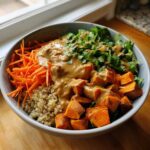
Make this satisfying Thai Peanut Sweet Potato Buddha Bowl for a flavorful, balanced, and easy weeknight dinner. It features roasted sweet potatoes, crisp vegetables, and a rich, creamy peanut sauce.
- Prep Time: 15 min
- Cook Time: 30 min
- Total Time: 45 min
- Yield: 4 servings 1x
- Category: Lunch
- Method: Roasting and Stovetop
- Cuisine: Thai Inspired
- Diet: Vegan
Ingredients
- 2 medium sweet potatoes, peeled and cubed
- 1 tablespoon olive oil
- 1/2 teaspoon salt
- 1/4 teaspoon black pepper
- 1 cup dry quinoa or brown rice
- 2 cups water or vegetable broth
- 1 block (14 oz) extra-firm tofu, pressed and cubed (optional protein)
- 1 head broccoli, cut into florets
- 1 cup shredded red cabbage
- 2 carrots, julienned
- 1/2 cup chopped fresh cilantro
- 1/4 cup chopped peanuts, for garnish
- For the Thai Peanut Sauce:
- 1/2 cup creamy peanut butter
- 1/4 cup low sodium soy sauce or tamari
- 2 tablespoons rice vinegar
- 2 tablespoons maple syrup or honey
- 1 tablespoon fresh lime juice
- 1 teaspoon grated fresh ginger
- 1 clove garlic, minced
- 1/4 to 1/2 cup hot water, to thin
Instructions
- Preheat your oven to 400°F (200°C). Toss the cubed sweet potatoes with olive oil, salt, and pepper. Spread them in a single layer on a baking sheet. Roast for 20 to 25 minutes, flipping halfway, until tender and slightly caramelized.
- While the potatoes roast, cook the grain. Combine quinoa (or rice) and water/broth in a saucepan. Bring to a boil, then reduce heat to low, cover, and simmer for 15 minutes (quinoa) or 40 minutes (brown rice), until all liquid is absorbed. Fluff with a fork.
- Prepare the tofu, if using. Toss tofu cubes with a dash of soy sauce and roast alongside the sweet potatoes for the last 15 minutes, or pan-fry until golden brown.
- Make the Best Thai Peanut Dressing. In a small bowl or jar, whisk together the peanut butter, soy sauce, rice vinegar, maple syrup, lime juice, ginger, and garlic. Slowly whisk in hot water, one tablespoon at a time, until the sauce reaches a smooth, pourable consistency.
- Steam or lightly blanch the broccoli florets until crisp-tender.
- Assemble your Thai Buddha Bowl Recipe. Divide the cooked grain among serving bowls. Arrange the roasted sweet potatoes, tofu (if using), broccoli, red cabbage, and carrots neatly over the grain base.
- Drizzle generously with the creamy peanut sauce. Garnish with fresh cilantro and chopped peanuts. Serve immediately.
Notes
- For meal prepping, store the sauce separately from the bowl components to prevent the vegetables from becoming soggy. Assemble just before eating.
- If you prefer a gluten-free option, use tamari instead of soy sauce in the dressing.
- To make this a Plant Based Power Bowl without tofu, substitute with 1 cup of rinsed and drained chickpeas tossed with a little smoked paprika before roasting.
Nutrition
- Serving Size: 1 bowl
- Calories: 550
- Sugar: 18
- Sodium: 650
- Fat: 28
- Saturated Fat: 4
- Unsaturated Fat: 24
- Trans Fat: 0
- Carbohydrates: 60
- Fiber: 10
- Protein: 25
- Cholesterol: 0
