The Ultimate Beginner’s Guide to Creating a Sourdough Starter From Scratch (7-Day Timeline)
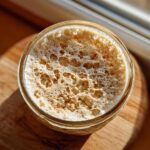
I am Alex, and I want to show you how to make a healthy, active sourdough starter using only flour and water. This guide provides simple, step-by-step instructions perfect for beginners to establish their own natural yeast culture for baking artisanal bread.
- Prep Time: 5 min per day
- Cook Time: 0 min
- Total Time: 7 days (active maintenance)
- Yield: Approx. 100g active starter
- Category: Baking Foundation
- Method: Natural Fermentation
- Cuisine: Global
- Diet: Vegetarian
Ingredients
Scale
- 100g Whole Wheat or Rye Flour (for initial days)
- 100g Unbleached All-Purpose Flour (for later days)
- 100g Unchlorinated Water (room temperature)
Instructions
- Day 1: Mix 50g of whole wheat or rye flour with 50g of room temperature water in a clean glass jar. Stir until fully combined. Cover loosely and leave at room temperature (ideally 70-75°F or 21-24°C) for 24 hours.
- Day 2: You may see small bubbles or nothing at all. Discard half of the mixture (about 50g). Feed the remaining starter with 50g of all-purpose flour and 50g of water. Mix well, cover loosely, and wait 24 hours.
- Day 3: Discard half of the starter. Feed with 50g of all-purpose flour and 50g of water. You should start seeing more consistent activity.
- Day 4: Discard half. Feed with 50g of all-purpose flour and 50g of water. If you see significant rising and falling, you can switch to feeding twice a day (every 12 hours).
- Day 5: Continue the 1:1:1 feeding ratio (discard half, feed equal parts flour and water). Look for predictable doubling in size within 6-8 hours after feeding.
- Day 6: If your starter consistently doubles in size and smells pleasantly tangy, it is becoming active. Continue the twice-daily feeding schedule if needed to build strength.
- Day 7: Your homemade sourdough culture should be bubbly and reliably active. Test for readiness: drop a small spoonful into a glass of water; if it floats, it is ready to bake with. This is your foundation for sourdough bread making.
Notes
- Use unchlorinated water; chlorine can inhibit wild yeast growth.
- Maintain a consistent temperature between 70°F and 75°F for best results during the initial creation process.
- If you see dark liquid (hooch) on top, this means your starter is hungry. Pour it off or stir it in, and feed it immediately.
- Switching to all-purpose flour after the first two days often helps create a more predictable, bubbly sourdough starter.
Nutrition
- Serving Size: 100g culture
- Calories: 180
- Sugar: 0.1
- Sodium: 1
- Fat: 0.5
- Saturated Fat: 0.1
- Unsaturated Fat: 0.4
- Trans Fat: 0
- Carbohydrates: 37
- Fiber: 2
- Protein: 5
- Cholesterol: 0