 Skip to content


Look, I’ve made plenty of dry, sad layer cakes in my day—that’s why I know how crucial texture is! For years, I thought that truly exceptional, bakery-style results were reserved for professionals, but making this coconut cake changed everything for me. I finally unlocked the secret to that incredibly moist and decadently fluffy crumb we all crave.
I’m Alex Hayes, and I’m so glad you’re here. Moving from spreadsheets to saucepans taught me that simple techniques yield big results, and this Ultimate Moist & Fluffy Southern Coconut Layer Cake with Cream Cheese Frosting is proof! If you want something show-stopping that tastes like pure joy, stick with me.
This recipe is the result of finally learning to trust the process, and it’s what brought me true joy back into the kitchen.
- Why This Ultimate Moist & Fluffy Southern Coconut Cake Recipe Works (E-E-A-T Focused)
- Ingredients for Your Show-Stopping Coconut Layer Cake
- Step-by-Step Instructions for the Ultimate Coconut Cake
- Tips for Success: Achieving a Perfect Moist Coconut Cake
- Variations on the Classic Coconut Cake
- Serving Suggestions for Your Tropical Coconut Dessert
- Storage and Reheating Instructions for Leftover Coconut Cake
- Frequently Asked Questions About Making Coconut Cake
- Estimated Nutritional Information for This Coconut Cake
Why This Ultimate Moist & Fluffy Southern Coconut Cake Recipe Works (E-E-A-T Focused)
When you want that bakery-style experience at home, it’s not luck—it’s technique! This specific preparation method for our moist coconut cake is designed to maximize softness and flavor from the first mix to the last bite.
- The combination of melted coconut oil AND whole milk gives us superior moisture retention compared to just using butter alone.
- We don’t just bake the cake; we give it a little spa treatment with that simple soaking syrup immediately after it comes out of the oven!
- The texture science behind this recipe is what makes it a winner every single time.
The Secret to a Truly Fluffy Coconut Cake Recipe
Fluffiness starts with temperature control, friends. You absolutely must make sure your milk and egg whites are at room temperature before they even think about meeting the butter. This helps them emulsify perfectly when added to the creamed mixture.
We also beat the softened butter and sugar long enough to look pale and creamy before adding the wet bits. See, that process whips in necessary air bubbles that give the final crumb that light, airy quality you look for in a great layer cake.
Flavor Boosts for the Best Coconut Cake Recipe
We use two different forms of coconut to make sure that flavor really sings. We’ve got the coconut extract right there in the batter for that strong tropical core. Then, we use real coconut milk in the soaking syrup—that’s key!
Don’t skip the optional step of toasting the coconut flakes we sprinkle on top! It brings out this deep, nutty sweetness that makes this coconut cake taste like it came from a five-star holiday bakery.
Ingredients for Your Show-Stopping Coconut Layer Cake
Okay, here’s where we round up our troops! For this Ultimate Moist & Fluffy Southern Coconut Cake, getting the measurements right is half the battle, but making sure everything is prepped correctly—especially the temperature—is the other half. Lay everything out now so you can move fast when it’s time to mix!
For the Moist Coconut Cake Layers
- 1 3/4 cups all-purpose flour
- 1 3/4 cups granulated sugar
- 1 tablespoon baking powder
- 1/2 teaspoon salt
- 1 cup unsalted butter, softened (you know, the kind that leaves a gentle indent)
- 4 large egg whites, room temperature—don’t forget this!
- 1 cup whole milk, room temperature
- 1/4 cup coconut oil, melted and cooled slightly
- 2 teaspoons pure vanilla extract
- 1 teaspoon coconut extract
- 1 cup sweetened flaked coconut, plus more for coating later
For the Coconut Milk Soaking Syrup
This little mixture is our moisture insurance, trust me!
- 1/2 cup unsweetened coconut milk (not the refrigerated drinking kind, the canned stuff!)
- 1/4 cup granulated sugar
For the Cream Cheese Frosting and Coating
This rich frosting loves the tangy flavor it brings to the party!
- 8 ounces cream cheese, softened
- 1/2 cup unsalted butter, softened
- 4 cups powdered sugar, sifted (we want smooth, not lumpy frosting!)
- 1 teaspoon vanilla extract
- 1/4 teaspoon salt
Step-by-Step Instructions for the Ultimate Coconut Cake
Now that we have everything ready to go, let’s get this coconut cake in the oven! I’m going to walk you through exactly how I turn this batter into soft, fluffy layers. I promise, this process is straightforward, but those little details are what transition you from a decent home baker to someone who consistently produces bakery style results.
Preparing the Cake Batter and Baking
First things first, crank that oven up to 350°F (175°C)! While it heats up, prep those three 8-inch round pans—grease, flour, and definitely put down parchment circles on the bottom. Trust me on the parchment; it saves a lot of heartbreak later!
In one big bowl, just whisk your dry stuff together: flour, sugar, baking powder, salt. Now, grab your mixer and beat that softened butter into that dry mix until it looks like perfectly textured coarse sand. This is important for the crumb structure!
In a separate bowl, whisk your room-temperature egg whites, whole milk, cooling coconut oil, vanilla, and coconut extract. Slowly add this wet mixture to the sandy mix, turning your mixer on low. Stop as soon as it’s combined—I mean it, stop! Over-mixing is the enemy of fluffiness here. Gently fold in that cup of flaked coconut, divide it up, and bake for about 28 to 32 minutes. Keep an eye on that toothpick test!
The Moisture Secret: Applying the Soaking Syrup
While those beautiful layers are cooling just slightly, whip up the syrup. It’s super easy: gently heat the unsweetened coconut milk and sugar in a little saucepan until the sugar dissolves. Don’t let it boil, we just want everything friendly!
Here is where we lock in that *super* **moist** quality you’re looking for. While the cakes are still a bit warm—not piping hot, but warm enough that they aren’t setting completely—poke holes all over the tops with a skewer. Brush that warm syrup evenly over all three layers. Seriously, don’t skip this step! Letting them soak up that sweetness ensures this coconut cake stays lovely and tender for days.

Assembling Your Bakery Style Coconut Cake
Once these layers are totally cool—and I mean cool, or you’re melting frosting—it’s time for the star of the show: the cream cheese frosting! You can find my favorite stable recipe here, but basically, you beat that softened cream cheese and butter until fluffy, then slowly add the sifted powdered sugar, vanilla, and salt until you get that perfect tangy spread.
Layer one, a good scoop of frosting, sprinkle with coconut. Repeat for layer two. Then, cover the top and sides of the whole magnificent structure with the rest of that gorgeous frosting. For that final, show-stopping **bakery style coconut cake** look, pack the sides and top with extra flaked coconut. You can even toast those flakes first for extra richness!

Tips for Success: Achieving a Perfect Moist Coconut Cake
I want this coconut cake to be the best you’ve ever made, so let’s talk about the tiny details that separate the good cakes from the great ones. Baking this recipe should feel relaxed, not stressful, but these pointers—learned the hard way, I might add—are non-negotiable if you want that signature ultra-moist texture.
First off, let’s circle back to temperature. If your milk or egg whites are cold, they shock the system! Seriously, room temperature dairy and eggs mix in much more smoothly with the fats. This creates a stable emulsion, which means the batter holds air better, resulting in that beautiful, soft crumb. Don’t rush this step!
Now for the coconut flavor itself. The recipe calls for adding the flakes, but if you want that deep, toasty, tropical flavor that really pops against the sweet frosting, you must toast them first. Just spread that flaked coconut onto a baking sheet and pop it into a 325°F oven for about five to eight minutes. You *have* to watch it like a hawk, though—it goes from golden perfection to charcoal in about thirty seconds flat!

Finally, listen to your oven! Every recipe has a time range, but never use time alone to check doneness. For this moist coconut cake, you’re done when the cake springs back lightly when you gently tap the top, and the toothpick comes out with just a few moist crumbs clinging to it. If it comes out totally dry, you’ve baked it too long, and we’ve lost some of that precious moisture!
Variations on the Classic Coconut Cake
I absolutely adore this rich cream cheese frosting, but I know sometimes you’re looking for something a little different, perhaps something lighter, or maybe you want to adapt this recipe slightly for an easy dessert when you are short on time. That’s perfectly fine! This coconut cake is flexible, and we can definitely explore some fun twists while keeping that core moisture intact.
Making an Old Fashioned Coconut Cake Alternative
If you grew up with a different style of cake, you might be looking for that classic Southern taste. The recipe notes mention that if you prefer an Old Fashioned Coconut Cake vibe, you can skip the cream cheese frosting altogether. Try swapping it out for a traditional cooked frosting—that fluffy, meringue-like topping that tastes wonderfully sweet and slightly marshmallowy. It provides a completely different texture but keeps that nostalgic flavor profile alive!
Adding Tropical Flavor: Pineapple Coconut Cake Ideas
Since coconut loves its tropical buddies, adding pineapple is a fantastic way to elevate things! For a true Pineapple Coconut Cake experience, you can easily fold about half a cup of well-drained, crushed pineapple directly into the finished cake batter just before dividing it among the pans. Or, if you’re feeling fancy, make a very thin layer of that crushed pineapple (drained well!) between the cake layers before you frost them. It adds a lovely, sharp tang that cuts through the richness.
Serving Suggestions for Your Tropical Coconut Dessert
When you pull this massive, glorious cake out, you deserve a drink or a coffee pairing that can stand up to its richness, right? We’ve spent all this time making the ultimate layering happen, so let’s make sure we serve it right!
If this is going on at a dinner party, I often pair a slice of this cake with something light and bubbly. Honestly, a crisp, sparkling lemonade works wonders because that little bit of tartness cleanses the palate from the sweet cream cheese frosting. If it’s a formal celebration, something like the chocolate martini recipe I shared balances out perfectly if someone needs a decadent sip on the side instead of just more sugar!
For a Sunday afternoon or brunch gathering, though, you cannot beat it with a strong cup of coffee. I find that a dark roast really cuts through the creaminess perfectly. And hey, if you want to share what you’re up to with me and the rest of the community, feel free to tag me when you post your masterpiece pictures over on my Facebook page. I absolutely love seeing your bakes!
Storage and Reheating Instructions for Leftover Coconut Cake
Okay, let’s talk about the inevitable: having leftovers of this magnificent coconut cake! Because we used that glorious cream cheese frosting, we have to handle storage a little differently than if we’d gone with a simple buttercream. We want to keep those layers moist and that frosting tasting fresh, not sour.
If you have a bit left over—and honestly, that’s a compliment to the recipe!—you generally want to keep it chilled. Cover slices or the remaining cake tightly with plastic wrap, making sure the wrap doesn’t actually touch the frosting if you can help it, to prevent the coconut flakes from sticking everywhere.
It’s best stored in the refrigerator for up to three, maybe four days. That creamy frosting just doesn’t do well sitting out at room temperature for too long, especially if your kitchen is warm. But here is the most important thing about enjoying your refrigerated leftovers: never eat it cold!
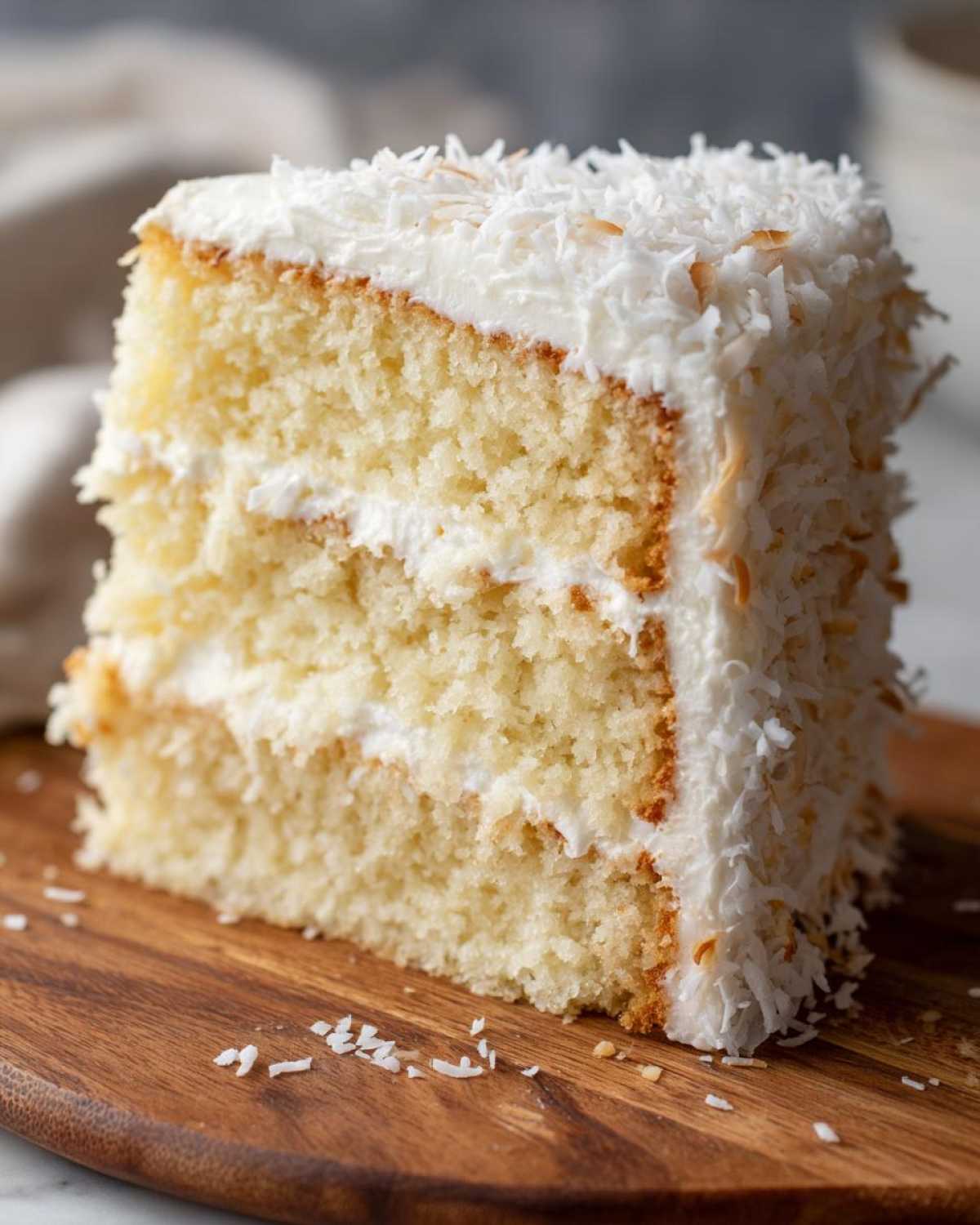
When you’re ready for another slice of this ultra-moist coconut cake, pull it out about 30 to 45 minutes before serving. Letting it come up to room temperature softens the frosting back to its luscious, scoopable state and allows the cake crumb to relax, bringing all that coconut flavor right back to the forefront. Trust me, eating it straight from the fridge makes it taste dense and sad. A little patience, and it’s like baking it all over again!
Frequently Asked Questions About Making Coconut Cake
I know jumping into a complex-looking cake can bring on the questions, so let’s tackle a few things you might be wondering about before you dive in. Don’t worry if you don’t have every single specialized ingredient; we can usually find a workaround! I always try to make sure every recipe here supports the home cook, and that includes providing honest answers!
Can I use cake mix instead of making this homemade coconut cake from scratch?
I won’t lie, using this scratch recipe gives you the absolute best flavor and that divine homemade coconut cake texture. That said, I totally get needing a shortcut sometimes! If you absolutely must, you can certainly use a good quality white or yellow cake mix. Just follow the box instructions, add a teaspoon of that coconut extract, and then use the soaking syrup trick we use in the main recipe. That soaking syrup does wonders even for a mix!
What is the secret to how to make coconut cake moist?
If you think about it, cakes dry out because they lose moisture during baking and cooling. The biggest secret here, honestly, is the soaking syrup. Brushing that warm, slightly sweet coconut milk mixture over the cake layers while they’re still warm ensures the crumb stays super saturated. My second tip for a truly **moist coconut cake** is simply pulling it out of the oven as soon as that toothpick test says it’s done. Don’t bake it a minute past when it needs to be pulled!
We want more fun baking questions answered? Head over to the main blog page whenever you need some extra inspiration!
Estimated Nutritional Information for This Coconut Cake
Alright, I promised you the details, and that includes a look at the numbers. Just remember, since this is a homemade creation packed with butter, cream cheese, and sugar (because wonderful cakes need those things!), and because everyone’s ingredients vary slightly, these values are educated estimates. They give us a general idea, but they aren’t a guarantee from a lab!
When planning your next celebration dessert, keep these approximate figures in mind for a single slice of this rich, incredible cake:
- Serving Size: 1 slice
- Calories: 480
- Sugar: 65g
- Fat: 24g (with 15g being saturated fat)
- Sodium: 250mg
- Carbohydrates: 64g
- Protein: 5g
It’s certainly a treat, but wow, isn’t it worth every single bite? Don’t worry about the numbers too much; just bake it with joy, and enjoy it with the people you love!
PrintUltimate Moist & Fluffy Southern Coconut Layer Cake with Cream Cheese Frosting
I am happy you are here. This recipe delivers the bakery-style coconut cake you want: incredibly moist, light, and fluffy layers topped with rich cream cheese frosting. It is a show-stopping dessert perfect for any celebration.
- Prep Time: 30 min
- Cook Time: 35 min
- Total Time: 1 hr 40 min
- Yield: 12 servings 1x
- Category: Dessert
- Method: Baking
- Cuisine: American
- Diet: Vegetarian
Ingredients
- 1 3/4 cups all-purpose flour
- 1 3/4 cups granulated sugar
- 1 tablespoon baking powder
- 1/2 teaspoon salt
- 1 cup unsalted butter, softened
- 4 large egg whites, room temperature
- 1 cup whole milk, room temperature
- 1/4 cup coconut oil, melted and cooled slightly
- 2 teaspoons pure vanilla extract
- 1 teaspoon coconut extract
- 1 cup sweetened flaked coconut, plus more for coating
- 1/2 cup unsweetened coconut milk (for soaking syrup)
- 1/4 cup granulated sugar (for soaking syrup)
- 8 ounces cream cheese, softened
- 1/2 cup unsalted butter, softened
- 4 cups powdered sugar, sifted
- 1 teaspoon vanilla extract
- 1/4 teaspoon salt
Instructions
- Preheat your oven to 350°F (175°C). Grease and flour three 8-inch round cake pans. Line the bottoms with parchment paper circles.
- In a large bowl, whisk together the flour, 1 3/4 cups sugar, baking powder, and salt.
- Add the softened butter to the dry ingredients. Beat with an electric mixer on low speed until the mixture resembles coarse sand.
- In a separate bowl, whisk together the egg whites, whole milk, melted coconut oil, vanilla extract, and coconut extract.
- Gradually add the wet ingredients to the dry ingredients, mixing on low speed until just combined. Do not overmix.
- Gently fold in the 1 cup of flaked coconut.
- Divide the batter evenly among the prepared cake pans. Bake for 28 to 32 minutes, or until a toothpick inserted into the center comes out clean.
- While the cakes cool slightly, prepare the soaking syrup: In a small saucepan, combine the 1/2 cup coconut milk and 1/4 cup sugar. Heat gently until the sugar dissolves. Do not boil.
- Once the cakes are slightly warm, poke holes all over the tops using a skewer or fork. Brush the warm coconut milk syrup evenly over all three layers. Let the cakes cool completely on wire racks.
- Prepare the cream cheese frosting: In a large bowl, beat the softened cream cheese and 1/2 cup butter until smooth. Gradually add the powdered sugar, mixing until combined. Beat in the vanilla extract and salt until the frosting is light and fluffy.
- Place one cooled cake layer on a serving plate. Spread about 1 cup of frosting evenly over the top. Sprinkle with flaked coconut. Repeat with the second layer.
- Place the final layer on top. Frost the top and sides of the entire cake with the remaining cream cheese frosting.
- Press additional flaked coconut onto the top and sides of the cake for a bakery-style finish.
Notes
- For maximum coconut flavor, lightly toast some of the flaked coconut before using it as a garnish. Spread it on a baking sheet and bake at 325°F (160°C) for 5-8 minutes, watching closely to prevent burning.
- Using room temperature milk and egg whites helps create a more even batter, leading to a fluffier cake crumb.
- If you want an Old-Fashioned style, use a traditional cooked frosting instead of cream cheese, but the cream cheese pairing is excellent for moisture.
Nutrition
- Serving Size: 1 slice
- Calories: 480
- Sugar: 65g
- Sodium: 250mg
- Fat: 24g
- Saturated Fat: 15g
- Unsaturated Fat: 9g
- Trans Fat: 0.5g
- Carbohydrates: 64g
- Fiber: 1g
- Protein: 5g
- Cholesterol: 75mg
