 Skip to content


There is nothing quite like pulling a warm, crusty loaf of homemade bread from your own oven. Seriously, it’s magic! I’m Alex, and trust me, I know what you’re thinking because I lived it: Cooking felt like stress when I was deep in corporate burnout. The idea of making bread seemed impossible—that was for real bakers, right?
But then, I finally figured out this No-Knead Dutch Oven recipe. It was the moment I stopped seeing the kitchen as a chore and started feeling genuine joy about creating something delicious. This recipe is my secret weapon for beginner bakers. It’s the absolute easiest way to get stunning artisan results without breaking a sweat. You just mix a few things, walk away, and come back to perfect, crusty bread. If you want to build confidence in baking bread, this is where you start!
- Why This No-Knead Dutch Oven Bread is Your New Favorite Bread
- Gathering Ingredients for Your Homemade Bread Recipes
- Step-by-Step Instructions for No Knead Bread
- Expert Tips for Perfect No Knead Bread Every Time
- Serving Suggestions for Your Delicious Homemade Bread
- Storage and Reheating Instructions for Leftover Bread
- Frequently Asked Questions About Making This Bread
- Nutritional Estimate for This Simple Bread
- Share Your Pure Cooking Joy Baking Success
Why This No-Knead Dutch Oven Bread is Your New Favorite Bread
There are a lot of recipes out there, but this method for making bread is special because it gives you bakery results with almost zero actual work. It’s pure culinary payoff! If you’re looking for comfort food that truly warms the soul without the afternoon spent kneading, stick with this one.
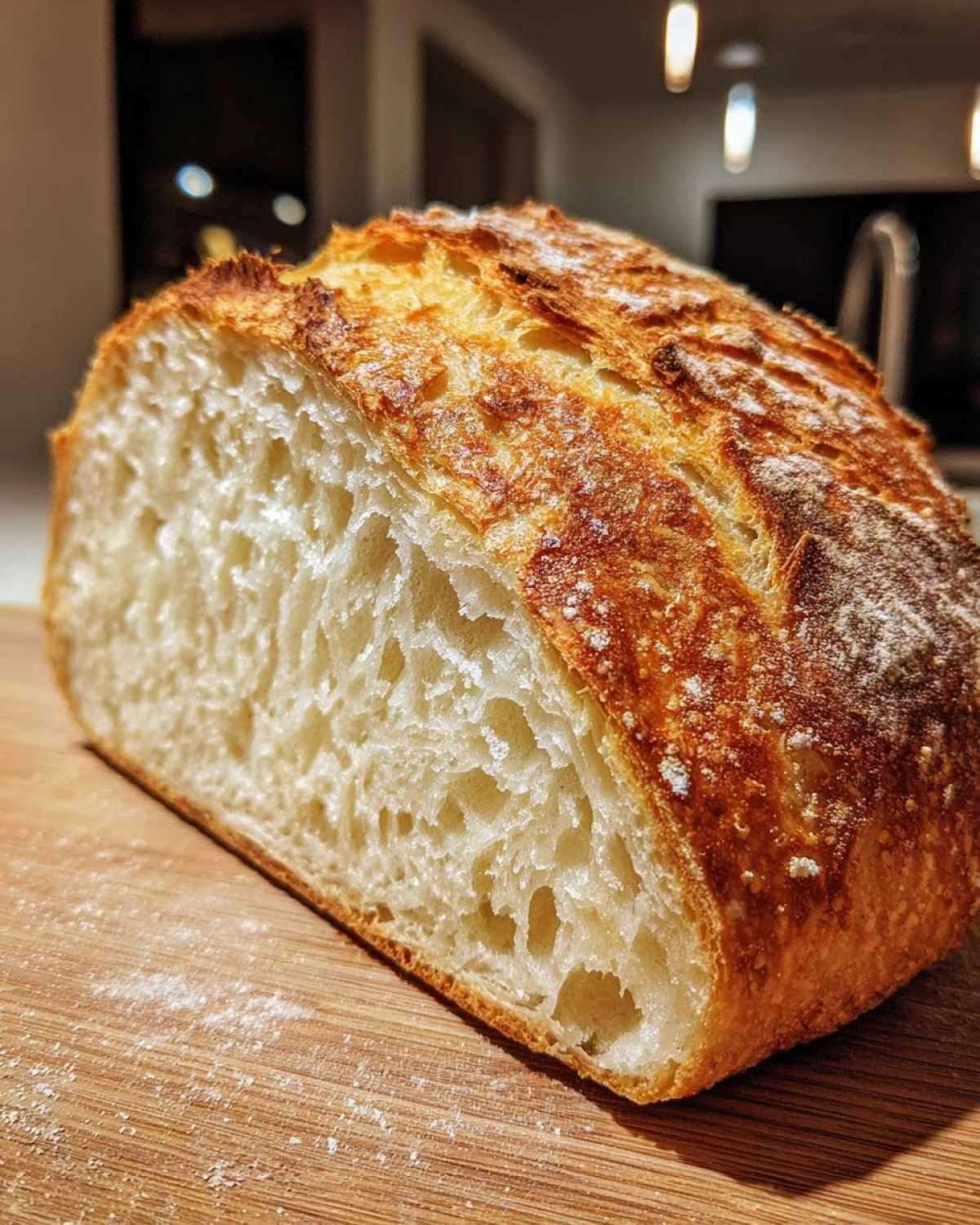
- It’s truly crusty outside and impossibly soft inside—the kind of bread you dream about.
- Perfect for anyone who thought they couldn’t bake bread; this recipe is foolproof.
- It pairs perfectly with just about anything, from soup to simple butter. Comfort food at its very best!
Minimal Effort for Maximum Crusty Bread Results
The best part is the “No-Knead” promise. You mix it, cover it, and let time do the heavy lifting. That long, slow rest lets the yeast work its natural magic, developing incredible flavor without you spending a second developing gluten by hand. It makes Easy Bread Baking feel like cheating, honestly!

The Magic of Dutch Oven Bread Baking
Okay, so the Dutch oven is key here. When you preheat that heavy pot, it gets screaming hot, right? When you put the dough in covered, the Dutch oven traps all the moisture that steams off the dough. That trapped steam keeps the crust soft initially, allowing the loaf to expand fully. Then, when you uncover it, bam—that ridiculously crisp, golden shell forms. It’s the ultimate Dutch Oven Bread Tutorial hack!
Gathering Ingredients for Your Homemade Bread Recipes
I remember thinking that making homemade bread from scratch required a pantry full of specialty flours and weird binders. Nope! That’s what I love about this recipe—it sticks to the basics, the stuff you probably already have sitting around. You don’t need fancy equipment, just these four humble ingredients to start your journey into fantastic Crusty Loaf Baking.

Essential Components for This Crusty Loaf Baking
We’re keeping it super simple here. You need a good amount of flour—about three cups of all-purpose or actual bread flour works wonders. Then, salt for flavor, and a tiny, tiny whisper of instant yeast. Don’t use active dry yeast unless you plan to activate it first! And the secret weapon that keeps the yeast slow and cool? Cool water. Not warm—it needs to be cool for that long, slow flavor development overnight.
Step-by-Step Instructions for No Knead Bread
Okay, time to get serious about baking this incredible loaf of bread. The steps are easy, but the timing is everything! Remember, because we aren’t kneading, the dough will feel super messy and sticky. Don’t panic! That’s exactly what you want. Just trust the process—it’s hands-off magic until the very end.
Mixing and the Long Rest for Perfect Bread Dough
First things first, whisk together your flour, salt, and that instant yeast in a big bowl. Now, pour in the cool water. Mix it with a wooden spoon—just until everything looks messy and combined? Stop! Seriously, don’t fuss over it. Cover that bowl tightly with plastic wrap. Now, this is the important part: You need to leave it alone at room temperature for a whopping 12 to 18 hours. When you come back, the dough will be bubbly, jiggly, and look totally alive. It’s already doing all the hard work for us!
Preheating the Dutch Oven Bread Tutorial
About 30 minutes before your bread is ready to bake, it’s time to get that Dutch oven screaming hot. Put your Dutch oven, lid and all, into the cold oven! Then turn the oven up to 450 degrees Fahrenheit. This step is non-negotiable for that amazing crust. When the oven signals it’s hot, brace yourself. You have to be super careful here—use thick oven mitts! The pot will be scorching hot. This bit is the most important part of the Dutch Oven Bread Tutorial!
Shaping and Baking Your Artisan Bread From Scratch
Carefully take the hot pot out. Gently flip your shaggy dough mass onto a lightly floured surface. Don’t punch it down; just fold it over on itself a few times to make a rustic little ball. Pop that ball right into the hot Dutch oven, put the lid on tight, and slide it back into the oven. Bake it covered for 30 minutes. Then, take the lid off and let it bake uncovered for another 15 to 20 minutes until that crust is deep golden brown. Now, here is the final expert tip for perfect Artisan Bread From Scratch: You must, I repeat, MUST let it cool completely on a wire rack before slicing. If you cut it warm, that glorious interior turns gummy. Patience! Check out some great baking tips here at Pure Cooking Joy for more help.

Expert Tips for Perfect No Knead Bread Every Time
Sometimes, even the easiest bread recipe needs a little nudge from an experienced baker! I’ve learned a few things over the years that really elevate this loaf from “good” to “I can’t believe I made this.” Don’t worry about making mistakes; that’s just part of the fun when you’re learning to bake!
Flour Choice and Flavor Variations for Your Bread
You can definitely use all-purpose flour, and it gives you a softer texture—but if you want that truly chewy, artisanal bite, swap in bread flour! It just has a bit more protein to help the structure. If you want to branch out beyond the plain white loaf, try stirring in a teaspoon of dried rosemary or Italian herbs right before you put the dough in the hot pot. Honestly, a tiny drizzle of honey into the water when you mix it deepens that crust flavor beautifully, too.
Troubleshooting Common Bread Issues
So, what if your dough looks flat after 18 hours? Usually, that means your kitchen was too cold! Yeast is slow when it’s chilly. If your crust is coming out pale, it just means it needs more time uncovered at the end. Don’t be afraid to let it keep baking until it’s that deep, mahogany brown you see at bakeries—that color means amazing flavor! If you ever need more general baking wisdom, just check out the tips section here on the blog.
Serving Suggestions for Your Delicious Homemade Bread
Now that you have this amazing, golden loaf of crusty bread, the fun part begins: eating it! This recipe stands up so well to dipping and spreading because the interior is so nicely structured. We made this loaf to bring people together and enjoy the simple moments, right? I love serving it alongside our creamy soups.
Pairing This Bread with Soups and Spreads
Honestly, I think this bread is required by law to be served alongside a hearty bowl of soup. It’s perfect for soaking up those tomato or lentil soups we make here. But don’t stop there! A simple spread of good quality butter is mandatory. Or, if you want to get fancy, just pour some high-quality olive oil into a shallow dish with a pinch of salt and pepper. That crust just begs for dipping!
Storage and Reheating Instructions for Leftover Bread
Okay, what happens when you actually have leftovers? Because sometimes, despite our best intentions, a whole loaf of this amazing bread isn’t gone in one sitting! You want to keep that gorgeous crust from getting sad and soft. The best way to store it is wrapped tightly in a clean kitchen towel, and keep it at room temperature. Don’t put it in the fridge; that actually makes it go stale faster, which is the worst!
When you’re ready for another slice, especially the next day, you have to revive it. Pop the slice or half-loaf directly onto a baking sheet for just five or six minutes at 350 degrees Fahrenheit. Trust me, that brief blast of heat brings back the crackle in the crust like it just came out of the Dutch oven!
Frequently Asked Questions About Making This Bread
When you start baking artisan bread, you’re going to have questions! I certainly did when I was trying to figure this out after leaving my high-stress job and looking for simple weeknight dinner solutions. Here are a few things I hear all the time about this specific loaf.
Can I use active dry yeast instead of instant yeast for this bread?
Oh, yes, you absolutely can! But because active dry yeast is a little more delicate, you can’t just toss it in with the flour like you do with instant yeast. You need to prove it first. Take about half a cup of your required cool water—make sure it’s lukewarm, not cold or hot—and mix the yeast in there with a tiny pinch of sugar. Let it sit for about 5 to 10 minutes until it gets foamy on top. Once it looks bubbly, you can add that mixture to your dry ingredients along with the rest of the cool water. Just remember, if it doesn’t foam up, your yeast is dead, and you need to start over with a fresh packet!
Is this recipe similar to other Easy Bread Baking methods?
Not really, and that’s the beauty of it! Traditional yeast bread recipes require you to knead for 10 to 15 minutes to develop the gluten structure necessary for building a good rise. This one skips all that elbow grease! It’s the definition of Easy Bread Baking because the long, slow, 18-hour rest period creates the gluten structure on its own, while the cool water keeps the yeast from working too fast. You get a professional crumb with beginner-level effort. It’s hands-off perfection!
What is the best way to store this crusty loaf?
Listen, the enemy of a great crusty loaf is air and humidity! Don’t put this beautiful bread in a plastic bag or the refrigerator; it will turn soft and stale almost immediately (I learned this the hard way). The best thing you can do is leave it on the cutting board cut-side down, but if you can’t finish it in a day, wrap it tightly in aluminum foil. Foil traps enough moisture to keep it soft but prevents the hard crust from getting soggy. Remember what I said about reheating? That’s for reviving the crust texture!
Nutritional Estimate for This Simple Bread
Now, I’m totally not a nutritionist—I’m just here to make tasty food that brings joy! But I know you wonderful home cooks sometimes like to see the breakdown. Because every aspect of food creation matters, I’ve pulled together the estimates based on the recipe below. Please know these numbers can shift a little depending on the brand of flour you grab or exactly how much you slice it. This is just a guideline, not a strict diet plan, people!
For a standard serving size of one slice, here is the estimate for this fantastic bread:
- Calories: About 180 per slice
- Fat: Only about 0.5 grams (Barely anything!)
- Carbohydrates: Roughly 38 grams
- Protein: A decent 6 grams to keep you going
- Sugar: Very low, usually under 1 gram
This is why I love this homemade bread so much—it’s satisfying, crusty, filling, and doesn’t weigh you down because it’s mostly made of simple flour, water, yeast, and salt. It’s truly an honest loaf of bread!
Share Your Pure Cooking Joy Baking Success
My biggest goal here at Pure Cooking Joy is to see you all find that same peace and accomplishment I found when I finally mastered my first loaf of bread. That feeling of holding something warm and delicious that you created? That’s what this is all about!
So please, when you pull your gorgeous, crusty, no-knead loaf out of the Dutch oven, tell me about it! Did you manage that incredible crackle? Did you spread it with butter immediately like a civilized person? Leave a comment below and let me know how it turned out. Leaving a star rating also helps other beginners feel confident enough to try this project, which is huge for spreading the joy.
If you snap a picture of your beautiful, rustic creation, tag us on social media! We absolutely love seeing your bakes. You can follow along and share your successes with the community over on Facebook at Pure Cooking Joy. Happy baking, friends—you totally nailed it!
PrintEasiest No-Knead Dutch Oven Bread

Create a crusty, soft loaf of artisan bread with minimal effort using this simple no-knead recipe baked in a Dutch oven. This recipe is perfect for beginners seeking satisfying homemade bread.
- Prep Time: 10 min
- Cook Time: 45 min
- Total Time: 13 hours 45 min
- Yield: 1 loaf 1x
- Category: Baking
- Method: Baking
- Cuisine: American
- Diet: Vegetarian
Ingredients
- 3 cups all-purpose or bread flour
- 1 1/2 teaspoons salt
- 1/4 teaspoon instant yeast
- 1 1/2 cups cool water
Instructions
- In a large bowl, whisk together the flour, salt, and yeast.
- Pour in the cool water and mix with a wooden spoon until just combined into a shaggy dough. Do not overmix.
- Cover the bowl tightly with plastic wrap. Let the dough rest at room temperature for 12 to 18 hours. The dough will become bubbly and increase in size.
- About 30 minutes before baking, place a 5 to 6-quart Dutch oven with the lid inside your oven. Preheat the oven to 450 degrees Fahrenheit (232 degrees Celsius).
- Carefully remove the hot Dutch oven from the oven. Gently scrape the sticky dough onto a lightly floured surface. Fold the dough over itself a few times to form a rough ball.
- Place the dough ball into the hot Dutch oven. Cover with the lid.
- Bake for 30 minutes with the lid on.
- Remove the lid and continue baking for another 15 to 20 minutes, or until the crust is deep golden brown.
- Carefully remove the bread from the Dutch oven and let it cool completely on a wire rack before slicing.
Notes
- For a richer flavor, you can let the dough rise for up to 24 hours.
- If you are looking for quick weeknight meals that save time, this hands-off bread pairs well with our simple recipes, unlike relying on meal planning services.
- Cooling the bread completely before cutting prevents a gummy interior texture.
Nutrition
- Serving Size: 1 slice
- Calories: 180
- Sugar: 0.5
- Sodium: 350
- Fat: 0.5
- Saturated Fat: 0.1
- Unsaturated Fat: 0.4
- Trans Fat: 0
- Carbohydrates: 38
- Fiber: 1.5
- Protein: 6
- Cholesterol: 0
