 Skip to content


Hi, I’m Alex, and I’m so glad you’re here. If you think breakfast has to be boring—or worse, time-consuming—I’m here to change your mind, especially when it comes to eggs! We all want that ultimate morning meal: something satisfying, sky-high in protein, and unbelievably creamy, right? Well, I found the secret weapon, and it’s sitting in your fridge right now: cottage cheese. Forget milk or heavy cream; using this simple dairy item to make cottage cheese scrambled eggs is a game-changer for texture and macros.
This recipe embodies everything I love about Pure Cooking Joy: it’s incredibly simple, uses everyday ingredients, and tastes like you spent ages fussing over them. Trust me, once you try this hack, you’ll never look at plain eggs the same way again. It’s the perfect foundation for a soul-satisfying start to your day.

- Why You Need This Creamy Cottage Cheese Scrambled Eggs Recipe
- Gathering Ingredients for Perfect Cottage Cheese Scrambled Eggs
- Step-by-Step Instructions for Fluffy Cottage Cheese Eggs
- Expert Tips for the Best Cottage Cheese Scrambled Eggs Texture
- Flavor Variations for Your Cottage Cheese Breakfast Hack
- Making Cottage Cheese Scrambled Eggs for Meal Prep Eggs
- Serving Suggestions for Your Protein Packed Breakfast
- Storage and Reheating Instructions for Cottage Cheese Scrambled Eggs
- Frequently Asked Questions About Cottage Cheese Eggs
Why You Need This Creamy Cottage Cheese Scrambled Eggs Recipe
Honestly, this isn’t just another egg recipe; it’s a total upgrade for your breakfast routine. We’re solving three big problems here: flavor fatigue, texture boredom, and needing more staying power in the morning. If you’ve been searching for true breakfast cookies alternatives that keep you full, this is it!
-
Protein Packed Breakfast Power
The cottage cheese adds a serious, easy boost of protein that keeps you satisfied until lunch. Seriously, this is one of the best high protein breakfast recipes because it sneaks nutrition in without tasting like diet food!
-
Achieving Creamy Scrambled Eggs Without Milk
This is the pure magic. You get that decadent, luxurious texture you crave—the kind usually reserved for eggs slowly cooked with actual heavy cream—but you skip the extra fat. Hello, genuinely creamy scrambled eggs without milk!
-
The Best Way to Cook Cottage Cheese Eggs Fast
We are talking about an easy 5 minute breakfast here, folks. Even with the necessary low-and-slow approach, the prep is minimal, meaning you get the best way to cook cottage cheese eggs is also the quickest way to a satisfying meal.
Gathering Ingredients for Perfect Cottage Cheese Scrambled Eggs
Okay, the beauty of this recipe is how short the ingredient list is! You don’t need a ton of fancy stuff when the cottage cheese is doing most of the heavy lifting for flavor and texture. It’s amazing how something so simple yields such a great result. You’ll want to make sure you have these few things ready to go before you even turn on the stove.
This list makes one generous serving, perfect for a satisfying morning boost. If you’re prepping for the week, just multiply these by how many servings you need. For reference, I always use small curds when I’m making these meal prep eggs!
- 3 large eggs
- 1/2 cup small-curd cottage cheese (this is crucial!)
- 1 teaspoon butter or your favorite cooking oil
- Salt to taste
- Freshly cracked black pepper to taste
Step-by-Step Instructions for Fluffy Cottage Cheese Eggs
Alright, pay close attention here because this is the part where we nail the texture, which is the biggest concern people have when trying this whole cottage cheese scrambled eggs thing for the first time. The secret to success is respecting the curds! We want soft, fluffy eggs with little creamy pockets, not just a grainy mess. It all comes down to how much we stir and how low we keep that heat.
Preparing the Cottage Cheese Scrambled Eggs Base
First things first: the eggs. Crack your three eggs into a bowl and add your salt and pepper. Whisk them just until the yolks and whites are combined—maybe three or four gentle strokes. Don’t go crazy whipping them into foam! That incorporates too much air, which works against the specific density we’re creating here. Next, gently fold in that half-cup of cottage cheese. I mean gentle! You should still clearly see those little white curds mixed in with the egg. If you blend them smooth, you’re headed toward a different texture entirely, so always fold!
The Low Heat Technique for Whipped Cottage Cheese Eggs
Heat your pan over medium-low. I cannot stress this enough: low and slow is vital for creamy eggs, especially when you’ve got cottage cheese involved. Once your butter is melted and shimmering (not browned!), pour in your mixture of eggs and curds. Let it sit for about 30 seconds without touching it so the edges start to set up. Now, take your rubber spatula and gently push the cooked egg from the edge toward the center, letting the uncooked liquid flow underneath. This slow folding motion builds those beautiful, tender layers. Keep pushing and folding until they look mostly set but still shiny and moist. The residual heat handles the rest, giving you the perfect result for those whipped cottage cheese eggs texture!

Expert Tips for the Best Cottage Cheese Scrambled Eggs Texture
This is where we graduate from just following a recipe to actually mastering the technique. When I first started making cottage cheese scrambled eggs, I made a rookie mistake: I microwaved them! Oops. That was fast, sure, but the cottage cheese separated instantly into hard, grainy little bits. Never again! Now, I focus entirely on gentle cooking and the right ratio to keep things luxurious.
Choosing the Right Cottage Cheese Curd Size
Listen, I swear by the small-curd variety for this recipe, and here’s why: small curds disperse slightly throughout the eggs as you cook, melting into the background while still offering that soft, creamy burst. If you grab large-curd cottage cheese (which I sometimes do when I’m in a rush), you need to be extra disciplined with stirring. If you truly want a smoother texture that borders on fully incorporated, give the eggs and large curds just one quick pulse—no more than twice—in a quick-use blender or food processor before heating. It takes a second and vastly improves the consistency.
Ideal Cottage Cheese to Egg Ratio for Fluffy Cottage Cheese Eggs
For the fluffiest experience, stick closely to the 3 eggs to 1/2 cup ratio listed in the recipe. This gives you a wonderful balance of fluffy egg protein and the creamy fat from the cheese. If you want them *extra* decadent, you can push it to 2/3 cup of cottage cheese per three eggs, but be warned—they will be much softer and might need heavier heat reduction toward the end. If you use less cheese, say, only 1/4 cup, they will still be good, but they lean closer to a traditional scrambled egg with little soft chunks, rather than that signature creamy cloud texture we are aiming for!
Flavor Variations for Your Cottage Cheese Breakfast Hack
One of my favorite parts about developing healthy egg breakfast ideas is customizing them! The natural, slight tang of the cottage cheese means these eggs are just begging for some extra flavor boosters. It’s truly the ultimate cottage cheese breakfast hack because you can turn it into almost any dish you want!
Keto Friendly Egg Recipes Additions
Because we aren’t adding any fillers like flour or breadcrumbs, these eggs are naturally fantastic for low-carb eating. Pop in some wilted spinach right at the end, or sauté some thinly sliced mushrooms first before adding your eggs. Even a small amount of smoked salmon folded in right before serving adds sophistication and healthy fats.
Making Cottage Cheese Scrambled Eggs Savory
If you’re skipping the toast and just want pure savory flavor, you have to rely on aromatics! I always keep garlic powder and smoked paprika in my spice rack for eggs—a quarter teaspoon of either makes a world of difference. My absolute favorite addition, though, is fresh chives snipped right over the top just before they hit the plate. They add freshness without adding any extra cooking time.
Making Cottage Cheese Scrambled Eggs for Meal Prep Eggs
I know, I know—scrambled eggs for meal prep eggs sounds risky, right? Usually, standard scrambled eggs get rubbery and sad when you reheat them. But because we used cottage cheese instead of relying on milk, these eggs actually hold their moisture surprisingly well!
You’ll want to cook them just a tiny bit less than you normally would—keep them slightly wetter than you like when you first take them off the heat. When you reheat them gently later in the week, that residual moisture saves the day. They steam up nicely, making these meal prep eggs a week-saver for busy mornings.
Serving Suggestions for Your Protein Packed Breakfast
Even though these eggs are fantastic on their own—truly a heavy-hitting protein packed breakfast—sometimes you just need something extra on the plate. I like to keep sides really simple so the eggs remain the star. Since we’re aiming for healthy ideas overall, I skip the heavy toast most days.
Try piling these creamy curds over a bed of fresh spinach, which will wilt slightly from the residual heat. Or, grab half an avocado—the healthy fats pair perfectly with the lean protein. For a quick, easy side, a handful of cherry tomatoes quickly warmed in the pan after you finish the eggs works beautifully. Keeps things fresh and light!

Storage and Reheating Instructions for Cottage Cheese Scrambled Eggs
Since we cooked these eggs low and slow, they hold up better than most when it comes to leftovers, but we still need to treat them gently! You can definitely make a bigger batch for later, but reheating is where people sometimes lose the magic texture. Don’t fret; I’ve got the best tricks to keep that creaminess locked in for your quick savory breakfast tomorrow.
For storage, transfer your leftovers to an airtight container as soon as they cool down slightly—don’t let them sit out for too long. They should keep beautifully in the fridge for up to three days. I usually plan on making just enough for two days, though, because, honestly, I love them so much!
Reheating Cottage Cheese Eggs Without Losing Moisture
The absolute worst thing you can do is blast these in a microwave on high power. That intense, fast heat will squeeze every last bit of moisture right out of the cottage cheese curds, and you’ll end up with eggs that feel tight and spongy. If you must use the microwave (we all have those rushed mornings!), use 50% power in 15-second bursts, stirring gently between each burst.
However, the BEST way, the way that truly honors that creamy texture we worked so hard for, is using the stovetop. Place a tiny splash of water or milk (just a teaspoon!) into a small non-stick skillet over very low heat. Add your portion of cold eggs and gently stir and fold them, just like you did the first time. The moisture from the added liquid creates steam, preventing the curds from seizing up and drying out. It takes about three minutes, and suddenly, your leftovers taste freshly made!
Can These Eggs Be Frozen?
If you’re looking far ahead for meal prep eggs planning, I’m going to tell you to stick to the fridge for leftovers. Freezing eggs, especially those with added dairy like cottage cheese, changes the texture quite a bit once thawed. They tend to break down into a runnier consistency. For the best experience, I recommend making only what you know you’ll eat within three days. If you want to freeze eggs, save it for simple hard-boiled eggs or just whisk the yolks and whites without the cottage cheese first!

Frequently Asked Questions About Cottage Cheese Eggs
I get so many emails and comments once people try this recipe, which is fantastic! It shows how much we all love finding simple ways to make our breakfasts better. Here are the top three questions I hear all the time about achieving that perfect cottage cheese scrambled eggs experience.
Can I use blended cottage cheese for a smoother texture?
Absolutely, you can! If your main goal is just to use cottage cheese for that protein boost and to make scrambled eggs creamier in general, blending the eggs and cottage cheese together until it’s one smooth liquid works really well. But here’s my caveat: by blending it smooth, you skip out on that textural payoff—those little soft pockets of cheese mixed throughout the fluffy egg. So yes, you can, but you lose the signature curd texture that makes this recipe special!
Are cottage cheese scrambled eggs good for a keto diet?
They are not just good; they are incredible keto staples! Since cottage cheese is mostly pure protein and fat (with very low natural sugars and carbs), this fits beautifully into keto friendly egg recipes. You get that rich, satisfying mouthfeel without relying on high-carb additions like bread or potatoes on the side. Just make sure that if you add herbs, you’re sticking to low-carb options like chives and not dried fruit!
What is the best way to prevent the cottage cheese from getting grainy?
This is always the million-dollar question for anyone trying this healthy savory breakfast idea! The single most important rule is heat management. You must cook these eggs low and slow. If your pan is too hot, the moisture in the cottage cheese evaporates too fast—it’s boiling the cheese, essentially—and that turns the curds hard and grainy. So, remember: medium-low heat maximum, and use that rubber spatula to gently push and fold the eggs slowly. That gentle movement keeps those curds soft and creamy while they cook through.
PrintCreamy Cottage Cheese Scrambled Eggs for a High Protein Breakfast
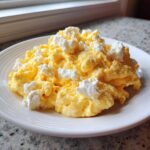
Make fluffy, high protein scrambled eggs using cottage cheese for a creamy texture without adding milk. This is a quick, healthy egg breakfast idea.
- Prep Time: 2 min
- Cook Time: 5 min
- Total Time: 7 min
- Yield: 1 serving 1x
- Category: Breakfast
- Method: Stovetop
- Cuisine: American
- Diet: Low Fat
Ingredients
- 3 large eggs
- 1/2 cup small-curd cottage cheese
- 1 teaspoon butter or oil
- Salt to taste
- Black pepper to taste
Instructions
- In a bowl, lightly whisk the eggs with salt and pepper. Do not over-whisk.
- Add the cottage cheese directly to the whisked eggs. Gently fold the cottage cheese into the eggs a few times; you want the curds to remain mostly intact for texture.
- Heat the butter or oil in a non-stick skillet over medium-low heat. Do not let the fat brown.
- Pour the egg and cottage cheese mixture into the warm skillet.
- Let the eggs set undisturbed for about 30 seconds around the edges.
- Using a rubber spatula, gently push the cooked egg from the edges toward the center, tilting the pan so the uncooked egg flows underneath.
- Continue this gentle pushing and folding motion until the eggs are mostly set but still slightly moist. Keep the heat low to prevent the cottage cheese from separating or becoming grainy.
- Remove the skillet from the heat immediately. The residual heat will finish cooking the eggs. Serve your creamy scrambled eggs right away.
Notes
- For the fluffiest cottage cheese eggs, use small-curd cottage cheese. Large curds can sometimes break down too much.
- Cooking low and slow is the best way to cook cottage cheese eggs; high heat causes the curds to toughen.
- If you prefer a smoother texture, you can briefly blend the cottage cheese and eggs together until just combined before cooking.
- This recipe is a great keto friendly egg recipe base; add chives or a sprinkle of cheddar cheese for extra flavor.
Nutrition
- Serving Size: 1 serving
- Calories: 250
- Sugar: 4
- Sodium: 350
- Fat: 14
- Saturated Fat: 6
- Unsaturated Fat: 8
- Trans Fat: 0
- Carbohydrates: 5
- Fiber: 0
- Protein: 26
- Cholesterol: 450
