 Skip to content


Oh, doesn’t the smell of a French bakery just stop you in your tracks? I’m talking about that buttery, slightly sweet aroma that promises layers upon flaky layers of pure morning bliss. For years, the idea of making real chocolate croissant pastries—pain au chocolat—seemed like something reserved for highly trained patissiers. I used to think, “I just don’t have three days to laminate dough!” Sound familiar? Well, I’m Alex, and here at Pure Cooking Joy, we turn complicated dreams into delicious reality. You can check out my story on why I started this whole thing right here. Trust me when I say you do not need those complicated folding tours to get flaky, incredible results. This recipe is my ultimate hack, using store-bought puff pastry to deliver that buttery, chocolate-filled goodness you crave, quickly enough for a Tuesday morning but special enough for a Sunday brunch. I love sharing these shortcuts because they remind us that joy in the kitchen is about smart steps, not just endless labor.
- Why You Will Make These Easy Chocolate Croissants Again and Again
- Gathering Ingredients for Your Flaky Chocolate Croissants
- Essential Equipment for Perfect Chocolate Croissant Assembly
- Step-by-Step Instructions: How to Make Chocolate Croissants
- Tips for Achieving Bakery Style Croissants at Home
- Make-Ahead and Storage for Your Chocolate Croissant Batch
- Serving Suggestions for Your Homemade Pain au Chocolat
- Frequently Asked Questions About Making Chocolate Croissants
- Estimated Nutrition for Your Buttery Chocolate Croissants
Why You Will Make These Easy Chocolate Croissants Again and Again
I promise you, once you try this simple method, you’ll be pulling these out constantly. They are instant hits, and frankly, they taste way better than they have any right to, considering how little work is involved!
- Unbeatable Speed: We’re talking about assembly in under 20 minutes. These are genuinely quick breakfast pastries when you need an indulgent treat fast.
- Incredible Flake Factor: Who knew store-bought stuff could deliver such wonderfully flaky chocolate croissants? The chilling step is the secret sauce here.
- Pure Indulgence: They are rich, they are buttery, and that gooey chocolate center makes every bite feel like a weekend celebration, even if it’s mid-week.
Gathering Ingredients for Your Flaky Chocolate Croissants
Okay, friend, this entire recipe hinges on using just a few high-impact items. Because we’re skipping the long process of making dough from scratch, we need to use the best store-bought puff pastry we can find. Don’t skimp here; that’s where the buttery layers come from!
Here is what you need to hunt down for your batch of homemade pain au chocolat:
- One standard package (about 14.1 ounces) of all-butter puff pastry. And listen, it absolutely must be thawed exactly according to the package directions. If it’s too cold, it cracks; if it’s too warm, it gets greasy before it bakes, and we want maximum flakiness!
- About 4 ounces of really good chocolate. You’ll want bittersweet or semisweet—nothing too milky. Cut it into sticks, aiming for about twelve 1/2-inch thick pieces. If you can find those pre-cut baking sticks, awesome, but just chopping up a nice bar works perfectly too.
- One large egg, plus one tablespoon of water. This is our simple, effective egg wash that gives us that beautiful bakery shine.
- One tablespoon of granulated sugar. This is totally optional, but I highly recommend sprinkling it lightly over the egg wash right before baking. It gives the *best* little crunch!
See? That’s it! Great ingredients make up for skipped steps in this recipe. We’re focusing on quality where it counts to make these buttery chocolate croissants shine.

Essential Equipment for Perfect Chocolate Croissant Assembly
You don’t need a fancy French mixer or a giant marble slab for this project, thankfully! Since we are working with ready-made puff pastry dough, we mostly just need tools for cutting and baking. Keep it simple, keep it clean, and you’ll be fine!
Here’s the gear I always pull out when I make these:
- A large, clean work surface. Lightly flour it, but not too much! Too much flour prevents the pastry from sealing properly.
- A sharp knife or a pizza cutter. You need clean cuts for neat rolling, so don’t try to use a dull butter knife here.
- Standard baking sheets. You’ll want two if you’re making a full batch of 12, or just grab a couple of pieces of parchment paper to line one sheet.
- Parchment paper. Seriously, don’t skip the parchment paper. It saves you from the inevitable melted butter mess sticking to the pan.
- A small bowl and a whisk or fork for mixing up that egg wash.
- A pastry brush. This is key for evenly getting the egg wash right to the edges so they brown nicely and look professional.
Step-by-Step Instructions: How to Make Chocolate Croissants
Alright, let’s stop talking about how great these are going to be and actually make them! Don’t let the name—chocolate croissant—scare you. Because we’re using ready-made pastry, the process is all about assembly, resting, and baking. Paying attention to the temperature and chilling times is non-negotiable if you want that beautiful airy texture. If you ever want to take the next dive into making pastry completely from scratch, I have a fantastic guide on making flaky pie crust dough that uses similar principles, which you can check out here, but for today, we are keeping it easy!
Preparing and Cutting the Puff Pastry
First things first, make sure that puff pastry is actually thawed but still cold. We need it pliable, not warm and sticky. Gently unfold the whole sheet onto a lightly floured surface. If it seems overly thick or stiff right out of the package, just take your rolling pin and very tenderly roll it out a little more. I’m aiming for a rough rectangle shape—don’t stress about perfection!
Next, grab a ruler or just eyeball it, and slice that rectangle down the middle lengthwise so you have two long strips. Now, cut those long strips over the short way into six equal pieces each. You should end up with exactly 12 smaller rectangles total. Try to keep your cuts as straight as you can.
Rolling the Chocolate Filled Pastry
This is the most satisfying part! Take one of your 12 small rectangles. Place one stick of that rich chocolate right near one of the short ends. You just want it nestled there, ready to be rolled up.
Now, fold that short end right over the chocolate to seal it in. Then, roll the pastry up tightly, just like you’re rolling up a tiny blanket or a jelly roll, until you’ve used up the whole piece of dough. When you finish rolling, make sure you place the entire shaped pastry seam-side down onto your parchment-lined baking sheet. We do this so they don’t unroll while they bake! Repeat this whole process for the remaining 11 pieces. You should have 12 gorgeous little logs waiting!

Chilling and Oven Preparation
Stop! Don’t rush to bake them yet. This is the step people skip, and it’s why their pastries sometimes look flat and greasy instead of puffy and flaky. Pop the entire baking sheet filled with your shaped treats into the refrigerator for at least 30 minutes. This chilling time allows the butter inside the puff pastry layers to solidify again. Seriously, this keeps the layers separated, giving you that authentic, airy crunch.
While they chill, go ahead and crank that oven up! Preheat it to 400 degrees Fahrenheit (200 degrees Celsius). You want the oven nice and hot when those cold pastries hit the rack.
Egg Wash Application and Baking
Once your 30 minutes are up, take the tray out of the fridge. In a tiny little bowl, furiously whisk together that one egg and the tablespoon of water until it’s uniform. That’s your egg wash. Take your pastry brush and lightly coat the tops and sides of every single croissant. Don’t let it drip everywhere; just a nice, even coating.
If you’re using the optional sugar, sprinkle just a tiny bit over the wet tops now for that fantastic, slightly crystalline crunch. Pop them gently into your preheated oven. Bake them for about 15 to 20 minutes. You’ll know they are done when they seem totally puffed up, they’ve climbed high, and they have turned a deep, glorious golden brown. Let them rest on the baking sheet for about five minutes before moving them to a wire rack to cool slightly. Serving these warm is pure heaven!
Tips for Achieving Bakery Style Croissants at Home
I know many of you are here because you want that bakery experience, that truly transcendent, shatteringly crisp layer you usually have to queue up early for. Since we used store-bought puff pastry, we’ve already covered 90% of the battle! But if you want these chocolate croissants to rival the ones flown in from Paris, let’s talk about a few finishing touches and, yes, the monster commitment of doing it the true French way.
It’s all about finesse and temperature, even when you’re starting with convenience dough. You can always find more on my bread and pastry journey efforts over on my baking page!
The Importance of Cold Butter and Dough Temperature
If you take away only one thing from making puff pastry—whether it’s from a box or that giant block of butter you lovingly folded in yourself—it’s this: Cold butter is your best friend. Period. When the pastry goes into the 400-degree oven, those cold little pockets of butter turn instantly into steam. That steam is what physically pushes the delicate layers of dough apart, creating that incredible flakiness we look for. If your dough is warm when it hits the oven, the butter just melts out into a puddle, and you end up with a dense, rich biscuit instead of a light, airy croissant.
That’s why we chilled them! That 30 minutes in the fridge solidifies everything back up. If your kitchen is super warm while you’re working, you might even want to chill the cut rectangles for 10 minutes *before* you put the chocolate inside. You can feel the dough changing texture under your fingers—you want it firm but not rock hard.
Ingredient Spotlight: Choosing the Best Chocolate
When it comes to the chocolate filling, please, please, please listen to me on this one: Skip the standard chocolate chips. I know it seems lazy to suggest chips, but those things are designed to hold their shape in cookies. They have stabilizers that stop them from melting smoothly, and you end up with hard little chocolate rocks inside your beautiful, flaky pastry.
For a genuine melt that pours out when you bite in, you need baking chocolate. Look for semi-sweet or bittersweet chocolate bars that are meant for melting, sometimes sold as *bâtons* or sticks. If you use a good quality bar and chop it into half-inch pieces, you get that wonderful, soft, gooey texture when it’s warm. It just melts perfectly into the layers instead of resisting the process. It makes all the difference for that truly bakery style croissant experience at home!

Make-Ahead and Storage for Your Chocolate Croissant Batch
I promise you, these are just as good, if not better, the next day when that buttery aroma seems to have settled deeper into the pastry. Since it takes a little time for the assembly, I always recommend planning ahead! This recipe is perfect for those Saturday mornings when you want to prep on Friday night.
For assembling ahead of time, you can shape all 12 of your amazing little pastries exactly like we did in the instructions—chocolate inside, rolled tight, seam-side down. Then, instead of chilling them immediately, cover the baking sheet loosely with plastic wrap. You can pop them right into the refrigerator for up to 24 hours. We call this a ‘cold proof’ when you’re making dough from scratch, but here, it just keeps everything cold and happy!
Baking From the Fridge
If you pull them straight from the fridge to the egg wash station, they might need a tiny bit of extra time to warm up a touch before baking, maybe letting them sit on the counter for 15 minutes first, just so the cold doesn’t shock the oven temperature too much. Otherwise, bake them exactly as directed, though you might need an extra minute or two for them to achieve that deep golden color.
Storing Baked Leftovers
If you manage to have any baked leftovers (which rarely happens in my house!), you want to store them in an airtight container at room temperature. Don’t put them in the fridge! The humidity in the fridge just zaps the crispness out of the pastry and makes them taste dull. They are definitely best the day they are baked, but they hold up well for two days this way.
How to Reheat for Maximum Flakiness
If you want that ‘just pulled from the oven’ experience tomorrow morning, you need dry heat, not steam! Do not use the microwave; you’ll end up with a sad, chewy pastry. Instead, I say grab a baking sheet, pop your cold croissant into a 300-degree oven for about 5 to 7 minutes.
Watch them closely! That quick blast of dry heat completely re-crisps the exterior layers, melting that center chocolate just enough so it’s gooey again without turning the whole thing soggy. It totally revives the butter from the puff pastry, and honestly, it’s my favorite way to eat the second-day treats!
Serving Suggestions for Your Homemade Pain au Chocolat
These buttery chocolate croissants are rich enough that they don’t really *need* anything else, which is why they are such an easy win for entertaining! But since we’re making them for a proper weekend brunch or perhaps just a cozy moment of self-care, sometimes a little accompaniment makes the experience feel just that much more complete.
My philosophy here is simple: Don’t compete with the chocolate and butter; complement it. Skip anything too heavy or sugary, because these pastries already deliver on indulgence.
A Classic Pairing: Coffee or Tea
Honestly, the number one best thing to serve alongside a warm pain au chocolat is a seriously good cup of coffee. I’m talking espresso, a freshly brewed dark roast, or maybe even a nice frothy latte if you have the equipment. The slight bitterness and warmth of the coffee cuts through the richness of the puff pastry beautifully.
If you’re more of a tea drinker, a strong black tea like English Breakfast or Earl Grey works wonders. The bergamot in Earl Grey is especially nice against the sweet chocolate. If you’re serving a crowd, I’ve got a great recipe for a very simple, crowd-pleasing punch that’s light enough not to overshadow the pastries if you wanted something bubbly—you can check out the details on that punch here!
Freshness on the Side
To balance out all that decadent, buttery goodness, you need something bright and slightly acidic on the plate. A simple side of fresh fruit is the perfect answer for breakfast or brunch.
- Fresh berries! Strawberries, raspberries, or a mix of both. Their tartness is the perfect counterpoint to the dark chocolate.
- Sliced oranges or maybe a small bowl of peeled grapefruit segments. That bright citrus zest is surprisingly fantastic with baked goods.
- A small side of plain Greek yogurt with just a drizzle of honey. This adds protein and a creamy texture that isn’t quite as heavy as a dollop of whipped cream.
Keep the sides light, keep them fresh, and let those amazing flaky chocolate croissants truly shine as the star of the morning show!
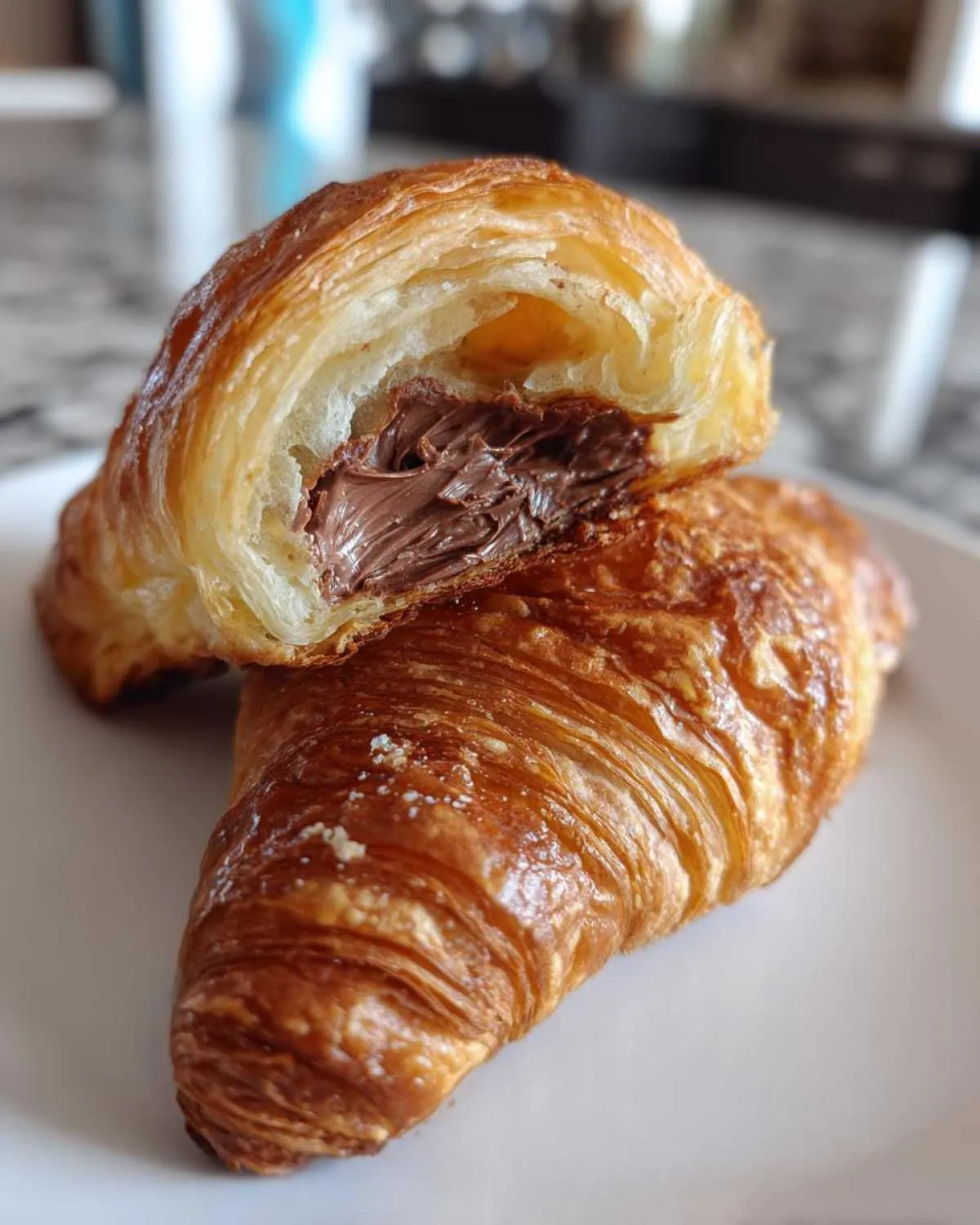
Frequently Asked Questions About Making Chocolate Croissants
I know trying a new recipe always brings up a few little sticky points, so I pulled together the questions I get most often about these easy chocolate croissants. We want to make sure you feel total confidence before you start rolling!
My store-bought puff pastry is super hard! Should I microwave it?
Oh no, never microwave puff pastry! That melts the butter right out of the layers, and it’ll ruin the whole flaky effect. If your pastry is rock hard straight from the freezer, the best thing to do is just let it sit on the counter, still wrapped, for 30 to 45 minutes until it’s pliable but still cold to the touch. Remember, we need that interior butter to stay totally firm!
Can I use crescent roll dough instead of true puff pastry?
That’s a common question, and I’m going to be honest: you can, but the result won’t be the same. Crescent roll dough is chemically leavened (it uses baking soda/powder), and it’s already partially layered and much denser. You’ll get a tasty, quick, chocolate-filled roll, but you won’t get that light, shatteringly crisp texture that defines a true flaky chocolate croissant. For real flakiness, stick to the all-butter puff pastry!
How do I get that beautiful, shiny golden look?
That gorgeous glaze is all down to the egg wash! We mixed one egg with one tablespoon of water, but if you want extra shine and a tiny extra crunch, you can use a mixture of one egg yolk and maybe half a teaspoon of water instead. The yolk has more fat and protein, which really browns up beautifully in the oven. Make sure you brush it on lightly and evenly over the tops right before baking. If you end up wanting to chat more about any recipe, feel free to reach out through my contact page!
Can I freeze these unbaked chocolate croissants?
Yes, you absolutely can! This is a great trick for having fresh pastries ready for any morning. Once you’ve assembled them (chocolate tucked in, rolled up, seam-side down), place them on a parchment-lined sheet and freeze them until solid. Then, transfer the frozen pastries to a freezer bag. When you want to bake them, just thaw them in the fridge overnight, let them come toward room temp for about 20 minutes, apply the egg wash, and bake! You might need to add about 5 minutes to the bake time since they start colder.
If I have leftovers, how do I reheat them to keep them crispy?
This is crucial for enjoying Day 2 pastries! You must avoid the microwave at all costs—it will make them soft and chewy. Instead, preheat your oven to 300 degrees Fahrenheit. Lay the leftover pastry right on the rack (or on a baking sheet if you prefer) and warm them gently for 5 to 7 minutes. That dry heat re-crisps the layers instantly. It’s like magic! If you want to see what others are baking, feel free to check out my work on Facebook!
Estimated Nutrition for Your Buttery Chocolate Croissants
Okay, let’s talk numbers. We are dealing with a wonderful, flaky, buttery, chocolate-filled pastry here, so these aren’t exactly diet food, and I want to be upfront about that!
As I always say over in my disclosure policy, these figures are just good estimates based on the standard ingredients listed—especially that all-butter puff pastry and the semi-sweet baking chocolate. When you’re making something this good, you have to embrace the indulgence, right?
Here is a general breakdown per single, glorious chocolate croissant:
- Serving Size: 1 croissant
- Calories: About 280
- Total Fat: 18g (Be aware, about 10g of that is Saturated Fat—that’s the butter working its magic!)
- Carbohydrates: 25g
- Protein: 5g
- Sugar: 10g
- Cholesterol: Around 50mg
If you decide to skip the optional sprinkling of sugar on top, you’ll shave off just a tiny amount there. Either way, enjoy every single, perfectly layered bite. You certainly earned it!
PrintEasy Chocolate Croissants (Pain au Chocolat) Using Puff Pastry

You do not need hours of lamination to enjoy bakery-quality pastries. This recipe shows you how to make flaky, buttery chocolate croissants, or Pain au Chocolat, quickly using store-bought puff pastry. They are perfect for an indulgent breakfast or weekend brunch treat.
- Prep Time: 20 min
- Cook Time: 20 min
- Total Time: 70 min
- Yield: 12 servings 1x
- Category: Breakfast
- Method: Baking
- Cuisine: French
- Diet: Vegetarian
Ingredients
- 1 package (14.1 ounces) all-butter puff pastry, thawed according to package directions
- 4 ounces good quality bittersweet or semisweet chocolate, cut into 1/2-inch thick sticks (about 12 sticks total)
- 1 large egg
- 1 tablespoon water
- 1 tablespoon granulated sugar (optional, for sprinkling)
Instructions
- Prepare the puff pastry: Unfold the thawed puff pastry sheet onto a lightly floured surface. If the pastry is very thick, gently roll it out slightly to make it easier to work with, aiming for a rough rectangle.
- Cut the pastry: Cut the puff pastry sheet lengthwise into two equal long rectangles. Then, cut each long rectangle crosswise into six equal pieces, giving you 12 smaller rectangles in total.
- Place the chocolate: Place one piece of chocolate near one short end of a pastry rectangle. Fold the short end of the pastry over the chocolate, completely covering it. Roll the pastry up tightly, as you would a jelly roll, until you reach the other end. Place the finished croissant seam-side down on a baking sheet lined with parchment paper. Repeat with the remaining pastry and chocolate.
- Chill the croissants: Place the baking sheet with the shaped croissants into the refrigerator for at least 30 minutes. This helps the butter firm up, which promotes flakiness during baking. Preheat your oven to 400 degrees Fahrenheit (200 degrees Celsius) during the last 10 minutes of chilling.
- Prepare the egg wash: In a small bowl, whisk together the egg and water until fully combined. This is your egg wash.
- Bake the croissants: Brush the tops and sides of the chilled croissants lightly with the egg wash. If desired, sprinkle lightly with granulated sugar for extra shine and crunch.
- Bake for 15 to 20 minutes, or until the croissants are puffed, deeply golden brown, and flaky.
- Cool slightly: Let the chocolate croissants cool on the baking sheet for 5 minutes before transferring them to a wire rack to cool further. Serve warm for the best texture.
Notes
- For the Dedicated Baker: If you want true bakery-style croissants from scratch, you must make your own laminated dough. This involves folding butter into the dough multiple times (a process called ‘turning’) and chilling between each turn. This process takes several hours or even days but results in superior layers.
- Chocolate Choice: Use high-quality chocolate bars intended for baking, often called ‘bâtons’ or ‘batons.’ Standard chocolate chips may melt too quickly or contain stabilizers that affect the texture.
- Make Ahead: You can assemble the croissants, place them on the baking sheet, cover them loosely, and refrigerate them for up to 24 hours before baking. Allow them to sit at room temperature for about 20 minutes before brushing with egg wash and baking.
Nutrition
- Serving Size: 1 croissant
- Calories: 280
- Sugar: 10
- Sodium: 250
- Fat: 18
- Saturated Fat: 10
- Unsaturated Fat: 8
- Trans Fat: 0.5
- Carbohydrates: 25
- Fiber: 1
- Protein: 5
- Cholesterol: 50
