 Skip to content


If you are anything like I used to be—craving food that felt exciting but needing it to be ready quicker than my takeout app can deliver—then you know the struggle. I spent years convinced that healthy eating meant bland sadness. But boy, was I wrong! Finding joy in the simple act of chopping vegetables and seeing vibrant colors pile up in one bowl changed everything for me. That’s why I’m thrilled to share my absolute favorite solution for quick, flavorful fuel: this Thai Peanut Sweet Potato buddha bowl.
This bowl isn’t just balanced; it’s incredibly satisfying. It proves that nourishing food doesn’t have to be complicated or stressful. You get tender roasted sweetness, satisfying crunch, healthy grains, and a frankly addictive peanut sauce all coming together in about 40 minutes. It truly captures that pure cooking joy I talk about!

- Why This Thai Peanut Sweet Potato buddha bowl Recipe Works for Everyone
- Gathering Ingredients for Your Thai Peanut buddha bowl
- Step-by-Step Instructions for the Perfect buddha bowl
- Expert Tips for Next-Level buddha bowl Assembly
- Variations: Making This buddha bowl Your Own
- Storage and Reheating Instructions for buddha bowl Leftovers
- Frequently Asked Questions About the Thai Peanut buddha bowl
- Estimated Nutritional Snapshot for This buddha bowl
- Share Your Thai Peanut Sweet Potato buddha bowl Creations
Why This Thai Peanut Sweet Potato buddha bowl Recipe Works for Everyone
I want you to feel totally confident heading into the kitchen for this recipe. Why does this particular creation quickly become a favorite? Because it checks every box! It’s efficient, delicious, and provides exactly what your body needs to tackle the afternoon slump or power through a busy week. It’s the definition of a healthy bowl recipe.
Perfect for Easy Meal Prep Bowls
If you’re like me and try to get ahead on Sundays, this is your secret weapon. These are fantastic easy meal prep bowls. Everything holds up beautifully in the fridge for days. Just keep that amazing peanut sauce in a separate little container, and you’re set!
Achieving Balanced Meal Combinations
What I love most about a true buddha bowl is hitting that magic formula. We’ve got complex carbs from the quinoa, healthy fats from the peanuts and sauce, plus fiber and vitamins from all those colorful veggies. It’s truly about balanced meal combinations that feel substantial, not skimpy.
Adaptable for High Protein Vegetarian Meals
This recipe is already vegetarian, but if you need an extra muscle boost, it’s simple to pivot. We’re relying on chickpeas here, but I often add pan-fried tofu right in the mix. It instantly becomes one of those wonderful high protein vegetarian meals that keeps hunger away for hours.
Gathering Ingredients for Your Thai Peanut buddha bowl
Okay, let’s talk about what you need to gather up! When you’re building something as layered and flavorful as a buddha bowl, the quality and prep of your ingredients really shine through. Don’t skip setting aside time for the sauce; that’s where so much of the magic happens! If you love peanut flavor, you might also want to check out my recipe for protein balls later on, but for now, grab these things.
Components for the Roasted Sweet Potato Bowls
First up are the things headed for the oven and the fresh stuff that adds the crunch. Make sure that sweet potato is cubed evenly—this is key for roasting evenly! You’ll need one large sweet potato, a little olive oil, salt, and pepper for seasoning. Don’t forget to rinse and drain that can of chickpeas; they roast up beautifully alongside the sweet potatoes. Finally, grab your base greens, some shredded red cabbage, and one carrot that you need to slice up nice and thin, like matchsticks. Those roasted vegetable recipes are just the start, though.
The Foundation: Quinoa Dinner Ideas
Every good bowl needs a solid, healthy base, right? For us, that’s quinoa. We’re using one cup of dry quinoa, and you’ll cook that up in two cups of liquid. You can totally use plain water if that’s all you have, but using vegetable broth really amps up the base flavor of the whole dish. These are fantastic quinoa dinner ideas that feel so much more exciting than plain rice!
Crafting the Best buddha bowl Sauces: Thai Peanut Dressing
This sauce makes the whole bowl sing! Please, please use creamy peanut butter here—it emulsifies so much better. You’ll measure out the peanut butter, some warm water (this helps it mix smoothly), soy sauce (or tamari if you’re going GF), rice vinegar, a bit of maple syrup for depth, fresh lime juice for that necessary zing, fresh ginger, and garlic that you must mince finely. Getting these measurements right is the secret to the best buddha bowl sauces; it should be rich and drizzle-able!

Step-by-Step Instructions for the Perfect buddha bowl
Alright, now that everything is gathered, it’s time to put this masterpiece together! I like to work in parallel so we can get this ready fast. Remember, we’re aiming for maximum flavor with minimum fuss. It’s all about setting up your components correctly, like timing things perfectly for my hibachi steak when I make it for dinner!
Roasting Vegetables and Cooking the Quinoa
First things first: crank that oven up to 400 degrees Fahrenheit. Toss your cubed sweet potato with the oil and seasoning and get it onto a baking sheet. It needs about 20 to 25 minutes—give it a flip halfway so it gets caramelized all over! While that’s happening, tackle the quinoa. Bring your liquid and grain to a boil, then immediately drop the heat to low, cover it up tight, and let it simmer for about 15 minutes until the water disappears. Then, take it off the heat and just let it sit there, covered, for a few minutes before fluffing it with a fork.
Making the Creamy Thai Peanut Sauce
This sauce requires zero hands-on cooking time, but you need to mix it well! Grab a small bowl and start whisking everything together: the peanut butter, warm water, soy sauce, vinegar, maple syrup, lime juice, ginger, and garlic. The key here is the warm water; it helps the peanut butter melt into a smooth emulsion. If it looks too thick to drizzle beautifully over your bowl, just add a tiny splash more water until you get that dreamy, pourable texture.
Assembling Your Colorful Vegetable Recipes buddha bowl
This is the fun part where we get to be artistic! Divide your fluffy quinoa among your four bowls to make that nice, warm base layer. Then, take everything else you prepared—the roasted sweet potatoes, your rinsed chickpeas, the handful of mixed greens, the shredded cabbage, and the carrot sticks—and arrange them neatly, almost like little colorful sections around the bowl. Don’t drop them haphazardly; make it look pretty! Finally, take that incredible peanut sauce and drizzle it generously over everything. These truly are some of the best colorful vegetable recipes you can make!

Expert Tips for Next-Level buddha bowl Assembly
When you’re moving beyond just following a recipe and starting to make these bowls *yours*, it comes down to a few little tricks I’ve picked up. It’s all about contrast in temperature and texture, which separates a good bowl from a truly spectacular one. Developing these habits will turn you into a master of the nourish bowl ideas category, trust me! I use similar temperature control tricks when I make my creamy mashed potatoes, ensuring every bite has that perfect feel.
Ingredient Prep for Vibrant Dinner Inspiration
If you are planning on having these bowls for dinner during the week, I highly recommend prepping all your raw veggies—the cabbage and the carrots—the night before. Keep them super chilled! The colder your raw toppings are, the better the contrast will be against those warm roasted sweet potatoes and the quinoa base. This step alone elevates your vibrant dinner inspiration from good to great. You want crunch, not wilted leaves!
Sauce Storage for Quick Lunch Bowls
This is perhaps the most important rule of buddha bowl survival: never, ever put the sauce directly on all the components if you plan on eating it later that day or the next. Sauce equals moisture, and moisture equals potential sogginess for your quinoa or greens. Always store the Thai Peanut Sauce (or any dressing, for that matter) in a tiny, sealed jar completely separate from the main bowl. When it’s time to eat your quick lunch bowls, just pour it over. It’s a game-changer for maintaining texture! And hey, if you want to see what we’re up to behind the kitchen counter, feel free to follow along over on Facebook!
Variations: Making This buddha bowl Your Own
You know I love this specific Thai Peanut version, but the beauty of the buddha bowl structure is how easily you can throw in what you have on hand or what flavor you’re craving that day! This isn’t a rigid commitment; it’s about customization. Think of it as your personal canvas for healthy eating. If you’re looking for inspiration outside of this creamy peanut perfection, I have tons of other ideas, like my super fast chicken salad recipe, although that’s a little different!
Protein Swaps for Vegan Power Bowls
Since this recipe leans heavily plant-based, it’s simple to tweak if you want different textural elements or just need a change from chickpeas. If you’re looking to build some serious staying power, try swapping out those chickpeas for baked tofu cubes seasoned with a little smoked paprika. Or, if you prefer using different legumes, swap them for black beans or even some marinated tempeh! This is how you create truly exciting vegan power bowls that never get boring.
Switching Up the Grain Base in Your buddha bowl
Quinoa is my standard because it cooks up fast and has that great fluffy texture, but if you’re looking for variety—maybe you’ve had quinoa three days in a row—don’t stress out. You can absolutely substitute it with brown rice, which gives a slightly chewier texture. Farro is another fantastic, nutty choice if you’re looking for something heartier. Just remember that cooking times will change depending on the grain you choose. Experimenting with what you use anchors your meal in the wonderful world of healthy grain bowls!
Storage and Reheating Instructions for buddha bowl Leftovers
One of the best things about making a big batch of these Thai Peanut bowls is having leftovers, but you have to store them right to keep that crunchy texture! If you’ve followed my advice and kept that amazing peanut sauce separate, you are already halfway there.
For optimal freshness—especially if you’re making these for lunch later in the week—the goal is to keep the “wet” ingredients away from the “dry” ones for as long as possible. Store the cooked quinoa and the roasted sweet potatoes/chickpeas together in an airtight container. Keep the fresh, raw ingredients like the cabbage and carrots in a separate, smaller container so they don’t get steamed by the warm components.
When you are ready to eat, whether it’s the next day or three days out, just combine your chilled or room-temperature components, maybe warm the quinoa and sweet potatoes for about 45 seconds in the microwave if you prefer a warm meal, and then drizzle that sauce over the top. Never reheat the sauce with the bowl; it can degrade the texture quickly. If you’re looking for another great make-ahead breakfast or snack, my overnight chia pudding is another fantastic option for meal prepping!
Frequently Asked Questions About the Thai Peanut buddha bowl
I always get questions when I post this recipe because everyone wants to customize their perfect bowl! That makes total sense, as these bowls are meant to fit *your* life. Here are some of the most common things I hear when people are tackling their first Thai Peanut buddha bowl. If you have more thoughts or run into issues, definitely pop over to my main blog page and leave a comment!
Can I make this a gluten-free buddha bowl?
Absolutely! This is one of the easiest adjustments to make, and it helps keep this recipe fitting seamlessly into different dietary needs. The only non-GF ingredient in the main list is the soy sauce in the dressing. Just swap the regular soy sauce out for Tamari, which is naturally brewed without wheat. You get the same salty, umami punch, and your entire Thai Peanut buddha bowl is perfectly gluten-free. Easy peasy!
What are good nourish bowl ideas if I dislike sweet potatoes?
Oh, I completely understand! While I adore that caramelized sweetness, it’s not for everyone. If you’re skipping the sweet potatoes, you have so many great paths forward for fantastic nourish bowl ideas. My go-to swaps would be swapping them for butternut squash—it offers a similar texture when roasted—or something with a bit more bite, like thick-cut broccoli florets tossed right alongside the chickpeas. You could even try roasted cauliflower if you’re feeling adventurous. Just make sure whatever veggie you pick gets a good toss in oil before roasting!
How long does the Thai peanut sauce last in the fridge?
That sauce is so addictive, you might be tempted to drink it straight from the jar, but storing it properly ensures it stays safe and delicious! Because this dressing uses peanut butter, which is high in fat, it keeps really well. If you seal it up tight in an airtight container, I find it stays perfectly good for about 7 to 10 days in the refrigerator. Because it’s high in sugar and fat and has acidity from the lime and vinegar, it acts as a good natural preservative. Just give it a good whisk before you pour it over your leftovers the next day!
Estimated Nutritional Snapshot for This buddha bowl
Now, I know some of you are tracking macros, and others are just curious! I always want to give you a good general idea of what’s in these bowls so you know you’re fueling up right. Keep in mind, because we are working with a roasted vegetable component and a peanut-based sauce, these numbers are estimates based exactly on the ingredient list provided earlier. I used the yield of four servings for these calculations.
This meal strikes a fantastic balance! You’re getting great complex carbohydrates from the quinoa and sweet potato, along with a solid amount of protein from the chickpeas and nuts. Since this is designed to be satisfying, there’s a bit of healthy fat in there, but every component is working hard to make this recipe delicious and good for you.
- Serving Size: 1 bowl
- Calories: 580
- Protein: 20g
- Fat: 30g
- Carbohydrates: 65g
See? That’s a powerhouse meal! It gives you the energy to keep going without that heavy, sluggish feeling. Remember, if you add extra tofu for protein or load up on toppings, these numbers will shift a bit, of course. But as written, this Thai Peanut buddha bowl is a winner for a truly balanced plate!

Share Your Thai Peanut Sweet Potato buddha bowl Creations
Wow, we made it through the whole process! Doesn’t that smell incredible already? I truly hope this recipe brings you as much joy and ease as it brings to my own kitchen. Building these bowls is such a rewarding habit, and I can’t wait for you to taste that creamy peanut sauce poured over those perfectly roasted sweet potatoes.
Now the real fun begins! I absolutely love seeing how you customize your creations. Did you add a sprinkle of toasted sesame seeds? Did you use farro instead of quinoa? Don’t keep those beautiful bowls to yourself!
Please take a picture and tag me when you make this Thai Peanut buddha bowl. You can rate the recipe right here on the page—your feedback really helps other home cooks trying this out for the first time. Knowing that you found pure cooking joy while assembling these colorful components means the world to me. Happy cooking, friends!
PrintThai Peanut Sweet Potato Buddha Bowl
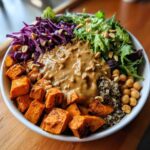
Make this flavorful and balanced Buddha bowl featuring roasted sweet potatoes, crisp vegetables, and a creamy Thai peanut sauce. It is a satisfying meal perfect for weeknight dinners or healthy meal prep.
- Prep Time: 15 min
- Cook Time: 25 min
- Total Time: 40 min
- Yield: 4 servings 1x
- Category: Dinner
- Method: Roasting and Assembly
- Cuisine: Asian Inspired
- Diet: Vegetarian
Ingredients
- 1 large sweet potato, cubed
- 1 tablespoon olive oil
- 1/2 teaspoon salt
- 1/4 teaspoon black pepper
- 1 cup dry quinoa
- 2 cups water or vegetable broth
- 1 (15-ounce) can chickpeas, rinsed and drained
- 4 cups mixed greens (spinach or kale)
- 1 cup shredded red cabbage
- 1 large carrot, julienned
- 1/2 cup chopped peanuts, for topping
- For the Thai Peanut Sauce:
- 1/2 cup creamy peanut butter
- 1/4 cup warm water
- 3 tablespoons soy sauce or tamari
- 2 tablespoons rice vinegar
- 1 tablespoon maple syrup or honey
- 1 tablespoon fresh lime juice
- 1 teaspoon grated fresh ginger
- 1 clove garlic, minced
Instructions
- Preheat your oven to 400 degrees Fahrenheit (200 degrees Celsius). Toss the cubed sweet potato with olive oil, salt, and pepper. Spread on a baking sheet and roast for 20 to 25 minutes, turning halfway, until tender and slightly caramelized.
- While the sweet potatoes roast, cook the quinoa. Combine quinoa and water or broth in a saucepan. Bring to a boil, then reduce heat to low, cover, and simmer for 15 minutes, or until all liquid is absorbed. Fluff with a fork.
- Prepare the Thai Peanut Sauce. In a small bowl, whisk together peanut butter, warm water, soy sauce, rice vinegar, maple syrup, lime juice, ginger, and garlic until smooth and creamy. Add more water, one teaspoon at a time, if you prefer a thinner consistency.
- Assemble the bowls. Divide the cooked quinoa among four bowls to form the base.
- Arrange the roasted sweet potatoes, rinsed chickpeas, mixed greens, shredded cabbage, and julienned carrots neatly over the quinoa in sections.
- Drizzle a generous amount of the Thai Peanut Sauce over all the components in each bowl.
- Sprinkle with chopped peanuts before serving.
Notes
- For a high-protein vegetarian meal, you can add 4 ounces of baked or pan-fried tofu cubes to each bowl.
- This recipe works well for easy meal prep; store the sauce separately and add it just before eating.
- If you prefer gluten free comfort food, ensure you use tamari instead of soy sauce in the dressing.
Nutrition
- Serving Size: 1 bowl
- Calories: 580
- Sugar: 14
- Sodium: 550
- Fat: 30
- Saturated Fat: 4
- Unsaturated Fat: 26
- Trans Fat: 0
- Carbohydrates: 65
- Fiber: 12
- Protein: 20
- Cholesterol: 0
