 Skip to content


If you think baking a truly decadent, gourmet dessert means spending hours wrestling with fussy techniques and endless ingredients, let me stop you right there! I’m Alex, and I used to think the same way back when I was stuck in the corporate grind. Finding joy in simple, impressive baking—like this stunning Basque cheesecake—changed everything for me. This recipe is magic because it gives you that deeply caramelized, almost black top alongside an incredibly creamy, custardy center. It’s completely crustless, which cuts out unnecessary steps. Trust me, this whole operation is way less complicated than it looks, and it’s one of the simplest baking recipes I’ve ever mastered since I started Pure Cooking Joy. You can read more about my journey finding that peace in the kitchen over on my About Page.
- Why This Basque Cheesecake Recipe is a Must-Try
- Ingredients for the Perfect Basque Cheesecake Recipe
- How to Prepare Your Burnt Basque Cheesecake
- Cooling and Chilling: Key Steps for the Best Basque Cheesecake
- Tips for Success with Your Basque Cheesecake Recipe
- Variations: Trying a Cheesecake Loaf Pan Basque Cheesecake
- Serving Suggestions for This Impressive Dessert
- Storage and Reheating Instructions for Basque Cheesecake
- Frequently Asked Questions About Basque Cheesecake
Why This Basque Cheesecake Recipe is a Must-Try
Honestly, this recipe turned my whole view on desserts upside down. Who knew something that looks so unbelievably gourmet could be this easy? This Basque cheesecake is my go-to when I need a showstopper without the stress. Forget complicated assembly; we’re keeping things rustic and quick!
- It’s a fantastic Crustless Cheesecake, saving you time and mess!
- No more fiddling with water baths! This is a true No Water Bath Cheesecake success story, all thanks to high heat.
- It falls under the simplest baking recipes category—seriously minimal monitoring is needed once it’s in the oven.
- It’s truly a decadent dessert that always gets rave reviews.
If you loved my easy lava cake recipe, you’re going to adore how simple this one is.
Achieving the Signature Caramelized Cheesecake Top
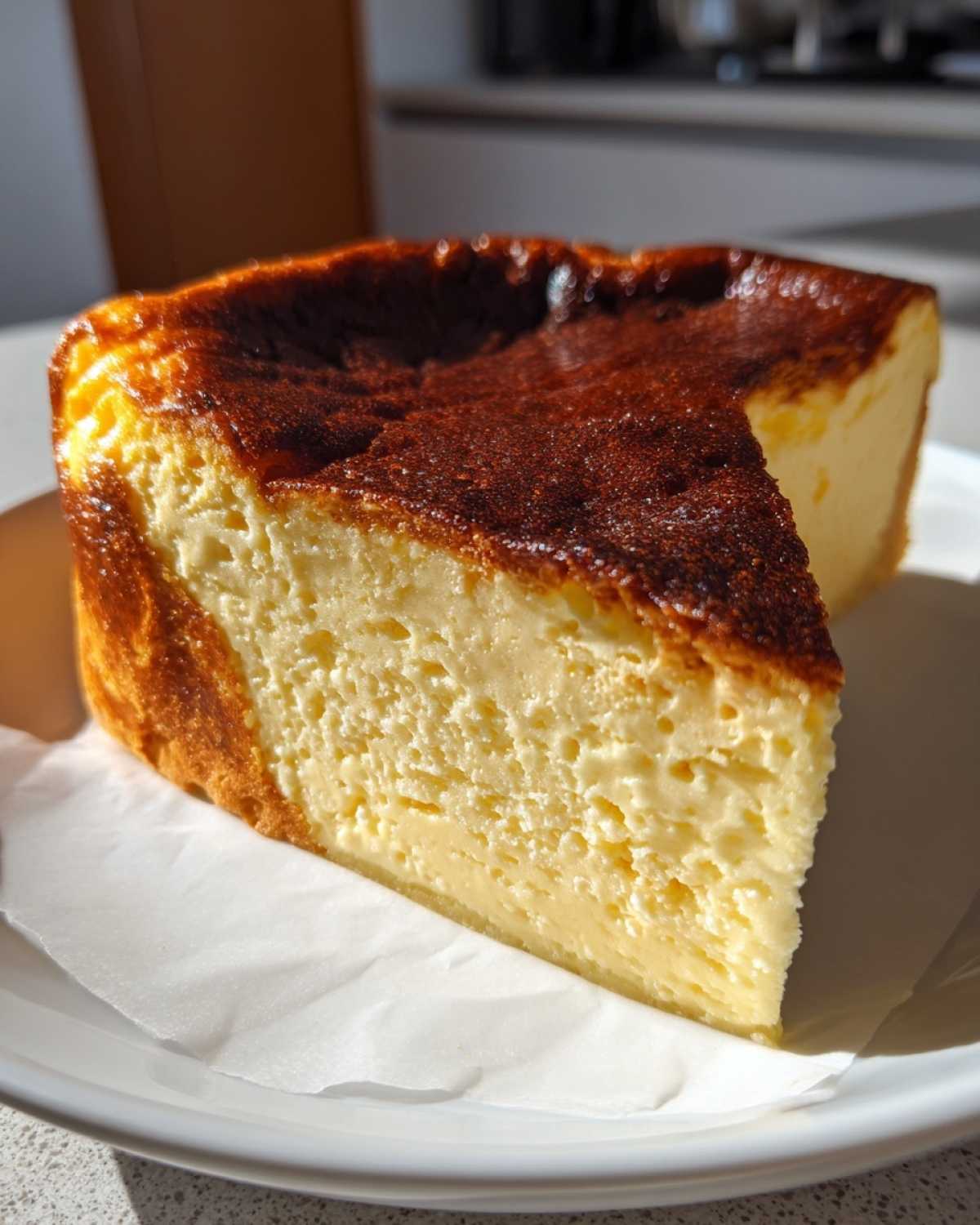
The beautiful, dark crown on this cake isn’t a mistake; it’s an intentional feature! The intense heat of the oven does all the work for you, creating that gorgeous Caramelized Cheesecake Top. You just crank up the temperature and let the magic happen. No torching required, which I always appreciate!
The Secret to a Creamy Cheesecake Texture
The best part about this San Sebastian cheesecake is that melt-in-your-mouth middle. We achieve that perfect Custardy Center Cheesecake by making sure all your dairy and eggs are perfectly softened to room temperature beforehand. When the ingredients blend smoothly, you get that incredible velvet texture once it chills.
Ingredients for the Perfect Basque Cheesecake Recipe
Only a few elements are required for this spectacular Basque cheesecake, fewer than you might expect for such a gourmet dessert! Having everything ready to go before you start mixing really helps keep the process fast and smooth. When you’re following a recipe designed to look rustic, clarity in measurement is everything for that perfect outcome.
- 900g full-fat cream cheese, softened to room temperature
- 1 1/4 cups granulated sugar
- 6 large eggs, room temperature
- 2 cups heavy cream (don’t go low-fat here!)
- 1 teaspoon vanilla extract
- 1/4 teaspoon salt
- 1/4 cup all-purpose flour (don’t skip this one!)
Check out my guide for the best chocolate chip cookie recipe for more tips on ingredient prep!
Ingredient Notes and Substitutions
Listen, the quality of your dairy matters here since it’s basically all dairy and eggs. That cream cheese absolutely has to be full-fat, not the light stuff, and leave it out for hours until it’s genuinely soft. Cold cream cheese equals lumpy batter, and we are aiming for a silky smooth experience. Same rule for the eggs—room temperature helps them incorporate without seizing up the fat.
Now, about that flour—it might seem like a tiny amount for this giant Crustless Cheesecake, but that little bit is crucial. It’s our stabilizer, helping the center achieve that lovely set structure without needing a water bath underneath a traditional cheesecake.
How to Prepare Your Burnt Basque Cheesecake
Alright, let’s get this show on the road! Making this Burnt Basque Cheesecake is all about setting up the right environment and then trusting the process. First things first: preheat your oven way up high to 400°F (200°C). I know, it seems too hot for a delicate dessert, but that high heat is exactly what gives us that signature look!
Next, grab your 9-inch springform pan. This is where we embrace the rustic charm. Take two big sheets of parchment paper and just crinkle them up a bit. Don’t smooth them out perfectly! We want those wrinkles because they create the beautiful, uneven edges we love on this rustic cheesecake. Line the pan so the paper sticks up way over the edges—this extra paper is our safety shield.

Before you even think about turning on the mixer, check your setup. If you want to see how I manage my starter for baking, I wrote a whole guide on my sourdough guide, but the principle is the same: prep fixes problems later!
Mixing the Creamy Cheesecake Batter
Take your time here, especially when mixing the cream cheese and sugar together. Beat them until they are ridiculously smooth. But listen closely once those eggs go in: add them only one at a time, mixing just until they disappear. We are trying to avoid whipping tons of air into this batter. Too much air equals a cake that puffs up and then cracks weirdly, not the dense, creamy cheesecake texture we want.
After adding the cream, vanilla, and salt, gently sift in that small amount of flour right over the top. Mix on the absolute lowest speed until you see no dry white streaks left. That’s it! Pour it into your prepared pan. If you want to connect with me on social media for quick baking tips, feel free to follow along on Facebook!
Baking for the Signature Burnt Basque Cheesecake Look
Bake this beauty for about 50 to 60 minutes. Don’t panic when the top gets dark—that’s the goal! You’re looking for a crust that’s deeply burnished, maybe even black in spots. The edges should look firm, but when you gently shake the pan, the very center should have a significant jiggle, almost like soft, thick pudding. That wobble means you’ve succeeded in making a true Custardy Center Cheesecake. If it looks totally firm, you’ve likely overbaked it slightly! Take it out immediately when you see that movement.
Cooling and Chilling: Key Steps for the Best Basque Cheesecake
Okay, you’ve pulled this gorgeous, dark-topped creation out of the oven, and I know your first instinct is probably to cut into it right away. But hang on just a second! This cooling phase is just as critical as the high-heat bake, especially for achieving that perfect final texture in your Basque cheesecake. If you rush this part, you’ll end up with a soupy mess rather than a perfectly rich slice.
The process is in two distinct stages, and you absolutely cannot skip the first one. First, leave the cheesecake right in that hot pan on a wire rack and just let it chill out on your counter for a good two hours. Why? Because while it cools slowly, that wobbly, custardy middle starts to firm up properly without shrinking too drastically. You’ll notice the edges pull away from the parchment paper a bit, and the wild jiggle will calm down to a gentle slump.

After it’s cooled completely to room temperature—and I mean truly room temp, not warm—then it’s time for the cold part. Cover it loosely with plastic wrap and tuck it into the fridge. I insist on a minimum of six hours, but if you can hold off until the next day, that’s when the real flavor deepens. I learned early on that slicing this cheesecake warm means disaster; chilling it overnight is mandatory for that dense, creamy cheesecake bite you’re looking for. It’s tough waiting, but trust me, it’s worth every second!
For more tips on getting creamy results without the stress, check out how I make my creamy egg salad—the same care with temperature applies!
Tips for Success with Your Basque Cheesecake Recipe
Whenever I make this Basque cheesecake—or as some people call it, the true San Sebastian Cheesecake—there are just a few little tricks that separate a good cake from a genuinely breathtaking one. Because this recipe is so simple, those tiny details count for everything!
First up: serving temperature. I know I told you to chill it overnight, and that’s important for setting the structure, but don’t ever cut into it straight from the fridge! When it’s ice cold, it’s dense and a bit stiffer. For that ultra-silky, almost luxurious mouthfeel—that signature creamy sensation—you absolutely have to let it sit out on the counter for at least 45 minutes before slicing. Trust me on this one; serving it cool, not cold, is a game-changer for texture.

When it comes time to unveil your masterpiece, you need a good strategy for that crinkled parchment paper. Once you’ve removed the outer springform ring, the paper wrapper will likely still be stuck firmly to the sides. I carefully slice down the sides of the paper with a serrated knife—just gently cutting where the paper meets the cheesecake—and then I peel the paper away in strips. It looks rustic, so don’t stress about making the tear marks perfect! It just adds character.
Remember, this whole dessert is about embracing imperfection. Don’t worry if the top cracks a little bit more than you saw in my photo, or if the sinking isn’t perfectly symmetrical. That’s the beauty of this no-fuss approach to baking. For more on making buttery, visually appealing treats, you should check out my recipe for tall, flaky scones!
Variations: Trying a Cheesecake Loaf Pan Basque Cheesecake
Okay, so you nailed the classic round Basque cheesecake, and now you’re thinking, “Alex, what’s next?” Or maybe you’re just baking for one or two people, and a giant 9-inch cake is just too much temptation in the fridge! That’s where the loaf pan comes in, and I promise, it’s just as easy.
For anyone wanting to try a smaller batch or just get that gorgeous rustic shape in a different format, you absolutely have to try making a Cheesecake Loaf Pan Recipe version. It’s still that same incredible, crustless, creamy dessert, but portioned perfectly for intimate gatherings or maybe just a week of amazing snacks for yourself!
The biggest thing you need to remember when switching pans is how heat penetrates the batter. A loaf pan is definitely deeper and narrower than a standard springform, so we have to adjust the cook time. Instead of your 9-inch round taking about an hour, you’ll want to pull the loaf pan version out a bit sooner.
For this swap, grab an 8.5 x 4.5 inch loaf pan. You need to line it with parchment paper just like the big one—make sure those edges stick way up! Because it’s deeper, the heat takes longer to reach the middle, so you might be looking at reducing your baking time by about 10 to 15 minutes. You’re still gunning for that deep caramelization on top and that signature gentle wobble when you shake it. Seriously, this variation is a winner if you want something easy but still looks super professional.
If you’ve enjoyed this exploration into variations, perhaps you’ll like my equally simple but flavorful pistachio coffee cake next time you feel like baking something different!
Serving Suggestions for This Impressive Dessert
We’ve made a stellar Basque cheesecake—a true showstopper that looks like it belongs in a fancy bakery window, not sitting on my kitchen counter! Because this dessert has such a dramatic caramelized color and a gloriously rustic look from the parchment paper, less is definitely more when it comes to garnishing. I find that over-decorating ruins that beautiful, simple charm that makes this cake so popular.
When I serve this gourmet dessert, my absolute favorite presentation is letting the cake shine all on its own, served right off the cooling rack or serving platter after the paper has been carefully peeled away. That deep, burnt color against the pale, creamy interior is all the decoration you need!
But if you feel like you absolutely need a tiny flourish—maybe for a birthday or a big dinner party—keep it light. A delicate dusting of powdered sugar is perfect. You can use a fine-mesh sieve to lightly shower the top. If you want a little color contrast, some incredibly vibrant fresh berries work wonders. Think just a few raspberries or maybe some thin slices of bright red strawberries placed artfully on top of the slice, not over the whole cake.
I also love pairing a slice with a tiny dollop of something tart to cut through that richness. A homemade lemon curd or a spoonful of tart cherry compote is perfect. It elevates this impressive dessert without making you do any extra baking work. For some inspiration on simple, flavorful pairings that don’t require tons of effort, you should take a look at my recipe for mango sticky rice!
Storage and Reheating Instructions for Basque Cheesecake
One of the best things about this intensely rich, decadent dessert is that it actually tastes better the next day! Dealing with leftovers from a phenomenal homemade Basque cheesecake is simple, but you do need to respect the chilling process to maintain that signature texture. Don’t worry if you find yourself with just a small wedge remaining; it keeps beautifully.
When you’re done enjoying the first round, the rule is to cover it up securely. I usually slide the remaining cake—still on its plate, or within the ring if you left it assembled—and cover it tightly with plastic wrap, making sure that wrap doesn’t stick directly to the top surface if possible. Then, straight into the refrigerator it goes. The cold helps the already set center firm up just a touch more, making those clean slices easier the next day.
Now, here is the most crucial part for enjoying your leftovers: you can’t eat it cold! I know it’s tempting when you pull that gorgeous, clean slice out of the fridge, but if it’s straight out of the cold, the texture will be too dense, almost rubbery. That melt-in-your-mouth creaminess disappears.
So, when you want to enjoy your second slice of easy cheesecake recipe heaven, plan ahead! Take the piece you want out of the fridge about 45 minutes to an hour before you plan to eat it. Letting it come back up to cool room temperature allows the fats to soften just enough, bringing back that perfect, slightly wobbly, custardy quality we worked so hard for. Seriously, if you follow these storage rules, your leftover cheesecake will taste almost as good as fresh!
For more tips on handling leftovers or prepping foods ahead of time, check out my guide on making easy homemade egg rolls—making things ahead saves so much stress!
Frequently Asked Questions About Basque Cheesecake
It’s totally normal to have questions when you’re diving into a new baking adventure, especially one that looks as dramatic as this Basque cheesecake! When I first started, I was obsessed with getting that perfect combination of charred and creamy. Here are a few things I learned through trial and error that might help you skip the guesswork. If you’re looking for even more inspiration from the kitchen, you can always browse my main blog post index!
Why is my Basque Cheesecake not burning on top?
Ah, the eternal question! If your top is looking pale instead of beautifully burnished, chances are your oven decided to be a bit lazy on you. This Caramelized Cheesecake Top demands heat—intense, direct heat! You need to make sure your oven is fully preheated to 400°F (200°C) and that your rack is positioned pretty high up, usually in the upper third of the oven. The closer the cake is to the heating element, the better that signature char develops. Don’t be afraid of the dark color; that’s when the flavor really comes out!
Can I use a different size pan for this Easy Cheesecake Recipe?
Yes, absolutely! This is a very forgiving, easy cheesecake recipe. If you use a loaf pan, as we talked about, you’ll need to reduce your baking time by about 10-15 minutes. If you try to use a larger 10-inch springform, not only will the baking time increase significantly, but the texture might change because the heat won’t penetrate evenly. The 9-inch round is the sweet spot for getting that perfect ratio of crustless top to that signature center wobble. Always use the pan size I suggest or test the center gently before pulling it out!
Is the center supposed to be completely set?
Nope! And this is where people often mistake a perfect Basque cheesecake for an underbaked one. If your center is completely firm when you take it out, you’ve baked it too long, and it will end up tasting more like a dense New York-style cake. For that true, melt-in-your-mouth experience, you are looking for a significant wobble—like soft gelatin—when you gently nudge the pan. Don’t worry, the cooling process handles the rest! That wobble turns into that perfect, soft, Custardy Center Cheesecake texture after a night in the fridge.
PrintEasy Burnt Basque Cheesecake Recipe for a Creamy Dessert

Welcome to the best Basque Cheesecake recipe. This crustless cheesecake delivers a perfectly caramelized top and an irresistibly creamy, custardy center with minimal effort. It is a simple baking recipe that always impresses.
- Prep Time: 15 min
- Cook Time: 60 min
- Total Time: 7 hours 15 min
- Yield: 10 servings 1x
- Category: Dessert
- Method: Baking
- Cuisine: Spanish
- Diet: Vegetarian
Ingredients
- 900g full-fat cream cheese, softened to room temperature
- 1 1/4 cups granulated sugar
- 6 large eggs, room temperature
- 2 cups heavy cream
- 1 teaspoon vanilla extract
- 1/4 teaspoon salt
- 1/4 cup all-purpose flour
Instructions
- Preheat your oven to 400°F (200°C). Take out a 9-inch springform pan. Line the pan with two large sheets of parchment paper, letting the paper overhang significantly on all sides to create a rustic look.
- In a large bowl, use an electric mixer to beat the softened cream cheese until it is completely smooth and has no lumps. This step is important for a creamy texture.
- Gradually add the sugar to the cream cheese mixture, beating until well combined and creamy. Scrape down the sides of the bowl as needed.
- Add the eggs one at a time, mixing just until each egg is incorporated before adding the next. Do not overmix the batter once the eggs are added.
- Gently mix in the heavy cream, vanilla extract, and salt until just combined.
- Sift the flour over the batter and mix on low speed until no streaks of flour remain. The batter will be thin; this is correct for a custardy center.
- Pour the batter into the prepared springform pan.
- Bake for 50 to 60 minutes. The top should be deeply caramelized, almost black in spots, and the edges should look set. The center should still have a significant wobble, like soft gelatin. This is the secret to a custardy center cheesecake.
- Remove the cheesecake from the oven. Let it cool completely on a wire rack at room temperature for about 2 hours. The center will sink as it cools.
- Once cool, cover the pan loosely with plastic wrap and chill in the refrigerator for at least 6 hours, or preferably overnight, for the best flavor and texture.
- When ready to serve, carefully remove the outer ring of the springform pan and peel away the parchment paper. Serve this rustic cheesecake at room temperature for the softest texture.
Notes
- For a loaf pan basque cheesecake, use an 8.5 x 4.5 inch loaf pan lined with parchment paper and reduce the baking time by about 10-15 minutes.
- Do not use a water bath; this recipe relies on high heat for the signature burnt top.
- Serving this cheesecake at room temperature enhances its creamy, decadent dessert quality.
Nutrition
- Serving Size: 1 slice
- Calories: 450
- Sugar: 35g
- Sodium: 250mg
- Fat: 35g
- Saturated Fat: 22g
- Unsaturated Fat: 13g
- Trans Fat: 0g
- Carbohydrates: 28g
- Fiber: 0g
- Protein: 8g
- Cholesterol: 180mg
