 Skip to content


If you are looking for that dessert that just melts in your mouth, the one that screams simple elegance, then you’ve found your holy grail. For the longest time, I thought custards were fussy—you know, the kind of delicate dish that required a culinary degree and perfect oven timing. But let me tell you, mastering this vanilla baked custard changed everything for me. It turned my whole perspective around on what a truly satisfying dessert could be. We’re talking about achieving that dream texture: perfectly set, incredibly smooth, and deeply flavored with real vanilla. Forget the complicated fluff; this is the ultimate, foolproof way to get a silky texture every single time you bake. It’s pure cooking joy, bottled up in a dish!
- Why This is Your Go-To Classic Baked Custard Recipe
- Simple Baked Custard Ingredients for Perfect Vanilla Baked Custard
- Mastering the Water Bath Baking for Custards: How to Prepare
- Step-by-Step Instructions for Your Vanilla Baked Custard
- Tips for Success with Your Smooth Vanilla Dessert Recipe
- Make Ahead Baked Dessert: Storage and Reheating for Vanilla Baked Custard
- Serving Suggestions for Perfect Vanilla Baked Custard
- Frequently Asked Questions about Vanilla Baked Custard
- Nutritional Estimate for This Traditional Oven Baked Sweet
Why This is Your Go-To Classic Baked Custard Recipe
I know you want a dessert that delivers every single time, and that’s exactly what this Classic baked custard recipe provides. It’s designed to skip past all the drama that usually comes with egg-based puddings. My goal is always to give you the most reliable results, and this method is my absolute favorite for ensuring that beautiful, silky finish.
- No scorching, no scrambling! The water bath technique keeps things gentle.
- The balance of milk and cream guarantees a rich, non-too-sweet flavor profile.
- This yields the Perfect creamy baked dessert without any weird weeping or curdling.
Honestly, if you follow the ratios here, you’re set. Check out more about my approach to simple, reliable cooking over at my About page!
Simple Baked Custard Ingredients for Perfect Vanilla Baked Custard
Look at this list—it’s proof that incredible things come from simple ingredients! We’re not messing around with flour or thickeners here; this is pure, simple baked custard magic built around eggs and dairy. You’ll need four large whole eggs plus two extra yolks, which really bumps up that richness we’re aiming for.
Make sure you grab 1/2 cup of sugar and just a tiny pinch of salt to balance everything out. For the liquid, it’s two cups of whole milk and one cup of heavy cream. My biggest tip for this recipe? Use a full tablespoon of *pure* vanilla extract. Anything processed just won’t give you that deep, true flavor this vanilla baked custard deserves!

Mastering the Water Bath Baking for Custards: How to Prepare
Okay, this step is non-negotiable, and I mean it! If you want that truly flawless, silky vanilla baked custard—the kind that doesn’t look like scrambled sidewalk cement—you have to use a water bath. This technique, often called water bath baking for custards, is your insurance policy against dry edges and curdled centers. It basically surrounds your custard dishes with gentle, steamy heat instead of blasting them directly, allowing everything to set evenly.
I remember my first few attempts before I respected the bath; I ended up with grainy desserts every time! Now, I set up my roasting pan first, placing my baking dish or ramekins inside, and then I pour in *hot* water—and I mean hot, almost boiling—until it comes halfway up the sides of the custard dishes. It feels fussy, but trust me, it’s how we get that signature smooth texture for any perfect creamy baked dessert.
Tempering Eggs for Smooth Vanilla Baked Custard
The next critical move happens before the oven even sees your custard. We have to gently wake up those eggs, which we call tempering. While you’re whisking your sugar and egg mixture (remember, don’t whip too much air in!), you slowly pour in that warm milk and cream mixture. I mean a slow, steady stream! You must whisk continuously throughout this process. If you dump it all in at once, you’ll end up with threads of cooked egg in your beautiful vanilla baked custard. This slow introduction brings the eggs up to temperature without shocking them. If you want to see some of my other technique tricks, pop over to my latest blog posts!
Step-by-Step Instructions for Your Vanilla Baked Custard
Now that we have our ingredients ready and that essential water bath set up, it’s time to bring it all together. Remember how I said straining is key to a smooth texture? Don’t skip that step! Once you’ve whisked your warm milk into your eggs (slowly, slowly!), pour that entire mixture through a fine-mesh sieve. This gets rid of those tiny proteins that could make your custard feel grainy later on.
Next, pour the strained mixture evenly into your baking dishes that are snug inside that roasting pan full of hot water. We are aiming for gentle cooking, which is why we keep that water bath going the whole time. This technique is the real secret behind any great recipe for how to make baked egg custard that sets just right.
Baking Time and Achieving Firm yet Creamy Baked Custard
Get your oven preheated to 325 degrees Fahrenheit. We aren’t cooking this hot and fast; we are coaxing it into perfection! Pop the whole setup in and plan for about 45 to 60 minutes. How do you know when it’s done? This is where the magic happens for that firm yet creamy baked custard result. You want the edges to look set—not wet—but when you give the whole pan a little nudge, the very center should still have a delightful, soft jiggle, like gelatin.

If you insert a thin knife about an inch in from the edge, it should come out mostly clean. Don’t wait until the center is totally firm, though; residual heat will finish cooking it outside the oven. That little bit of jiggle is what guarantees that creamy center we all crave in a perfect vanilla baked custard.
Tips for Success with Your Smooth Vanilla Dessert Recipe
Darlings, getting that perfect, Smooth vanilla dessert recipe result isn’t just about the mixing; it’s about what you do *after* it comes out of the oven. My number one rule to prevent weeping—that annoying puddle of watery liquid on top—is simple: do NOT overbake it! Remember that center jiggle we talked about? Trust that jiggle! If you bake it until it’s totally firm in the center, it’ll be jiggly-less and likely weep later on.

Once they’re out of the water bath, be careful and move them immediately to a wire rack to cool down to room temperature. They need that breathing room. Then, and this is the hardest part, you must chill them thoroughly. Four hours is the bare minimum, but honestly, overnight in the fridge lets those flavors really settle in and achieve peak creaminess. If you’re looking for time-saving shortcuts for other dishes, I share some great ideas over on my Weeknight Dinners page!
Make Ahead Baked Dessert: Storage and Reheating for Vanilla Baked Custard
One of the biggest joys of making this sweet treat is that it’s the ultimate Make ahead baked dessert. Seriously, you can breathe easy knowing dinner party prep is mostly done a day early! Once completely cooled, cover your baked custards tightly with plastic wrap—or just pop a lid on those individual ramekins if you have them—and slide them into the fridge. I really stress chilling them overnight; that’s when the texture truly stabilizes into that perfect, dense silkiness.
When serving time rolls around, you have options! Most people love this chilled straight from the fridge, but if you’re keen on Serving baked custard warm, gently set the ramekins in a shallow pan of warm water for just a few minutes to take the chill off the edge. It tastes divine either way. For more great make-ahead ideas that simplify your entertaining, take a look at my Comfort Food Favorites section!
Serving Suggestions for Perfect Vanilla Baked Custard
This vanilla baked custard is a showstopper all on its own, but just a tiny extra touch can elevate it beautifully for your next gathering. Don’t worry, we aren’t covering up the flavor; we are just adding a little sparkle! My absolute favorite finishing move, as noted in the recipe, is just a whisper of freshly grated nutmeg right before it hits the table. The aroma is just incredible!

For something a bit more elegant, fresh raspberries or halved strawberries add the perfect pop of color and brightness against the pale yellow dessert. If you are feeling indulgent—and why not when cooking for joy?—a thin drizzle of good quality caramel sauce is divine. It plays so nicely with the humble sugar in the custard base. You can find more ways to impress without stress on my Easy Entertaining page! And hey, if you make this, tag me! I love seeing your creations over on Facebook.
Frequently Asked Questions about Vanilla Baked Custard
I get so many wonderful emails asking about adjustments, and that’s great! Baking this vanilla baked custard is all about nailing that texture, so I threw together answers to the questions I hear most often. If you still have burning custard questions after this, pop over and check out some tips on soups and salads—just kidding! Ask away below!
Can I make this vanilla baked custard recipe without a water bath?
Oh, I really, really wouldn’t recommend it if you’re chasing that perfect texture. You *can* technically bake this without the water bath, sure, but you’re rolling the dice big time. Without that gentle heat shield, the edges cook way faster than the middle, and you usually end up with a grainy or curdled situation. That ruins the dream of achieving the firm yet creamy baked custard we worked so hard for! The water bath is just too important for keeping things even.
What is the best way to tell when my baked egg custard is done?
This is the make-or-break moment! Forget setting a timer and walking away; you have to watch it. The moment you see the edges look firm—like they’ve pulled away just a hair from the dish—it’s almost done. Then, give the whole pan the gentlest nudge you can manage. If the center still wobbles like Jell-O, you’re there! Remember, the residual heat will keep cooking it once it’s out of the oven. That slight jiggle is the best indicator for a beautiful how to make baked egg custard!
Can I use half-and-half instead of milk/cream?
You can try, but it’s going to change the richness significantly. This recipe calls for two sweet cups of whole milk and one cup of heavy cream because that high-fat content keeps the final product luxurious and helps prevent leaks later. If you swap that cream out for just half-and-half, your final texture will likely be much more delicate and prone to shrinking or weeping. For the best flavor in this smooth vanilla dessert recipe, stick to the whole milk and heavy cream combo!
Is this recipe too sweet?
I actually find most store-bought desserts way too sweet, so I specifically built this recipe to be modestly sweet. The 1/2 cup of sugar is just enough to balance the richness of the eggs and dairy, letting that vanilla shine through. If you like something less sweet, just reduce the sugar by one tablespoon next time. It’s much easier to add sweetness later with a topping than to try and fix a custard that’s too sweet!
Nutritional Estimate for This Traditional Oven Baked Sweet
Okay, friends, while my focus is always on delivering pure joy and flavor, I know some of you are curious about the numbers behind this delicious vanilla baked custard. I ran the numbers based on the ingredients we used—the eggs, the whole milk, and the cream—to give you a general idea of what you’re serving up.
Remember, this is just an estimate based on the standard components. Every brand varies a little bit, so please take these figures as a helpful guide rather than gospel! This recipe is certainly best enjoyed when paired with a lovely glass of wine or maybe some light fruit—honestly, it’s wonderful with anything!
Here is the breakdown:
- Serving Size: 1 serving
- Calories: 245
- Sugar: 18g
- Sodium: 110mg
- Fat: 15g
- Saturated Fat: 9g
- Carbohydrates: 18g
- Protein: 10g
If you are looking for some lighter appetizers to serve before this rich dessert, I’ve got a few easy ideas over on my Appetizers & Snacks page. But honestly, for this traditional oven baked sweet, I think worrying about the calories is missing the point. It’s meant to be a perfect moment of simple comfort!
PrintClassic Baked Vanilla Custard Recipe
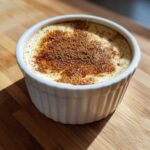
Make a smooth, creamy baked vanilla custard using a simple water bath technique. This recipe focuses on achieving a perfect, tender set for a traditional dessert.
- Prep Time: 15 min
- Cook Time: 55 min
- Total Time: 70 min
- Yield: 6 servings 1x
- Category: Dessert
- Method: Baking
- Cuisine: American
- Diet: Vegetarian
Ingredients
- 4 large whole eggs
- 2 large egg yolks
- 1/2 cup granulated sugar
- 1/4 teaspoon salt
- 2 cups whole milk
- 1 cup heavy cream
- 1 tablespoon pure vanilla extract
- Pinch of freshly grated nutmeg for topping (optional)
Instructions
- Preheat your oven to 325 degrees Fahrenheit. Place a 1.5-quart baking dish or several 6-ounce ramekins inside a larger roasting pan.
- In a medium bowl, whisk together the whole eggs, egg yolks, sugar, and salt until the mixture is just combined and the sugar begins to dissolve. Do not over-whisk to avoid incorporating too much air.
- In a saucepan, gently heat the whole milk and heavy cream over medium heat until small bubbles form around the edges. Do not let it boil. Remove from heat.
- Slowly pour the warm milk mixture into the egg mixture while continuously whisking. This slow addition tempers the eggs, preventing scrambling.
- Stir in the vanilla extract.
- Strain the custard mixture through a fine-mesh sieve into a large measuring cup or bowl to remove any chalazae or unmixed bits, which helps create a smoother texture.
- Pour the strained custard evenly into the prepared baking dish or ramekins.
- Carefully pour hot water into the roasting pan, surrounding the custard dish(es), until the water reaches halfway up the sides of the custard containers. This water bath is essential for even baking.
- Bake for 45 to 60 minutes. The custard is done when the edges are set but the center still jiggles slightly when gently nudged. A knife inserted near the edge should come out mostly clean.
- Carefully remove the custard from the water bath using tongs or by sliding the pan onto a heat-safe surface. Let it cool on a wire rack to room temperature.
- Chill the baked custard in the refrigerator for at least 4 hours, or preferably overnight, before serving. Sprinkle with nutmeg just before serving if desired.
Notes
- For the best texture, do not skip the water bath (Bain-Marie); it regulates the oven temperature around the custard.
- If you prefer a richer custard, substitute half of the whole milk with additional heavy cream.
- To test for doneness without a jiggle test, insert a thin knife about one inch from the edge; if it comes out clean, it is set.
- This simple baked custard recipe is excellent served chilled, or you can gently warm individual portions before serving.
Nutrition
- Serving Size: 1 serving
- Calories: 245
- Sugar: 18
- Sodium: 110
- Fat: 15
- Saturated Fat: 9
- Unsaturated Fat: 6
- Trans Fat: 0.5
- Carbohydrates: 18
- Fiber: 0
- Protein: 10
- Cholesterol: 180
