 Skip to content


Oh, I know that feeling! Sometimes you get that intense craving for real, fiery takeout flavor, but you just cannot face calling the delivery place or waiting an hour. I totally get it! That’s why I’m so excited to share what I consider the absolute best solution for those moments: my recipe for Authentic Street Style Thai Drunken Noodles (Pad Kee Mao) in Under 30 Minutes. Seriously, who said incredible Thai Drunken Noodles have to take all evening?
When I was deep in that corporate burnout phase, finding joy in food meant making something huge on flavor but tiny on time commitment. This recipe is pure evidence that you can create that signature smoky, spicy kick of true street food right on your stovetop before the takeout menus even arrive. Trust me, this one is going straight into your rotation for your next effortless weeknight dinner.

- Why This Authentic Street Style Thai Drunken Noodles Recipe Works (E-E-A-T)
- Essential Ingredients for Flavorful Thai Drunken Noodles
- Step-by-Step Instructions: How to Make Thai Drunken Noodles
- Tips for Perfect Street Style Asian Noodles at Home
- Ingredient Notes and Vegetarian Pad Kee Mao Option
- Storage and Reheating Instructions for Leftover Thai Drunken Noodles
- Serving Suggestions for This Savory Spicy Noodle Dish
- Frequently Asked Questions About Making Thai Drunken Noodles
- Nutritional Estimate for Homemade Thai Drunken Noodles
- Share Your Best Thai Drunken Noodles Experience
Why This Authentic Street Style Thai Drunken Noodles Recipe Works (E-E-A-T)
I know there are a million noodle recipes out there, but this Thai Drunken Noodles recipe isn’t just about throwing things in a pan. It’s about technique! I’ve worked hard to nail the method so you get that true, bold street food experience without waiting forever. It’s all about balancing that intense heat with savory depth.
Here’s why I think this version brings the magic:
- We get genuine flavor depth from specific sauces, especially that dark sweet soy sauce you won’t want to skip.
- Everything is designed to move fast—we’re talking cook time under 20 minutes once everything is prepped.
- High heat is our secret weapon for simulating that fast, smoky action you get from a professional outdoor wok setup.
Achieving True Smoky Flavor in Your Thai Drunken Noodles
The absolute key to making these noodles taste authentic is getting that little bit of char. Don’t be shy with the heat! The Smoky Thai noodles technique involves pushing your cooked protein and veggies to the side of the wok, getting the bare metal scorching hot, and then dropping the noodles right onto it for 30 seconds. That slight crispness and smoky bitterness separates the takeout version from the sad versions made in wimpy pans.
The 30 Minute Promise for Easy Thai Weeknight Dinner Success
I built this recipe specifically for those nights when hunger strikes hard and fast! If you have your sauce mixed and your ingredients ready to go, you absolutely nail the “Under 30 Minutes” promise. This makes Pad Kee Mao the perfect Easy Thai weeknight dinner because it comes together faster than most frozen meals, but tastes gourmet.
Essential Ingredients for Flavorful Thai Drunken Noodles
Okay, friend, this is where the magic starts! For truly killer Thai Drunken Noodles recipe, you have to respect the ingredients. Seriously, don’t try to substitute everything; some elements are non-negotiable if you want that authentic restaurant punch. The list looks long, but honestly, most of the work is just chopping and whisking!
You’ll need a pound of those gorgeous wide rice noodles. Whether you use fresh or dried, getting them chewy but not mushy is the foundation of a great Thai wide rice noodles recipe. You also need your fresh elements: garlic minced fine, those fiery Thai chilies sliced, onions, and bell peppers.
Sauce Components for Authentic Thai Drunken Noodles
The sauce is pure liquid gold. We need that deep savory flavor that comes from using the right combination. You absolutely need oyster sauce for body and umami, and regular soy sauce is a given. But the secret weapon here is the dark sweet soy sauce—it gives the dish that beautiful, rich mahogany color and a touch of necessary molasses sweetness.
Don’t forget the fish sauce! It’s pungent, yes, but it adds that irreplaceable salty, funky depth that ties the whole dish together. A little sugar balances the salt and spice, and white pepper gives it a clean finish.
Protein Options for Your Pad Kee Mao Tutorial
For this Pad Kee Mao tutorial, you get to choose your adventure! Chicken breast or sirloin slices work wonderfully because they sear up nicely and cook fast over high heat. Shrimp is fantastic if you want something a little lighter. If you’re going vegetarian, firm or extra-firm tofu is your best friend.
If you go with tofu (or even mushrooms if you prefer!), make sure you press that water out first. Soggy tofu means sad noodles, and we are not having that here! A quick sear gets the outside slightly firm before we toss it all back in.
Step-by-Step Instructions: How to Make Thai Drunken Noodles
This part is fast, so trust the process! When learning how to make Pad Kee Mao, the key isn’t complicated measuring; it’s being ready when your heat is high. This is stir-fry, which means everything goes quickly, one step right after the other. Get your cutting board cleared and your ingredients staged because once the wok is hot, we’re moving!
Noodle Preparation and Sauce Assembly for Thai Drunken Noodles
First things first: the noodles! If you are using dried wide rice noodles, you’re soaking them in hot tap water until they are flexible but still firm. Think ‘pliable’—not soft! If they go too far in the water, they turn into mush when you stir-fry them, and that is a cardinal sin in noodle making. Drain them fast and toss them with just a drop of oil so they don’t become one giant, sticky clump while the wok heats up.
While those soak, whisk up your sauce mixture in a small bowl. This is Step 2, and you want it ready to go. Oyster sauce, both soy sauces, fish sauce, sugar, and pepper—whisk away! Having this complex sauce ready to pour in one shot saves so much stress later.
Wok Cooking Noodles Spicy: Building the Flavor Base
Now, for the heat! Crank your wok up until it almost smokes. Seriously, we need high heat for that authentic restaurant texture. Add your oil, drop in your protein, and leave it alone for a solid minute to get a nice sear—that’s the start of our smoky profile. Cook that through and scoop it out.
Next, garlic and chilies go in for maybe 15 seconds—watch them closely, we want fragrant, not burnt bitterness! Toss in your onions and peppers for just a minute or two. Then comes the cool part: push everything to the sides and dump those noodles right onto the exposed hot metal surface. Let them sizzle there for about 30 seconds without touching them to get that true char—that’s the Wok cooking noodles spicy secret! Now, toss everything back together, pour that prepared sauce over the top, and stir aggressively for about a minute until everything is deeply coated. Right before you kill the heat, slam in the basil and stir just until it wilts. That’s it!

If you want a deeper dive into high-heat Asian cooking, I cover some great basics in my easy garlic noodles recipe, too, which relies on a similar principle. If you want the full, traditional take on this dish, check out this guide on authentic Pad Kee Mao technique.
Tips for Perfect Street Style Asian Noodles at Home
Getting that fantastic takeout vibe, especially with Street style Asian noodles, is all about respecting the ingredients’ timing. You’ll notice in the instructions that we turn the heat off *before* adding the basil. This is critical!
If you cook basil too long, especially the peppery Thai holy basil, it turns black and bitter instead of staying vibrant and fragrant. We want it barely wilted, providing that aroma right as you serve it. That little aromatic burst makes such a difference!
Also, quick-cooking vegetables like bell peppers and onions should only see the heat for a minute or two. They should still have a satisfying crunch, not be totally soft. This textural contrast—tender noodles, seared protein, and crisp veggies—is what makes authentic street food so addictive. Want more general stir-fry inspiration? I keep sharing ideas over on my blog! And if you need more street food inspiration, this guide on irresistible street style Thai drunken noodles recipe has some other great vibes.
Ingredient Notes and Vegetarian Pad Kee Mao Option
Let’s talk about sourcing, because sometimes getting specialty Asian ingredients can feel like a scavenger hunt! For the best experience making this Thai Drunken Noodles recipe, the basil choice really matters. If you can find Thai holy basil, grab it! It has this wonderful, slightly peppery or anise-like flavor that separates truly authentic Pad Kee Mao from the usual sweet basil blends.
But don’t panic if your local market is out. Sweet basil is a perfectly fine substitute—just know you might miss that unique spice note. My advice? Use what you can get easily, but if you’re aiming for total authenticity, track down the holy basil!
The Importance of Dark Sweet Soy Sauce
I mentioned this in our ingredient list, but seriously, don’t swap dark sweet soy sauce for regular soy sauce. Regular soy sauce only gives you saltiness. The dark sweet kind has molasses in it, which is what gives our noodles that beautiful deep brown, slightly sticky glaze! If you skip it, your noodles will look pale and won’t have that rich, sweet-savory balance that makes them irresistible.
Making the Vegetarian Pad Kee Mao Option Work
This dish is incredibly flexible, which is why I love it so much. If you are skipping meat or seafood, you are in luck because the robust sauce holds up amazingly well to vegetables and tofu. Creating a delicious Vegetarian Pad Kee Mao option is super simple.
When you swap out oyster sauce (which is fish-based), grab a bottle of mushroom sauce or vegetarian stir-fry sauce instead. This gives you that necessary umami depth without any animal products. Pair that swap with firm tofu—make sure you press out as much water as you can before you sear it! Pressing or even freezing and thawing the tofu first helps it absorb the sauce better when you toss everything together.
Storage and Reheating Instructions for Leftover Thai Drunken Noodles
Now, I have to be honest with you: like most stir-fries, these Thai Drunken Noodles are absolutely, one hundred percent best eaten right out of the wok when they are scorching hot and the noodles still have that hint of smoky char. They are built for immediate satisfaction!
That said, leftovers happen, and we need a plan to treat them with respect. Don’t just cram the container in the fridge and hope for the best. The noodles—especially wide rice noodles—will absorb a ton of moisture as they cool, making them clump up into one giant, slightly sticky block.
Here’s how I handle the situation:
- Storage: Store them in an airtight container, but try not to pile the noodles too high. If you mixed veggies and protein separately, keep them separate! Sticking is less likely that way. They’ll be good for about two days, tops.
- Reheating Trick: Forget the microwave if you can. The microwave just steams the noodles and makes them gummy. If you must use it, add just a tablespoon of water or chicken broth to the container before zapping it for 30 seconds, then toss aggressively.
- The Wonton of Real Flavor: If you have 5 extra minutes, use a clean skillet over medium heat. Toss the leftovers in the dry pan first to let some of that moisture evaporate, then add a tiny splash of soy sauce or water and stir until they loosen up. This brings back much of that original texture!
Serving Suggestions for This Savory Spicy Noodle Dish
You’ve done the work, you’ve mastered the char, and now you have this gorgeous, fiery plate of Savory spicy noodle dish sitting in front of you. Amazing! But like any truly bold food, it helps to have a few cool, fresh things on the side to balance out that incredible heat and richness.
Seriously, don’t skip the finishing touches. These little additions take the meal from “great stir-fry” to “restaurant-quality experience.”
- A Big Squeeze of Lime: This is non-negotiable! Right before you take your first bite, cut up a lime into wedges and serve them alongside the bowl. A fresh hit of lime juice brightens up all those rich, savory sauce components. It cuts through the oiliness and just makes the whole dish pop.
- Cool Cucumber Slices: If you made something this spicy, you need something cold to dip into or eat between bites to give your mouth a little rest. Simple, crunchy cucumber slices dressed with just a tiny drizzle of rice vinegar are all you need. They provide temperature contrast and cleanup the palate magically.
- Light, Brothy Soup: If you’re making this for a big family meal, sometimes you want something heartier but less intense on the palate. A very light, clear broth is perfect. Think a simple vegetable broth with some soft tofu cubes and maybe a swirl of sesame oil. I share a few of my favorite lighter options over on my soups and salads page that pair beautifully without stealing the show from the noodles.

Frequently Asked Questions About Making Thai Drunken Noodles
We’ve covered the core recipe, but I know when you’re trying a new, bold dish like this, you’ve got lingering questions. That’s okay! Getting true restaurant flavor at home often comes down to nailing those small technique points. Here are a few things people ask me all the time about nailing their Thai Drunken Noodles recipe.
Can I use dried noodles instead of fresh for these Thai Drunken Noodles recipe?
Absolutely, yes! While fresh noodles give you that super pillowy bite, dried wide rice noodles work perfectly well for your batch of Thai Drunken Noodles. The trick, which I covered in the steps, is soaking them in hot tap water—not boiling water—until they are pliable. You want them flexible but still firm to the bite. If you boil them, they will overcook instantly when they hit that screaming hot wok!
What is the best protein for Authentic drunken noodles at home?
In my experience making Authentic drunken noodles at home, the best proteins are the ones that cook fast and sear well at high temperatures. Chicken breast, sliced thin against the grain, is probably the most common and reliable choice. Shrimp is wonderful, too, but you have to be careful not to overcook it, or it gets rubbery! If you’re going for beef, thin slices of flank or sirloin work best.
My noodles stuck together; how do I prevent this in my Quick Thai stir fry noodles?
Oh, that happens to the best of us! You walk away for one second and suddenly your Quick Thai stir fry noodles are one giant sticky block. This usually means two things: either you didn’t soak the dried noodles long enough, or you didn’t toss them with oil immediately after draining. Right after they come out of the hot water, toss them gently with about a teaspoon of neutral oil. Then, make sure your wok is ripping hot when you throw them in for that char—high heat keeps things moving and prevents sticking!
Nutritional Estimate for Homemade Thai Drunken Noodles
I always like to give a little peek behind the curtain when it comes to the numbers. Now, remember, this is just an estimate! When you are making incredible food like this, especially when we’re playing around with different proteins—shrimp versus tofu versus beef—and how much oil we use in that high-heat sear, the final count is going to shift. But this gives you a great baseline for planning your Flavorful noodle dinner ideas.
Based on a serving size using chicken breast as the protein, here is what we are generally looking at for one serving of these amazing noodles:
- Serving Size: 1 serving
- Calories: 550
- Sugar: 8g
- Sodium: 1100mg (I know, it’s flavorful, so sodium is higher!)
- Fat: 12g
- Saturated Fat: 2g
- Unsaturated Fat: 10g
- Trans Fat: 0g
- Carbohydrates: 85g
- Fiber: 4g
- Protein: 30g
- Cholesterol: 50mg
If you swap to tofu, you’ll see the saturated fat and cholesterol drop significantly, which is great for making this a true Easy Asian noodle stir fry option any night you choose. If you are tracking macros, keep an eye on that sodium number; it comes from the soy and fish sauces, so you can lightly adjust those if needed, though it impacts the authentic flavor a bit!
Just a quick note as I always include: you can find my full policy on how I handle nutrition estimates and disclaimers over on my disclosure policy page. We aim for transparency here at Pure Cooking Joy!
Share Your Best Thai Drunken Noodles Experience
Whew! You made it! You conquered the high heat, tamed the chilies, and now you have incredible, legitimately spicy, homemade Thai takeout noodles sitting right in front of you. That deserves some fanfare!
I truly hope this recipe becomes your go-to when you need massive flavor in a short amount of time. When you try these spicy noodles, I would absolutely love to see what you cooked up! Did you stick to mild chicken, or did you go full throttle with five bird’s eye chilies?
Please, don’t be shy! Head down to the comments below and let me know two things. First, please leave a star rating so others know how much you loved this Best Drunken Noodles recipe. Second, tell me what protein you used! Was it shrimp? Tofu? I read every single comment because I love seeing your kitchen successes!

If you snapped a photo of your finished, steaming bowl of Pad Kee Mao, the best way to share it with me and the rest of our Pure Cooking Joy family is over on Facebook. You can connect with me directly right here: find Alex Hayes and Pure Cooking Joy on Facebook. Tag us in your photos—seeing your efforts and hearing about how much joy this quick stir fry brought to your table makes all the recipe testing worth it!
Happy cooking, and I can’t wait to hear what you thought of this flavor blast!
PrintAuthentic Street Style Thai Drunken Noodles (Pad Kee Mao) in Under 30 Minutes
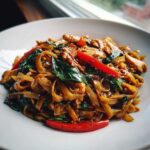
You can make authentic, spicy Thai Drunken Noodles (Pad Kee Mao) at home quickly. This recipe delivers the bold, savory, and smoky flavor of street food using wide rice noodles and fresh basil, perfect for a fast weeknight dinner.
- Prep Time: 10 min
- Cook Time: 15 min
- Total Time: 25 min
- Yield: 4 servings 1x
- Category: Dinner
- Method: Stir-Frying
- Cuisine: Thai
- Diet: Vegetarian
Ingredients
- 1 pound wide rice noodles (fresh or dried)
- 1 tablespoon neutral oil
- 8 ounces protein (sliced chicken breast, beef sirloin, shrimp, or firm tofu)
- 4 cloves garlic, minced
- 1–2 Thai bird’s eye chilies, thinly sliced (adjust for heat)
- 1/2 cup sliced onion
- 1 red bell pepper, sliced
- 1 cup baby corn or other quick-cooking vegetables
- 1 cup Thai holy basil leaves (or sweet basil if holy basil is unavailable)
- For the Sauce:
- 3 tablespoons oyster sauce
- 2 tablespoons soy sauce (or tamari for gluten-free)
- 1 tablespoon dark sweet soy sauce (for color and richness)
- 1 teaspoon fish sauce
- 1 teaspoon sugar
- 1/2 teaspoon ground white pepper
Instructions
- Prepare the noodles: If using dried wide rice noodles, soak them in hot tap water according to package directions until pliable but still slightly firm (al dente). Drain immediately and toss with a tiny bit of oil to prevent sticking. If using fresh noodles, separate them gently.
- Mix the sauce: In a small bowl, whisk together the oyster sauce, soy sauce, dark sweet soy sauce, fish sauce, sugar, and white pepper. Set aside.
- Cook the protein: Heat a wok or large skillet over high heat until it just starts to smoke. Add the oil. Add your chosen protein (chicken, beef, shrimp, or tofu) and spread it in a single layer. Let it sear for 1 minute without moving to develop a slight char. Stir-fry until cooked through, about 2-3 minutes. Remove the protein from the wok and set it aside.
- Aromatics and Vegetables: Add a little more oil if the wok is dry. Add the minced garlic and sliced chilies. Stir-fry quickly for about 15 seconds until fragrant. Do not burn the garlic. Add the onion, bell pepper, and baby corn. Stir-fry for 1-2 minutes until the vegetables begin to soften slightly.
- Achieve the smoky char: Push the vegetables to one side of the wok. Add the drained noodles directly to the hot, empty side of the wok. Let them sit for 30 seconds to develop a slight char, which adds the smoky flavor characteristic of street style Pad Kee Mao.
- Combine and Sauce: Return the cooked protein to the wok. Pour the prepared sauce mixture evenly over the noodles and vegetables. Toss everything together vigorously using tongs or two spatulas for about 1 minute, ensuring the noodles are evenly coated and the dark soy sauce colors everything deeply.
- Finish with Basil: Turn off the heat. Immediately toss in the Thai basil leaves. Stir just until the basil wilts, which should take about 15-20 seconds. This keeps the basil fragrant.
- Serve immediately to enjoy the best texture and heat.
Notes
- To get the best smoky char, use a wok or a very large, heavy skillet and ensure it is ripping hot before adding the noodles directly to the metal surface.
- For a vegetarian option, substitute the oyster sauce with vegetarian mushroom sauce and use tofu as your protein.
- If you cannot find Thai holy basil, use sweet basil, but know that holy basil provides a distinct, slightly peppery anise flavor crucial to authentic Pad Kee Mao.
Nutrition
- Serving Size: 1 serving
- Calories: 550
- Sugar: 8
- Sodium: 1100
- Fat: 12
- Saturated Fat: 2
- Unsaturated Fat: 10
- Trans Fat: 0
- Carbohydrates: 85
- Fiber: 4
- Protein: 30
- Cholesterol: 50
