 Skip to content


If you think truly decadent desserts require endless fuss, complicated steps, and tiny little water baths, I’m here to show you exactly how wrong you are! Welcome to Pure Cooking Joy. I’m Alex Hayes, and I used to trade my joy for spreadsheets back in my corporate life. Now? I’m all about finding peace in simple, incredible food, and nothing proves that more than this recipe.
We are diving headfirst into the world of the Basque Burnt Cheesecake. Forget everything you think you know about fussy cheesecakes—this one is crustless, requires minimal ingredients, and it actively *wants* to look a little messy! I promise you can achieve that signature deeply charred top and the unbelievable, mousse-like center. It’s surprisingly easy, and trust me, it’s the most impressive dish you’ll ever make with so little effort.
- Why This Basque Burnt Cheesecake Recipe is a Game-Changer
- Gather Your Minimal Ingredient Cheesecake Supplies
- Step-by-Step: How to Make Basque Cheesecake
- Baking and Cooling the Basque Burnt Cheesecake Perfectly
- Tips for an Easy Cheesecake Recipe Success
- Variations on the Classic San Sebastian Cheesecake
- Storing Leftovers of Your Basque Burnt Cheesecake
- Frequently Asked Questions About the Basque Burnt Cheesecake Recipe
- Share Your Basque Burnt Cheesecake Creation
Why This Basque Burnt Cheesecake Recipe is a Game-Changer
So, why should you ditch your standard cheesecake recipe for this Spanish stunner? Honestly, it’s the sheer drama of it! You get maximum flavor payoff with minimum kitchen time. It’s rustic, it’s gorgeous in its imperfection, and it just asks you to trust the process.
This is the Easy Cheesecake Recipe you turn to when you need elegance without the mess. We skip the crust entirely, which saves a ton of time, and we absolutely refuse to mess around with a finicky water bath. Check out the magic below:
- It’s naturally Crustless Cheesecake—pure indulgence from edge to edge!
- The high-heat baking creates that perfect contrast we crave.
- It’s an absolute show-stopper for easy entertaining.
Achieving the Signature Caramelized Cheesecake Top
That dark, almost black top isn’t a mistake! It’s intentional caramelization. We crank the oven temperature way up so the outside chars beautifully, locking in a deep, slightly bitter note that balances the rich, sweet interior. The trick is knowing when to pull it when the center is still soft.
The Secret to a Velvety Cheesecake Center
The interior turns out like the creamiest mousse you’ve ever had. This happens because we use all room-temperature ingredients—don’t skip that step! Also, we mix *just* until combined. Overmixing equals air bubbles, and we want smooth, dense creaminess here. Remember, this is a glorious No Crust Cheesecake!
Gather Your Minimal Ingredient Cheesecake Supplies
The Spanish genius behind this dessert knew that flavor shouldn’t require a massive grocery run. Seriously, look at this list—it’s seven core ingredients! I often joke that if you have cream cheese and eggs, you can make magic happen. But to get that truly authentic, Minimal Ingredient Cheesecake experience, we need to stick close to the measurements listed here. Accuracy matters, especially when you are trusting the high heat!
Everything needs to be at true room temperature. I mean it! If your cream cheese is cold, you’ll get lumps, and lumps ruin that luxurious texture we are aiming for. If you’re short on time, you can microwave the cream cheese for just 10 seconds, but never the eggs—just leave those out on the counter for about an hour before you start. It makes a huge difference for recipe accuracy, which is why I cover all my bases over on the site disclaimer page!
Essential Equipment for Your Basque Burnt Cheesecake
Because we aren’t using a water bath, we need to talk about containment. You absolutely need an 8-inch springform pan. This is essential for getting the cheesecake out safely after all that cooling time. You will also need a good amount of parchment paper—more than you think!
Here is the quick equipment rundown:
- An 8-inch springform pan (this is the classic size!).
- Plenty of sturdy parchment paper—we need lots of overhang for that rustic look.
- An electric hand mixer or stand mixer. Don’t even think about trying to do this by hand; your arm will fall off trying to get that cream cheese smooth.
- A large bowl for mixing.
Oh, and don’t forget your ingredients list! You’ll need 1.5 lbs of softened cream cheese, 1 cup of sugar, 6 room-temperature eggs, 1 3/4 cups of heavy cream, 1 tablespoon of flour (yes, just one!), a teaspoon of vanilla, and a tiny pinch of salt.
Step-by-Step: How to Make Basque Cheesecake
Here’s where the magic happens! Honestly, getting this Basque Burnt Cheesecake assembled takes maybe 15 minutes of prep time. I’m Alex, and if you’re looking for a recipe that feels like cheating because it’s so good for how little work it requires, you’ve found it. The baking time is crucial, but the prep is just about being gentle with the batter. We want everything silky smooth, not airy like a sponge cake.
Trust me on this: the structure of the pan lining is responsible for that gorgeous, rustic look where the paper peaks up over the sides. It looks impressive, but it’s just paper folded in place! If you mastered bread, you can handle this easy method because it’s even less structured. You can check out my tips for better baking foundations if you ever need a confidence boost!
Preparing the Pan and Oven for Simple Baked Cheesecake
First things first, let’s get that oven blazing! We need a ripping hot temperature to encourage that char we love so much. Set your oven to 400°F (200°C). Don’t hover—this high heat is the key to a Caramelized Cheesecake Top without turning the middle into concrete.
Next, the parchment paper. This is non-negotiable. Take two large sheets of parchment paper—and I mean *large*—and crisscross them in your 8-inch springform pan. You want huge overhangs, letting the paper bubble and crinkle up past the rim of the pan. Don’t trim it! Those high peaks protecting the sides from direct heat are what give us the signature look. Just make sure the paper sits firmly against the bottom.
Mixing the Creamy Cheesecake Dessert Batter
Time to mix! Grab your bowl with the softened cream cheese we talked about earlier. Beat that cream cheese on its own until it is absolutely pristine—no lumps allowed! I always scrape down the sides of the bowl religiously; nothing ruins a beautiful cake faster than a cold lump of cream cheese hiding at the bottom.
Once that’s smooth, add the sugar and beat *just* until it’s blended in and creamy. Now, add the eggs. Add them one at a time, mixing only until the yellow disappears before you drop in the next one. We aren’t incorporating air into this batter; we are combining ingredients gently for a Velvety Cheesecake center.
Finally, whisk in the heavy cream, vanilla, flour, and salt. Switch to a whisk or use the mixer on the absolute lowest speed and stop as soon as it’s uniform. Seriously, stop mixing as soon as you see no dry streaks. The batter is supposed to be quite thin, almost like heavy pancake mix. Pour it right into that parchment-lined pan, and move quickly to the oven!
Baking and Cooling the Basque Burnt Cheesecake Perfectly
Okay, this is the part where everyone gets nervous, but listen to me: you have to trust the heat. We preheated to 400°F (200°C), and now we slide this baby in. We are aiming for a glorious 45 to 55-minute bake time, but time is just a suggestion here. The real moment of truth comes when you look at it!
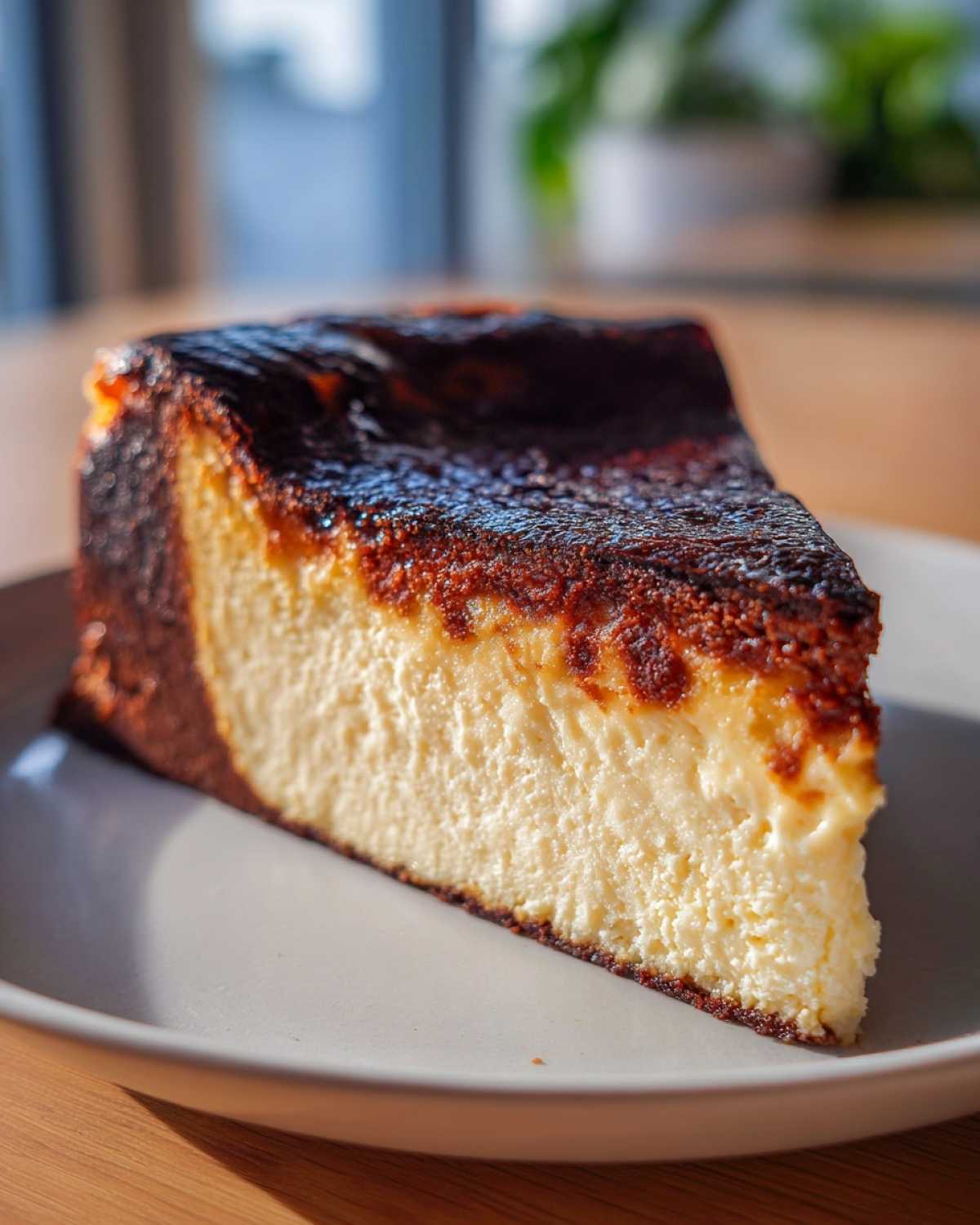
When you check on it—and try not to open the oven door too much—you are looking for deep mahogany edges, almost black on those parchment peaks. That’s the char we want! But here is the E-E-A-T moment: the center should still have a significant wobble. I mean, it needs to look like soft gelatin—it should jiggle dramatically when you gently nudge the pan. Don’t panic! This wobble is why we get that incredible, **creamy cheesecake dessert** interior later. If it looks even remotely firm in the middle, you’ve overbaked it, and it will come out dense, not luscious.
Once it hits that wobble point (usually right around the 55-minute mark for my oven), kill the heat immediately. We’ve done our part. The total magic time, including cooling, stretches out to about 7 hours 10 minutes, so make sure you plan ahead for this showstopper!
Cooling Protocol for the **Best Burnt Cheesecake**
You cannot rush the cooling process; this is just as important as the high heat! You need to let the cheesecake cool completely on a wire rack right there on your counter. This takes a good three hours, and yes, it will deflate quite a bit. That’s the cheesecake settling into its final, crustless form, so don’t let a sinking center worry you!
After it’s cooled to room temperature, we move it into the refrigerator. This is where the custard sets up and develops that signature **velvety cheesecake** texture. You need a minimum of six hours in the fridge, but honestly? Overnight is when this **best burnt cheesecake** really shines. It firms up just enough to slice beautifully without losing that mousse-like quality.
When you’re ready to serve, let it sit on the counter for about 30 minutes before cutting. That little bit of warmth brings out the flavor and makes it taste exactly how the bakers in San Sebastian intended!
Tips for an Easy Cheesecake Recipe Success
Even though this Easy Cheesecake Recipe is straightforward, there are a few small things that elevate it from good to absolutely mind-blowing. When I share recipes here, I want you to have the best shot at success, so these are the non-negotiables that I’ve learned over my many (and I mean *many*) attempts at mastering this beauty.
Temperature Matters for Your Basque Burnt Cheesecake
I know I keep harping on this, but I need to say it again: room temperature ingredients are the key to achieving that signature, dreamy, velvety cheesecake interior. If your cream cheese is even slightly cool, it won’t incorporate properly with the sugar; you’ll end up mixing longer, which introduces unwanted air.
When the cream cheese and the 6 eggs are at the same cozy room temperature, everything whips up into a homogenous, liquid silk in minutes. Cold ingredients fight each other, and we want harmony in the mixing bowl!
Serving Temperature: Chilled vs. Room Temperature
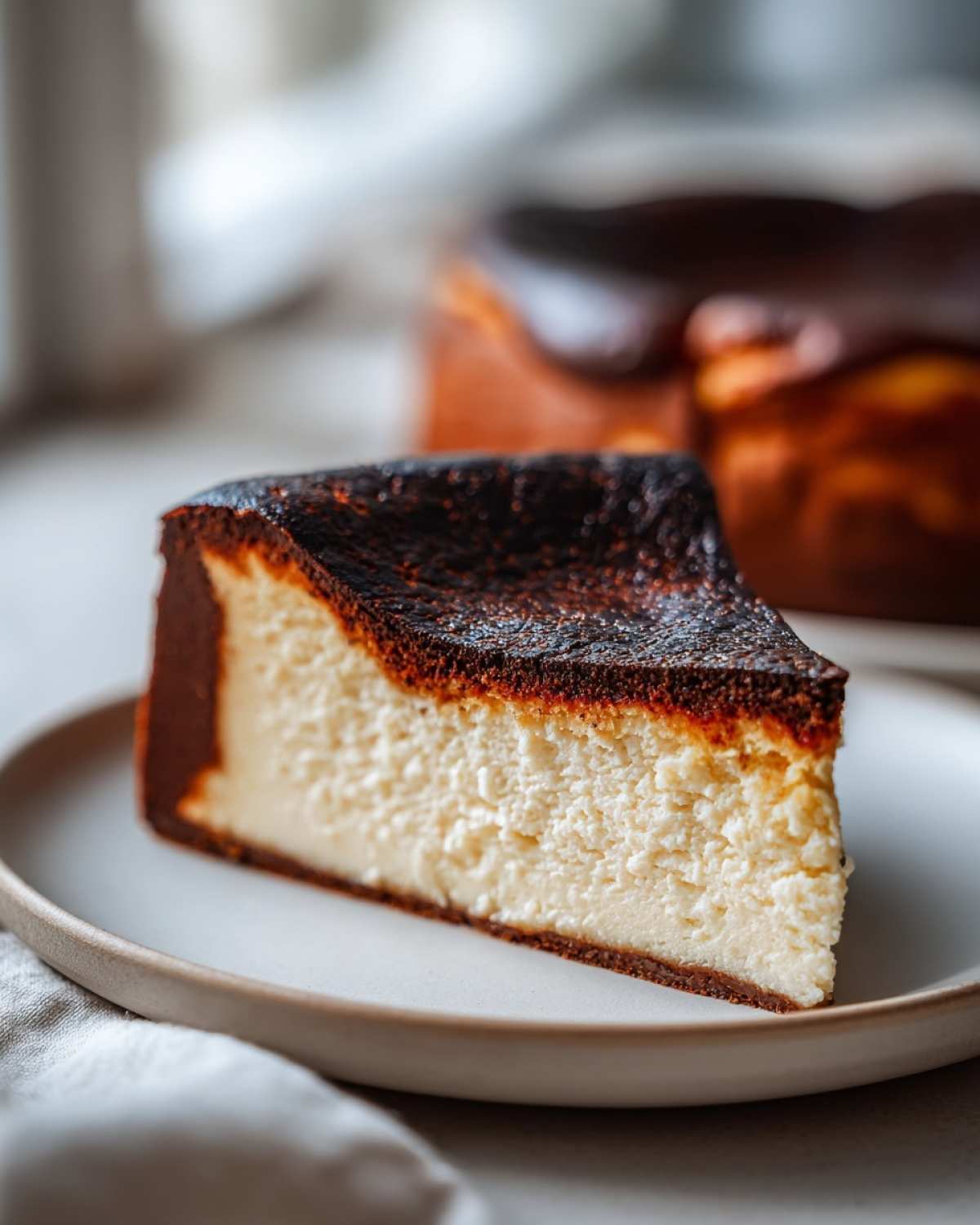
This is fun because you actually get two different desserts out of the same process! If you slice your Basque Burnt Cheesecake straight from the fridge after its long chill time, it will be denser, fudgier, and very rich. It holds its shape beautifully, which is great if you need clean slices.
However, if you want that truly authentic, mousse-like, almost spoonable texture that makes people gasp, let a slice sit out on the plate for about 20 to 30 minutes before digging in. As it warms up slightly, the custard structure softens beautifully. It transforms into that lighter, almost cloud-like experience that defines the best of the San Sebastian Cheesecake style.
Variations on the Classic San Sebastian Cheesecake
While the classic 8-inch springform pan works perfectly for that iconic rustic look, I know not everyone has one rattling around! So, what do we do when we want this amazing Basque Burnt Cheesecake but only have something else on hand? Get creative! The beauty of baking, especially with these simple ingredients, is that you can shift the shape without losing the flavor.
A super popular way people bake this now is in a loaf pan. I love this because it makes beautiful, thick slices—perfect for gifting or serving just a few people. If you want to check out a great example of baking this in a loaf pan, some folks over at Recipes by Claire have a fantastic guide on how to line that differently. Just remember, because loaf pans are deeper, you might need a little extra baking time, so watch that jiggle!
These shifts show how adaptable this recipe is for any easy entertaining situation. It’s truly a winner no matter the vessel.
Serving Suggestions for Your Decadent Spanish Dessert
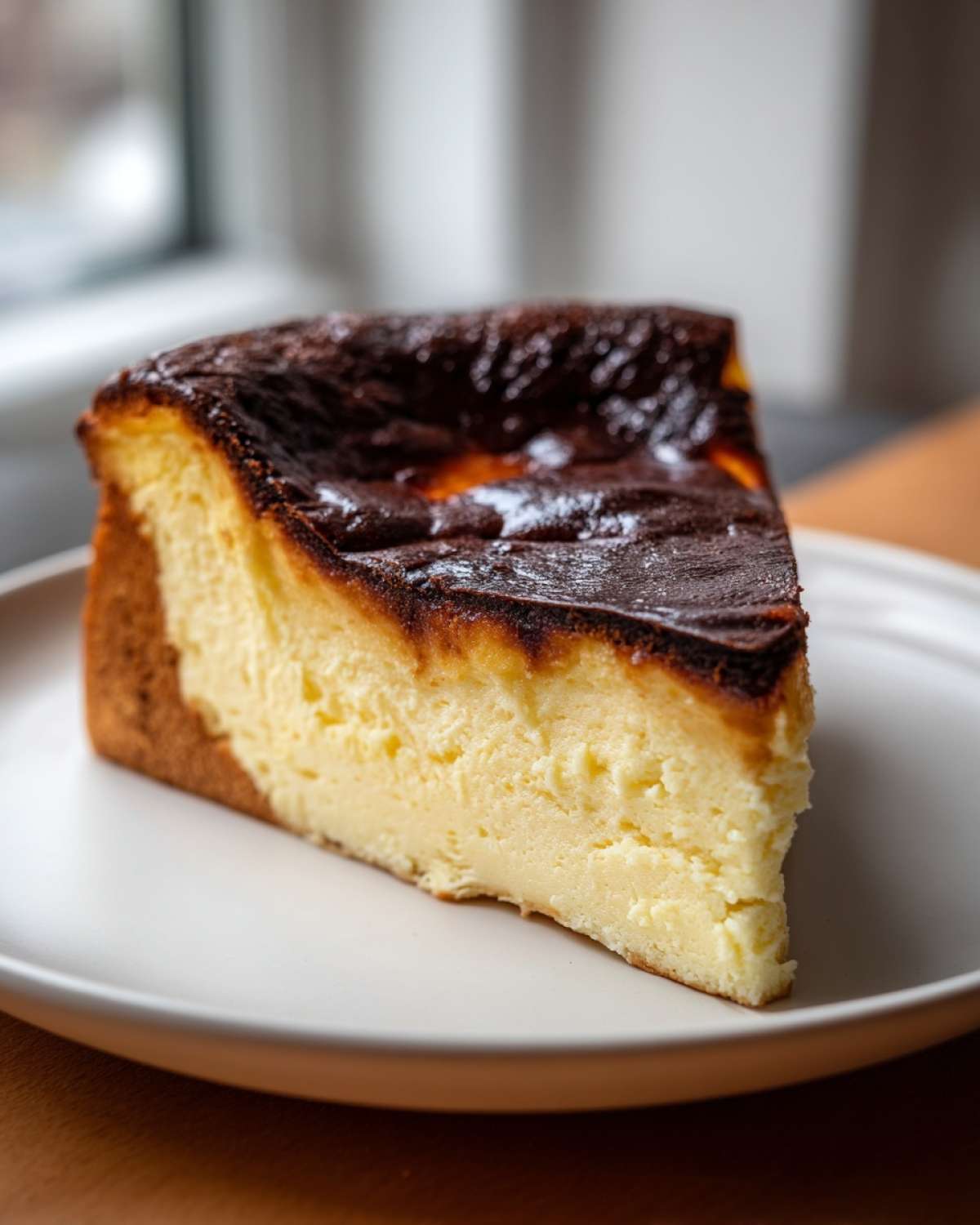
Once your Decadent Spanish Dessert has chilled for those required hours and the creaminess has settled in, it’s time to make it pretty! The great thing about the Basque style is that it looks stunning all on its own because of that deep char, so you don’t need much fuss.
If you want to dress it up slightly, here are the ways I recommend serving it:
- A light dusting of powdered sugar right before serving. This cools down the visual heat of the dark top beautifully.
- Fresh berries! Raspberries or sliced strawberries add a lovely bit of color and a fresh, tart note that cuts through the richness.
- A side dollop of intensely good homemade whipped cream, but honestly, that’s just showing off! The texture is so good on its own, you might not even need it.
Storing Leftovers of Your Basque Burnt Cheesecake
Now, let’s be real: you probably won’t have many leftovers of this Basque Burnt Cheesecake, but if you do manage to hide a slice or two from the crew, storing it correctly is easy! Remember, we worked so hard to get that perfect, dreamy texture, so we don’t want to ruin it by just wrapping it poorly.
The key here is keeping out any fridge odors and preventing the surface from drying out. Once the cheesecake is fully chilled—meaning it has completed its 6+ hours minimum in the refrigerator—take it out of the springform pan. Then, cover it tightly. You can use plastic wrap, but make sure it doesn’t actually touch the beautifully caramelized surface, or you’ll ruin that top layer when you unwind it later.
I usually cut a piece of parchment paper slightly larger than the top of the cake, just lay that gently on the surface, and *then* cover the entire thing loosely with plastic wrap or foil. Store it in the coldest part of your fridge. Because this is such a Minimal Ingredient Cheesecake, it keeps wonderfully well for about five days.
When you pull out a leftover slice, fight the urge to eat it freezing cold! Just like when we originally served it, let that portion sit on a small plate for about 20 minutes before taking a bite. That little bit of warming up reactivates that velvety, creamy texture we worked so hard to achieve. That little bit of chilling time combined with careful storage means you get that perfect slice, even on day three!
If you ever have questions about recipe rights or use, you can always check out the details on my Terms of Use page. But mainly? Enjoy those leftovers!

Frequently Asked Questions About the Basque Burnt Cheesecake Recipe
Whenever I share a recipe that looks this dramatic, I always get a flood of questions! And that’s okay! We want you to feel 100% confident before you preheat that oven. This simple, Minimal Ingredient Cheesecake seems intimidating because of that dark top, but once you understand the ‘why,’ you’re set. Here are some of the things I hear most often regarding this amazing Basque Burnt Cheesecake Recipe.
Is the high temperature necessary for this Easy Cheesecake Recipe?
Yes, yes, and definitely yes! This is the core difference between a classic New York cheesecake and this beauty. We are baking this Easy Cheesecake Recipe at a super high heat—400°F (200°C)—specifically to burn the outside quickly while treating the inside like a delicate custard. If you try to bake it low and slow like a traditional cake, you’ll bake the custard all the way through, and you’ll end up with a standard baked cheesecake, not the signature charred, caramelized masterpiece we want!
Can I substitute the flour in this Minimal Ingredient Cheesecake?
Honestly, for the absolute best, most authentic texture in this Minimal Ingredient Cheesecake, I really wish you wouldn’t touch that flour! That tiny tablespoon is there to just add the barest bit of structure so the center sets up into a true creamy cheesecake dessert rather than turning into soup. If, for allergy reasons, you absolutely must substitute, cornstarch is the closest one-to-one alternative.
If you use cornstarch, just make sure you whisk it in really well! But again, that little bit of flour helps stabilize the proteins in the cream cheese just enough. When you check in with me via my contact page after you bake it, the first thing I want to know is if you stuck to that one tablespoon of flour!
What should I do if my center doesn’t wobble when I check it?
If your center isn’t wobbling like soft gelatin, don’t panic and don’t overbake it! Take it out right away. It will be slightly firmer than I described, which means you’ll end up with a denser, more chilled texture, almost like a thick fudge rather than mousse. That’s still going to be delicious! Just make sure you chill it thoroughly for that night so it sets up completely before slicing. The key to avoiding this next time is making sure your oven hits that 400°F mark, and pulling it right when the edges look dark enough.
Can I use light cream cheese or Neufchâtel instead of full-fat?
Oh gosh, no! Please don’t try to make this a diet-friendly dessert—you’ll rob it of its whole purpose! This is supposed to be a **Decadent Spanish Dessert**, and that means full fat is required. Light cream cheese has more water content, and that extra moisture will absolutely stop the cheesecake from setting correctly, even with the small amount of flour we use. Stick to the full-fat block cream cheese for that perfect, velvety cheesecake result.
How long does it take to chill before I can eat this?
This is the hardest part of any Basque Burnt Cheesecake Recipe! You absolutely must chill it for a minimum of 6 hours, but overnight is really the sweetest spot for maximum creaminess. If you try to slice it too soon, it will collapse into a puddle because the structure hasn’t fully set up in the cold. Patience pays off here, even for the most impatient baker!
Share Your Basque Burnt Cheesecake Creation
Wow, you made it! You tackled high heat, embraced the wobble, and now you have the most gorgeous, rustic, and unbelievably creamy Basque Burnt Cheesecake cooling on your counter. Seriously, give yourself a huge pat on the back. This isn’t just any dessert; it’s a statement piece, and I am so proud of you for sticking with the process.
Now, I desperately want to see how yours turned out! Did you go for the super-dark char, or keep it a little more golden brown? Did you serve it room temperature for that mousse experience, or chilled for a denser slice?
The best part of running this little corner of the internet is seeing food joy happen in real kitchens across the country. So please, take a photo of your stunning Basque Burnt Cheesecake creation, tag me on social media, and let me know how many people asked for the recipe! You can find me over on Facebook where I share little behind-the-scenes moments—just search for Pure Cooking Joy!
If you loved how surprisingly easy this cheesecake recipe was, I’d be thrilled if you could hop back here and leave a star rating, too. Your feedback helps other home cooks like Alex Hayes gain the confidence to try something new. I review everything to make sure the site stays honest, which you can read more about on my Privacy Policy page. Happy baking, friends, and thank you for joining me on this journey!
PrintEasy Basque Burnt Cheesecake: Creamy, Crustless, and Caramelized

I’m Alex, and I want to show you how to make the best Basque Burnt Cheesecake. This recipe delivers a rich, velvety, mousse-like interior and a perfectly charred, caramelized top, all with minimal ingredients and no water bath. It is simple to prepare and impressive to serve.
- Prep Time: 15 min
- Cook Time: 55 min
- Total Time: 7 hours 10 min
- Yield: 8 servings 1x
- Category: Dessert
- Method: Baking
- Cuisine: Spanish
- Diet: Vegetarian
Ingredients
- 1.5 lbs cream cheese, softened to room temperature
- 1 cup granulated sugar
- 6 large eggs, room temperature
- 1 3/4 cups heavy cream
- 1 tablespoon all-purpose flour
- 1 teaspoon vanilla extract
- Pinch of fine sea salt
Instructions
- Line an 8-inch springform pan with two large sheets of parchment paper, allowing the paper to hang over the sides to create a rustic edge. Do not trim the paper.
- Preheat your oven to 400°F (200°C). This high heat is key for the burnt top.
- In a large bowl, beat the softened cream cheese with an electric mixer until completely smooth. Scrape down the sides.
- Add the sugar and beat until just combined and creamy. Do not overmix.
- Beat in the eggs one at a time, mixing only until each egg is incorporated before adding the next.
- Gently whisk in the heavy cream, vanilla extract, flour, and salt until the batter is uniform. The batter will be thin.
- Pour the batter into the prepared pan.
- Bake for 45 to 55 minutes. The edges should be deeply browned, almost black, and the center should still wobble significantly, like soft gelatin.
- Remove the cheesecake from the oven. It will deflate as it cools.
- Let the cheesecake cool completely on a wire rack at room temperature for at least 3 hours.
- Chill the cheesecake in the refrigerator for a minimum of 6 hours, or preferably overnight, for the best creamy texture.
- Serve chilled or allow it to sit at room temperature for 30 minutes before slicing.
Notes
- Use room temperature ingredients for the smoothest, creamiest cheesecake batter.
- Do not use a water bath; the high heat creates the signature burnt exterior.
- For a denser texture, chill longer. For a more mousse-like texture, serve closer to room temperature.
- You can dust the cooled cheesecake with powdered sugar before serving, or serve with fresh berries.
Nutrition
- Serving Size: 1 slice
- Calories: 450
- Sugar: 35g
- Sodium: 200mg
- Fat: 32g
- Saturated Fat: 19g
- Unsaturated Fat: 13g
- Trans Fat: 0g
- Carbohydrates: 38g
- Fiber: 0g
- Protein: 8g
- Cholesterol: 210mg
