 Skip to content


If you’ve ever looked at those flawless, glossy sugar cookies on social media and thought, “There’s no way I can make icing that beautiful,” I’m here to tell you that feeling is totally wrong! For years, I struggled too, wasting time with runny glazes that cracked or refused to set. But I’ve simplified the process so much here for you. This is my absolute favorite **cookie icing recipe** because it’s incredibly easy, requires zero stress, and dries perfectly smooth and hard on your cut-out cookies. You can find even more details on my dedicated post for the sugar cookie icing recipe now. Get ready to bring that professional joy right into your own kitchen!
- Why This Is the Best Hardening Cookie Icing Recipe for Beginners
- Ingredients for Your Perfect Cookie Icing Recipe
- Step-by-Step Instructions: How to Make Cookie Icing
- Expert Tips for the Best Icing for Cut Out Cookies
- Making Ahead and Storing Your Cookie Icing Recipe
- Troubleshooting Common Cookie Icing Recipe Issues
- Frequently Asked Questions About This Cookie Icing Recipe
- Serving Suggestions and Pairing for Your Decorated Cookies
- Estimated Nutritional Snapshot for This Cookie Icing Recipe
- Share Your Success with This Cookie Icing Recipe
Why This Is the Best Hardening Cookie Icing Recipe for Beginners
I promise you, achieving that bakery-perfect coating on your cut-out cookies doesn’t require you to be a seasoned decorator. This **cookie icing recipe** is my go-to because it checks all the boxes: it’s unbelievably easy to mix up, it dries beautifully smooth, and most importantly, it sets hard. That means no more messy piles of cookies sliding around in your storage tins! Since I figured out the secret to consistent results, I stopped wasting expensive cookie dough.
If you’ve ever wrestled with recipes calling for raw egg whites, you know the anxiety that comes with them. This version uses meringue powder, which is just dried, stabilized egg white. Trust me, it makes this an incredibly reliable **icing that hardens for cookies** every single time. It’s the key to getting that wonderful, firm cookie frosting finish needed for stacking and gifting. If you want to try some other easy baked goods once you’ve mastered this, check out my post on Italian butter cookies or even my easy breakfast cookie recipes.
Achieving a Glossy Cookie Icing Finish
That shine you see isn’t magic; it’s just good technique when mixing! Once you add the water and whip it up on high speed, the air incorporates just right. Keep beating those 3 to 5 minutes, and you’ll see the mixture transform from dull and gritty to a high-shine, beautiful pale white. That sheen is what makes this **smooth cookie icing** pop when the lights hit it.

The Secret to Icing That Hardens for Cookies
This all comes back to the meringue powder. It’s the structural hero here! When you use the right amount, it pulls that icing tight as it dries. This prevents cracks and yields a firm, durable shell. You get a crisp texture that holds up beautifully, making this the ideal **firm cookie frosting** for any intricately cut shape.
Ingredients for Your Perfect Cookie Icing Recipe
Okay, gathering your ingredients is where you start building trust with your icing! Unlike some fussy recipes out there, this basic **cookie icing recipe** relies on just a few common pantry staples, but the quality matters for that perfect finish. You won’t need any weird, obscure items, thankfully! I love that it keeps things straightforward.
The one thing you absolutely must pay attention to is the confectioners’ sugar. Please, please, please sift it first! Those little clumps of powdered sugar will absolutely ruin your smooth finish, and you’ll spend ages trying to beat them out later. Trust me, you want smooth sailing here.

Here is exactly what you’ll need for about two dozen medium cookies:
- 4 cups confectioners’ sugar, sifted
- 3 tablespoons meringue powder (This is your structure secret!)
- 1/2 teaspoon vanilla extract (Use a good one; it’s one of the main flavors!)
- 6 tablespoons warm water (Plus a tiny bit extra, just in case)
That meringue powder is what elevates this from a simple glaze to a true decorating icing that hardens. It’s shelf-stable, safer for everyone, and gives you the exact structure we need for that fantastic, durable result. It’s worth grabbing a container of it!
Step-by-Step Instructions: How to Make Cookie Icing
Alright, now for the fun part—mixing this magic potion! Don’t stress about timing; this whole **cookie icing recipe** comes together faster than you think. The real trick here isn’t speed, but knowing when to stop mixing and how to adjust the texture based on what you plan to do next. Since this icing is designed to set firmly, getting the water ratio perfect the first time is super important for a great result.
I always use my stand mixer for this because it gets the volume right, but a powerful hand mixer works too. When I first started out, I just used a sturdy whisk, but honestly, it’s much easier on your wrist with a machine!
Mixing the Base Sugar Cookie Icing Recipe
First things first, if you skipped sifting the sugar earlier? Go back and do it now! I’m serious; this impacts the final smoothness dramatically. In your mixing bowl, combine those 4 cups of sifted confectioners’ sugar with the 3 tablespoons of meringue powder. You want these completely mixed before adding anything wet. This ensures the stabilizer is evenly distributed.
Next, pour in the vanilla extract and start with just 6 tablespoons of warm water. You want to beat this initially on low speed just until everything starts coming together. Don’t let that dry sugar fly everywhere!
Adjusting Consistency for Outlining and Flooding
Once the ingredients are combined, crank that mixer up to medium-high for about 3 to 5 minutes. This is where the aeration happens, creating that beautiful shine. When it looks smooth and uniform, that’s the time to check your consistency—this is the most crucial part of any good **cookie flooding icing** procedure.
For outlining, you want something thick enough that when you lift your spoon, the icing falls back into the bowl in a thick ribbon, and that ribbon sits on the surface for a few seconds before dissolving. This is your **cookie piping icing** thickness. If it runs immediately, it’s too thin!

If you are flooding the center of your cookies, you need to loosen it up. Add water one teaspoon at a time. Keep mixing briefly after each addition. When it’s right for flooding, drizzle some icing in a figure eight pattern over the main bowl. If it takes 10 seconds for that drizzle line to blend back into the bowl, you’ve hit perfection. Grab some of this perfectly balanced base, and you can head over to check out my favorite lemon meringue recipe later for a completely different kind of sweet fix!
Expert Tips for the Best Icing for Cut Out Cookies
Now that you have your base figured out—the perfect texture for outlining and flooding—I want to share a few professional tricks. I learned these the hard way when I was first trying to elevate my holiday cookie game. Getting this **cookie icing recipe** to look flawless takes just a tiny bit more attention, especially when it comes to color and dealing with Mother Nature (hello, humidity!). Remember, we are aiming for that signature smooth, glossy cookie icing look every time we decorate.
Coloring Your Cookie Icing Recipe
If you want vibrant, rich colors that don’t bleed, absolutely ditch the standard grocery store liquid food dyes. They have too much water, which thins out your structure, and they often give you sad, pastel results unless you use half the bottle. Instead, invest in quality gel food coloring. A tiny toothpick dip is usually enough color for an entire batch of icing base.
When you add the gel, only add a little bit at a time, mixing thoroughly after *each* drop. You’ll notice that as you mix, the color deepens, and the icing might thicken up slightly. If you are coloring a large bowl, make sure you scrape down the sides and paddle so you don’t end up with streaks of white in your beautiful color. It’s worth the extra minute of mixing!
Making Corn Syrup Free Cookie Icing Variations
One of the things I love most about this particular technique is that many people search specifically for a **corn syrup free cookie icing**. Great news: because we are skipping the corn syrup and relying on the power of the meringue powder for structure, this recipe naturally fits that bill! It’s a major win for simplicity and stability.
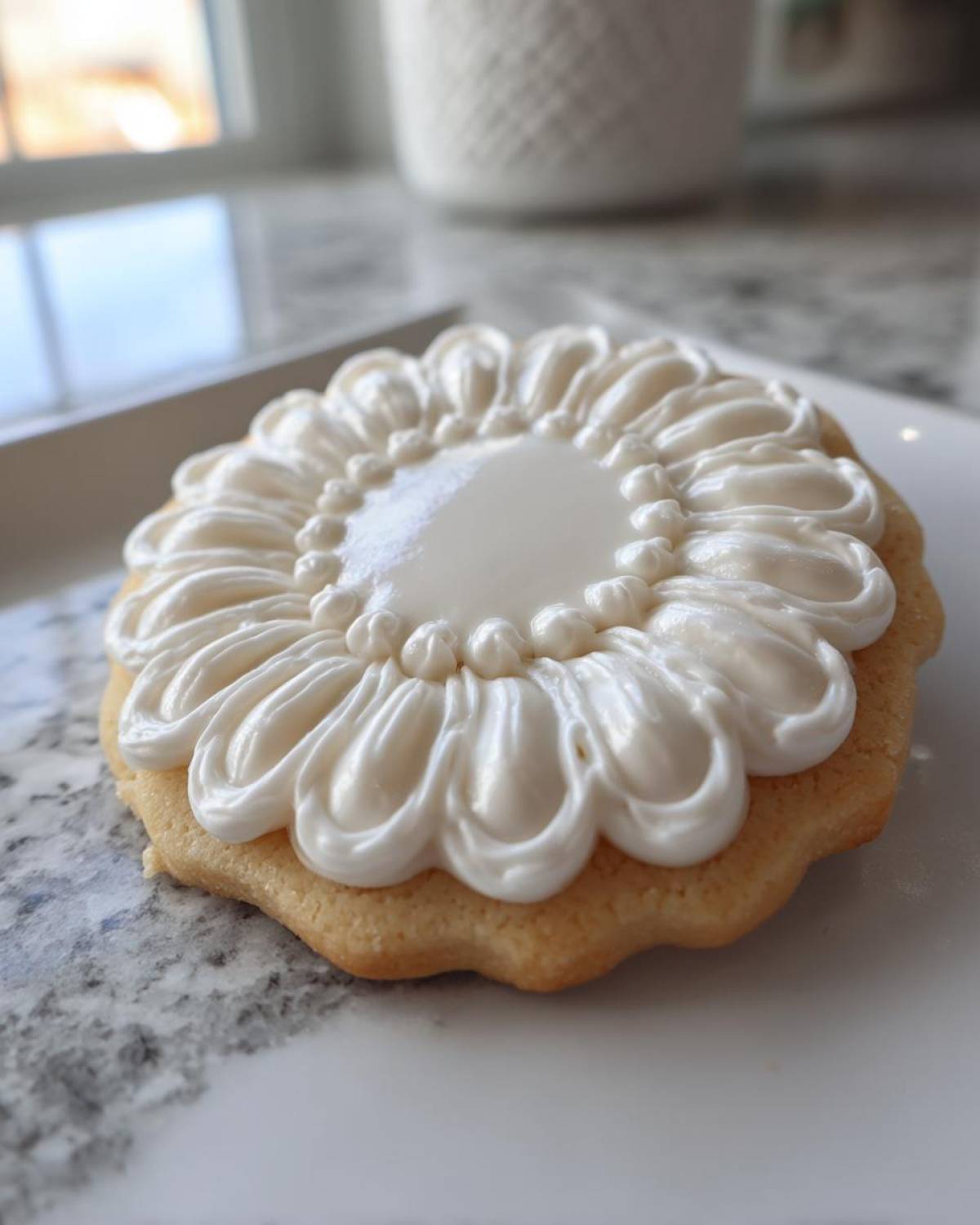
If you wanted to play with the flavor slightly beyond the vanilla, it’s easy to swap that extract out. You could certainly try a lemon or almond extract for a different profile, but I usually stick to the classic **vanilla cookie icing** when I’m doing intricate designs since it lets the cookie flavor shine through. If you are using almond, just be careful; almond extract is stronger than vanilla, so start with just 1/4 teaspoon and taste before committing!
If you’re having issues with the icing drying out or cracking when you store it, give it a quick mix with a tiny splash of water when you bring it back out to decorate. For the ultimate guidance in baking success, I always recommend looking at reliable sources. I really admire the techniques they share over at sourdough chocolate chip cookies inspiration—it’s that dedication to good technique that makes all the difference in the final product!
Making Ahead and Storing Your Cookie Icing Recipe
Planning ahead is key when decorating, especially around the holidays! You can absolutely make this **cookie icing recipe** a day ahead of time. The trick to storage is air: keep it airtight. Store any leftover icing in small, sealed containers or even Ziploc bags, pressing out as much air as possible.
If you refrigerated it, don’t panic if it seems stiff the next day. Just let it come to room temperature for about 30 minutes, then add water, just one tiny drop at a time, mixing gently until you restore that beautiful piping consistency. You can also browse my advice on freezing pie filling for other make-ahead tips for your kitchen planning!
If you only have a little bit left, cover it tightly with plastic wrap pressed directly onto the surface to stop a skin from forming. That way, you keep that fresh, smooth quality intact for the next day!
Troubleshooting Common Cookie Icing Recipe Issues
Okay, so even the absolute best **cookie icing recipe** can throw us a curveball sometimes. Dough consistency, humidity in the air, even how fast you mixed it—it all plays a role! But don’t panic if your icing isn’t behaving perfectly right out of the mixer. Troubleshooting is just part of baking, and having a few fixes ready makes you feel like a pro.
When you hit one of these snags, remember we are usually just tweaking the water-to-sugar ratio. Since this recipe is designed to dry firm, most issues are easily corrected by adding a tiny bit of liquid or a spoonful of sugar. Stay calm, grab a spoon, and let’s fix it together!
If your icing is too runny for outlining:
This is the most common beginner mistake, especially if you added too much water during the flooding check. If the icing drips off your spoon in a watery stream rather than a thick ribbon, it needs help! Slowly add sifted confectioners’ sugar, one tablespoon at a time, mixing well after each addition until you reach that perfect piping consistency we talked about for outlining. Don’t rush this; adding sugar too fast will make it too stiff again!
If your icing is cracking while drying:
This usually means it was too thick when applied, or the relative humidity is super low. If you apply a very thick layer, the outside shell dries faster than the inside, causing stress fractures. The fix here is gentle: try covering your iced cookies loosely with plastic wrap for the first hour of drying. This traps a tiny bit of moisture, allowing the whole layer to cure more evenly. For future batches, make sure you thin flood icing just enough so it settles smoothly.
If your icing just won’t dry or harden:
This is a humidity monster! If it’s raining or super muggy where you are, drying time will quadruple. If you check on your cookies after 12 hours and they are still totally tacky, you likely added too much water initially, or the air is just too saturated. The solution that works for me is moving them to a drier spot, maybe near a dehumidifier or away from open windows. If you used the precise measurements, however, this is rare, but sometimes you just have to wait. A little bit of tacky surface is okay for piping details, but if it’s completely wet, you might need to mix a small emergency batch of stiffer icing and gently dab small amounts onto the wet areas for structural help.
Frequently Asked Questions About This Cookie Icing Recipe
I know when you’re trying a new technique, especially decorating, questions pop up at the last minute. That’s totally normal! When I was first getting confident with this kind of frosting, I had a thousand questions too. People often ask me about texture, drying time, and how this compares to a traditional **royal icing recipe for cookies**. Here are the answers to the questions I hear most often about getting this **easy cookie icing** just right!
Can I use this easy cookie icing on soft cookies?
That’s a great question about application! This specific formula, because we rely on the meringue powder to make it dry firm and hard, is absolutely designed for cut-out cookies—think crisp sugar cookies or gingerbread that can handle a fully set decoration. If you try to put this on a soft, chewy drop cookie, the icing will likely crack right off the top when you try to bite into it because the cookie will bend but the icing won’t! For soft cookies, you really want a simple glaze or a buttercream frosting.
How long does this smooth cookie icing take to dry completely?
This is where patience comes in, and honestly, humidity plays a huge role! If my kitchen is cool and dry, I find that the flooded layer is usually dry enough that I can gently touch it after about 4 to 6 hours. However, if I need to stack or box the cookies up—meaning they need that rock-hard shell—I always leave them cure overnight, a full 12 hours. If it’s super humid outside, that timescale can easily double, so plan your decorating schedule accordingly. The glossy look you get initially will turn into a duller, firm finish when it’s fully dry.
Keep practicing, and you’ll get a feel for it! For more tips on keeping your kitchen creative and stress-free, you might enjoy checking out my process for making no-fail crème brûlée cheesecake. Happy decorating!
Serving Suggestions and Pairing for Your Decorated Cookies
Once you’ve put all this beautiful effort into making perfectly decorated cookies, you want to show them off! This gorgeous **cookie icing recipe** looks especially stunning against warm, spiced backgrounds. Think about serving these treats alongside a slice of my favorite moist cinnamon apple bread during a fall gathering.
They are also the star of any holiday cookie platter. The glossy shells stand up to being packed and travel well, which is wonderful for gifting. The best part is pairing them with a hot beverage. A strong cup of coffee or hot chocolate makes that hard, sweet icing absolutely irresistible. Don’t forget to snap a photo for your friends! You can share your beautiful results with me over on Facebook at Pure Cooking Joy!
Estimated Nutritional Snapshot for This Cookie Icing Recipe
Okay, let’s talk numbers for a second. I know that when you make something this delicious, especially when it’s pure sugar and vanilla, you might wonder about the specifics. I always try to give you a snapshot, but please keep this in mind: these figures are just estimates based on standard calculations for the ingredients listed above. I calculated this based on about 64 servings, which is roughly 1/4 cup of prepared icing.
If you stick to the 4 cups of powdered sugar and the meringue powder, the structure remains the same, so the calories won’t jump around too much, even if you use slightly different extracts. It’s all part of being transparent about what we’re eating when we enjoy these beautiful treats!
- Serving Size: About 1/4 cup
- Estimated Calories: 180
- Total Sugar: 45 grams (Yes, it’s icing, we know! But boy, is it worth it.)
- Carbohydrates: 45 grams
- Protein: 1 gram
As you can see, this **cookie icing recipe** is primarily sugar—which is exactly what it needs to be to get that glorious, hard, glossy finish we are after! It’s a treat, an art project, and totally worth the indulgence. Don’t sweat the numbers too much; focus on how beautiful those cookies look when you’re done!
Share Your Success with This Cookie Icing Recipe
Honestly, the very best part of baking isn’t the quiet time in the kitchen; it’s seeing the joy on someone’s face when they see what you’ve made! Now that you have mastered this **cookie icing recipe** and created beautiful, hardened decorations, I truly want to see them. Don’t keep all that glossy perfection to yourself!
When you make this icing, please come back and leave a star rating right here on the recipe card. Those little stars help other home cooks, just like you, who are hesitant about trying royal icing alternatives. Your feedback confirms that this method works reliably!
And if you took photos (and I really hope you did, because this icing looks amazing!), tag me when you share them on social media. Seeing your vibrant colors and perfectly piped edges instantly makes my day. It proves that everyone can achieve this level of finish without the stress.
Head over to my main blog page anytime to see what else we are cooking up that week. Baking should always bring you pure joy, and succeeding with something tricky like cookie decorating is the best feeling. Happy baking, and I can’t wait to see your gorgeous cookies!
PrintThe Best Hardening Sugar Cookie Icing Recipe for Decorating

This is the best cookie icing recipe for decorating cut-out sugar cookies. It is easy to make, dries smooth, and hardens perfectly for stacking. This recipe gives you a glossy cookie icing that is ideal for beginners.
- Prep Time: 15 min
- Cook Time: 0 min
- Total Time: 15 min
- Yield: Covers about 2 dozen medium cookies 1x
- Category: Baking
- Method: Mixing
- Cuisine: American
- Diet: Vegetarian
Ingredients
- 4 cups confectioners’ sugar, sifted
- 3 tablespoons meringue powder
- 1/2 teaspoon vanilla extract
- 6 tablespoons warm water (or more, as needed)
Instructions
- In a medium bowl, whisk together the sifted confectioners’ sugar and meringue powder until fully combined.
- Add the vanilla extract and 6 tablespoons of warm water to the dry ingredients.
- Use a hand mixer or stand mixer fitted with a paddle attachment to beat the mixture on low speed until the sugar is incorporated.
- Increase the speed to medium-high and beat for 3 to 5 minutes until the icing is smooth and glossy.
- Check the consistency. For outlining, the icing should be thick enough to hold a line when drizzled from a spoon. For flooding, add water, one teaspoon at a time, until the icing flows smoothly off the spoon and the trail disappears back into the bowl within 10 seconds.
- Divide the icing into separate bowls for coloring, if desired. Add gel food coloring slowly and mix until the color is uniform.
- Use the icing immediately for outlining cookies. Let the outline dry for at least 30 minutes before flooding the center.
- To flood, use a spoon or a small squeeze bottle to fill the outlined area. Gently tilt the cookie to spread the icing evenly.
- Allow the icing to dry completely, which can take several hours or overnight, depending on humidity. The icing will harden to a firm, smooth finish.
Notes
- For a corn syrup free cookie icing, substitute the corn syrup (if using a different recipe) or simply rely on the meringue powder for structure. This recipe uses meringue powder for a reliable, hard finish.
- If the icing is too thick for piping, add a few drops of water. If it is too thin for outlining, add a tablespoon of sifted confectioners’ sugar.
- This icing dries firm enough to stack cookies, making it the best icing for cut out cookies you plan to transport or store.
Nutrition
- Serving Size: 1/4 cup
- Calories: 180
- Sugar: 45
- Sodium: 5
- Fat: 0
- Saturated Fat: 0
- Unsaturated Fat: 0
- Trans Fat: 0
- Carbohydrates: 45
- Fiber: 0
- Protein: 1
- Cholesterol: 0
