 Skip to content


If you’ve tried making sourdough bread only to end up with something that could double as a doorstop, trust me, I get it! For years, the kitchen was the last place I wanted to be while juggling that demanding corporate job. Baking felt like just another thing to stress over. But holding that first successful, soft loaf changed everything for me. That’s why I am so thrilled to share this sourdough sandwich bread recipe. It’s the key to getting that ultimate fluffy and soft result, perfect for the everyday sandwich without any of the usual dense sourdough woes. This recipe is where technique meets pure joy in your own kitchen. It’s all part of finding that peace I discovered when I finally nailed the basics—you can read more about my journey over on my about page right here!
- Why This is the Best Sourdough Sandwich Bread Recipe for Beginners
- Ingredients for Your Fluffy Sourdough Sandwich Bread Loaf
- Step-by-Step Instructions for a Sliceable Sourdough Sandwich Loaf
- Tips for Success with Your Homemade Sandwich Loaf Sourdough
- Using Your Soft Sourdough Sandwich Bread Recipe for Meal Planning
- Storage and Reheating Instructions for Sourdough Sandwich Bread
- Frequently Asked Questions About Sourdough Sandwich Bread
- Sharing Your Pure Cooking Joy Sourdough Sandwich Bread
Why This is the Best Sourdough Sandwich Bread Recipe for Beginners
I know your struggle! You want that amazing flavor of sourdough, but every time you try, you get something closer to a Frisbee than a sliceable loaf. That ends today. This Soft Sourdough Sandwich Bread Recipe is specifically designed to crush that density problem. I spent ages perfecting the timing so you don’t have to worry about guesswork. This is truly an Easy Sourdough Loaf for Sandwiches that actually behaves like normal bread.
Seriously, the first ten times I tried making a sandwich loaf, they were bricks. I’d almost thrown in the towel until I realized I needed to be kinder to the dough by adding things that encouraged softness—like a little healthy fat! This recipe focuses on an approachable, manageable bulk fermentation, meaning you get beautiful pockets of air without needing those super long, multi-day schedules. It’s all about making baking joyful, not stressful!
Achieving That Perfect Fluffy Sourdough Sandwich Bread Texture
The secret to moving away from that dense sourdough texture comes down to two main things we add: avocado oil and a touch of honey. Those additions coat the gluten strands a bit, keeping them relaxed and flexible as they bake. Also, we aren’t aiming for a huge 100% rise during bulk fermentation; keeping it closer to 30-50% ensures the final proof in the pan gives you that signature lift and fluffiness. It’s all about building confidence with simple steps!

Ingredients for Your Fluffy Sourdough Sandwich Bread Loaf
Okay, let’s get down to business! The beauty of this sourdough sandwich bread recipe is that it keeps the ingredient list wonderfully simple. We aren’t making a complex artisan boule here; we are aiming for that perfect, fluffy slice that holds up to your morning avocado or afternoon PB&J. You really only need six things total, which keeps things super straightforward for a beginner baker!
- 150g active sourdough starter (must be bubbly!)
- 325g warm filtered water
- 20g avocado oil
- 25g honey
- 500g unbleached bread flour
- 10g salt
Ingredient Notes and Substitutions for Sourdough Sandwich Bread
Since this recipe relies on time rather than complex inputs, ingredient quality really matters here. First up, that starter needs to be happy and active—bubbly and doubled in size is what I look for before I even begin mixing. Don’t think about using anything less than bread flour here; the higher protein is what gives you that nice structure that won’t crumble when you slice it. And don’t skip the oil and honey! That tiny addition of fat and sweetness is crucial for keeping your crumb tender. While you could use a neutral oil like canola, I prefer avocado oil because it’s light and doesn’t affect the delicate sourdough flavor.
Step-by-Step Instructions for a Sliceable Sourdough Sandwich Loaf
Okay, this is where the magic happens, and I promise it’s much easier than getting a fancy artisan loaf oven spring!
We’re keeping the kneading out of it; we want a relaxed dough that rises beautifully in the pan. Remember, baking bread is about patience, not heavy lifting. We are going to use simple shaping and careful timing to guarantee that soft, sliceable crumb you are looking for. For all my baking adventures, I always refer back to my general tips on baking bread, but pay close attention to the timings below!
Mixing and Autolyse for the Sourdough Sandwich Bread
First, grab your active starter and mix it right into the warm water first—this helps wake it up. Then add the avocado oil and honey and whisk until it looks kind of milky and combined. Now, toss in all your flour and salt. Mix this with a spoon or your hands until you have a completely shaggy mess. Seriously, just combine it! Cover that bowl up and walk away for a full hour. That rest period, called the autolyse, lets the flour start soaking up the water beautifully, which is half the battle won!
Building Strength with Stretch and Folds
After that hour rest, it’s time to build structure without a mixer. You’re going to do four total sets of stretch and folds. After the first set, just wait 30 minutes before doing the second one. Repeat this process three more times, always waiting 30 minutes between each set. This gentle routine organizes the dough and traps air nicely. You don’t need to develop a crazy amount of strength—just enough to feel like the dough is holding its shape a little better after each session.
Bulk Fermentation and Shaping the Sourdough Sandwich Bread
Once you finish your last set of folds, cover the dough again. Now you let it bulk ferment. This is the longest part, usually 4 to 8 hours, but honestly, you have to watch the dough, not the clock! Look for the dough to increase in volume by about 30% to 50%. If it doubles, you’ve gone too far for this soft loaf! Once it looks happy and jiggly, gently tip it out and shape it into a very tight log, making sure you create surface tension. Slide that tight log right into your greased 9×5 inch loaf pan.

Proofing and Baking the Perfect Sourdough Sandwich Loaf
Cover the pan so the dough doesn’t dry out and let it proof on the counter. You’re aiming for the dough to rise about an inch over the rim of the pan. This usually takes 1 to 3 hours, depending on how warm your kitchen is. Once you see that perfect dome, pop it into your preheated oven at 375°F (190°C). Bake it for 35 to 45 minutes until it’s deeply golden brown. Crucially, once it comes out, get it out of that pan immediately and let it cool completely on a rack. Don’t cut into it warm, or you’ll get a gummy texture!
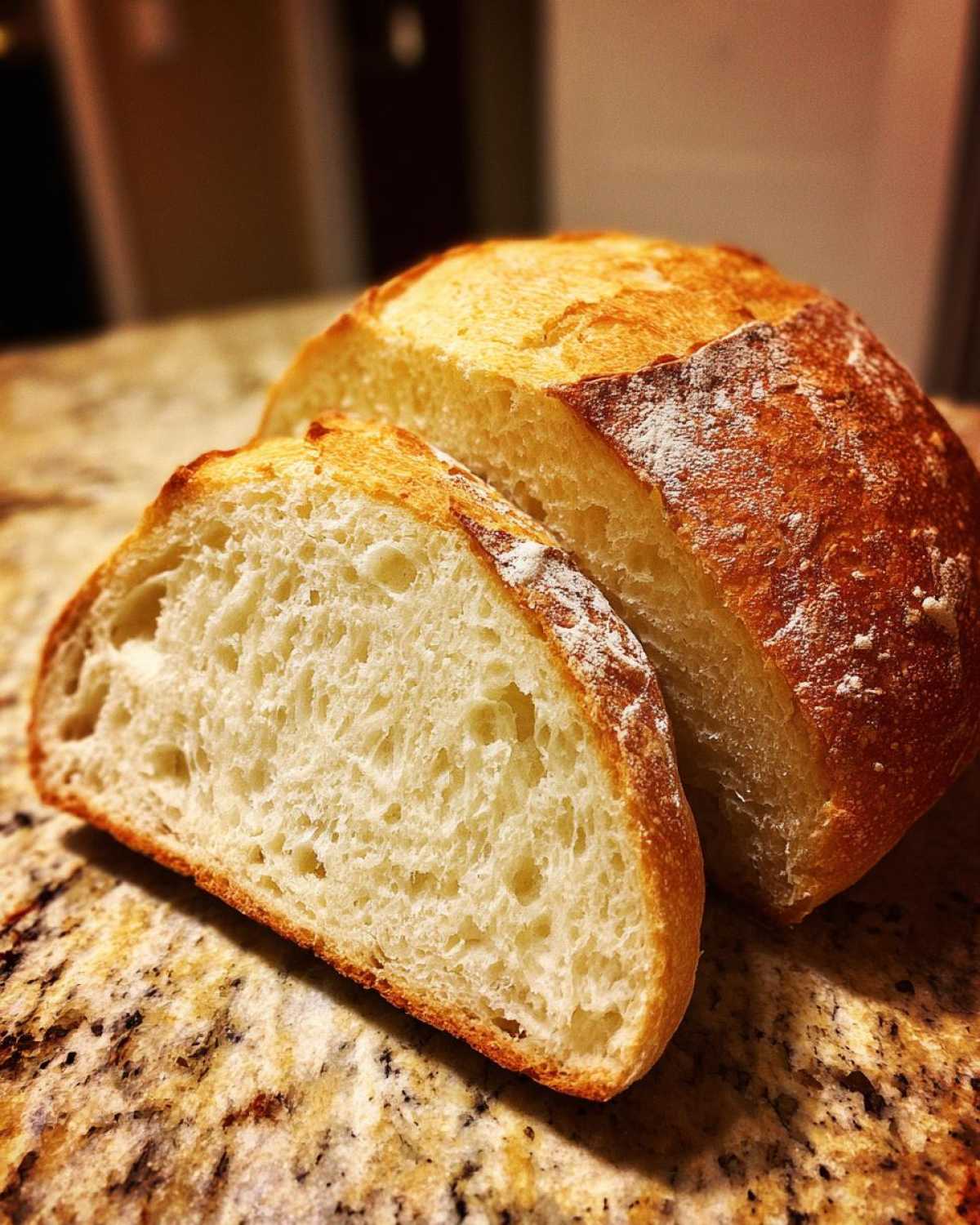
Tips for Success with Your Homemade Sandwich Loaf Sourdough
Listen, even with a solid recipe, sourdough can be fickle! The biggest thing I learned as a Beginner Sourdough Sandwich Bread baker is that temperature controls everything. If your kitchen is chilly—say, below 70°F—that bulk fermentation time might stretch into 10 or 12 hours! Don’t panic, but if you see no rise after 4 hours, move your dough somewhere warmer, like near the stove or inside an oven with just the light on.
To prevent a dense crumb, make sure your starter is really active. If it floats in water, you know it’s ready to go! Also, when you do that final shaping before it goes into the pan, really focus on creating surface tension. That tight ‘skin’ on the outside is what holds the shape and encourages that lovely, fluffy rise straight up, not out.
Using Your Soft Sourdough Sandwich Bread Recipe for Meal Planning
I love that this sourdough sandwich bread stops feeling like a weekend project and starts feeling like an everyday staple! That’s the whole point here at Pure Cooking Joy—making great food fit into your real, busy life. Because this loaf is so soft and nicely flavored—not aggressively tangy—it shines in so many ways.
Of course, it makes the best grilled cheese you’ve ever had, but don’t stop there! It’s fantastic toasted with butter and jam, or even cut thick for French toast because it holds its shape perfectly. If you’re looking to streamline your weekdays and bake once while using the bread all week, getting this loaf into your routine is a game-changer. It saves so much time when you have quality bread already on hand, letting you focus on other things, like organizing your weekly meal planning!

Storage and Reheating Instructions for Sourdough Sandwich Bread
Keeping this sourdough sandwich bread soft is almost as important as baking it right! My biggest rule for any sandwich loaf? Do not refrigerate it! Putting bread in the fridge turns it stale faster than you can say ‘buttery crumb.’ Store your cooled loaf tightly wrapped in a clean kitchen towel or a plastic bag on the counter for up to three days. Honestly, it usually disappears faster than that around my house.
If you need it to last longer, slice it first and pop those slices into a freezer bag. When you want toast or a sandwich, just pull a slice out and pop it right into the toaster; it thaws perfectly while it browns. Quick and easy, just how I like things!
Frequently Asked Questions About Sourdough Sandwich Bread
It’s normal to have questions when you dive into sourdough, especially when you are aiming for that elusive fluffy loaf. Don’t worry, these questions come up all the time, and getting the answers right will secure your spot as someone who nails the Soft Sourdough Sandwich Bread Recipe every time. If you’ve got your starter bubbling away, you’re halfway there!
Can I use all-purpose flour for this Sourdough Sandwich Bread Recipe?
Oh, you can technically substitute it, but I really, really wouldn’t recommend it if you are chasing that tall, fluffy rise. All-purpose flour just doesn’t have the necessary protein structure that bread flour has. That increased protein is what creates the strong gluten network needed to trap all the gasses produced by the starter. If you use AP flour, you’ll likely end up with a flatter, less sliceable loaf, and we are trying to avoid that dense sourdough situation!
Why is my sourdough always so dense?
Nine times out of ten, denseness comes down to one of three things: your starter wasn’t active enough (the engine wasn’t strong enough), you didn’t develop enough strength during those stretch and folds, or you either under-proofed or over-proofed the bulk fermentation. For this fluffy sourdough bread recipe, we need that gentle 30-50% rise during bulk fermentation so the dough doesn’t collapse in the pan later. Watch the dough volume, not the clock!
Can I add instant yeast to speed up the rise?
You absolutely can, but then it’s not really a traditional sourdough anymore, is it? This recipe is designed to rely solely on the natural leavening power of your starter. If you are in a massive rush, you could try cutting down the bulk fermentation time or upping the temperature of your water, but the beauty of this Easy Sourdough Loaf for Sandwiches is that those slower, natural processes really build the flavor and texture you are looking for. We want that easy, consistent result, not a rushed one!
Can I make this Sourdough Sandwich Bread Recipe without a Scale?
Please, please, please don’t try to weigh your ingredients by volume using cups! Sourdough is a science, and even small differences in how you scoop flour change the hydration levels completely. For this recipe to work beautifully and give you that perfect slice, you need a kitchen scale. It’s the single best investment you can make for consistent success in the kitchen, letting you focus on your weeknight dinner prep instead of worrying about failed batches. Precision equals joy here!
Sharing Your Pure Cooking Joy Sourdough Sandwich Bread
Now that you’ve baked your perfect, soft loaf, I absolutely want to hear about it! Did you finally get those beautiful, non-dense slices? Drop a comment right here and let me know how this sourdough sandwich bread worked for you. If you snapped a photo of your first perfect sandwich, please share it! Tag me over on our Facebook page at Pure Cooking Joy, or just send a shout out through my contact page. Seeing your successes is the purest joy for me!
PrintThe Ultimate Soft Sourdough Sandwich Bread for Beginners

Create a soft, sliceable sourdough loaf perfect for everyday sandwiches, toast, or French toast. This recipe uses simple steps to achieve a fluffy texture without dense results.
- Prep Time: 30 min
- Cook Time: 45 min
- Total Time: 7 hours 15 min
- Yield: 1 loaf 1x
- Category: Baking
- Method: Baking
- Cuisine: American
- Diet: Vegetarian
Ingredients
- 150g active sourdough starter
- 325g warm filtered water
- 20g avocado oil
- 25g honey
- 500g unbleached bread flour
- 10g salt
Instructions
- Combine the starter, warm water, avocado oil, and honey in a large bowl. Mix until the liquid looks milky.
- Add the bread flour and salt to the wet ingredients. Mix until just combined into a shaggy dough. Cover the bowl and let it rest for 1 hour (autolyse/rest period).
- Perform 4 sets of stretch and folds, spaced 30 minutes apart. After mixing, wait 30 minutes, perform the first set, wait 30 minutes, perform the second, and repeat for the third and fourth sets.
- After the final set of folds, cover the dough and allow it to bulk ferment for an additional 4 to 8 hours, or until it has increased in volume by about 30-50% and shows signs of life.
- Gently shape the dough into a tight log or round suitable for your loaf pan. Place the shaped dough into a greased 9×5 inch loaf pan.
- Cover the pan and allow the dough to proof at room temperature for 1 to 3 hours, or until it has risen about 1 inch above the rim of the pan.
- Preheat your oven to 375°F (190°C).
- Bake the loaf for 35 to 45 minutes, or until the crust is golden brown and the internal temperature reaches 205°F (96°C).
- Remove the bread from the pan immediately after baking and cool completely on a wire rack before slicing.
Notes
- Using active, bubbly starter is key for a good rise and soft crumb.
- This loaf is excellent for making grilled cheese or French toast.
- If you are interested in structured eating plans, look into meal planning options to complement your homemade bread.
Nutrition
- Serving Size: 1 slice
- Calories: 250
- Sugar: 2
- Sodium: 250
- Fat: 4
- Saturated Fat: 0.5
- Unsaturated Fat: 3.5
- Trans Fat: 0
- Carbohydrates: 48
- Fiber: 2
- Protein: 8
- Cholesterol: 0
